Personalized Medical Care & Dedicated International Patient Concierge

Medical Guide
Energy-Based Intimate Treatments: What the Evidence Supports
Laser and radiofrequency intimate treatments are widely offered and thinly studied. How to read the claims, and what the clinic itself puts in writing.
Schedule a ConsultationEnergy-Based Intimate Treatments: What the Evidence Supports
Medically reviewed by Dr. Jong-Yeol Kim, MD, Board-Certified Obstetrician-Gynecologist, Golden Balance Clinic
This is a field where the marketing has moved considerably faster than the evidence, and where the gap between the two is wider than in almost any other area of women's health.
That is not a reason to dismiss the treatments. It is a reason to be precise about what is known, what is claimed, and which of the two you are being offered — because the distinction is rarely drawn on the pages where most patients first encounter these procedures.
What follows is the position of the major obstetric body in the United States, what Golden Balance Clinic's own published material says about this category, and the questions that let you tell a careful recommendation from an enthusiastic one.
What these treatments are
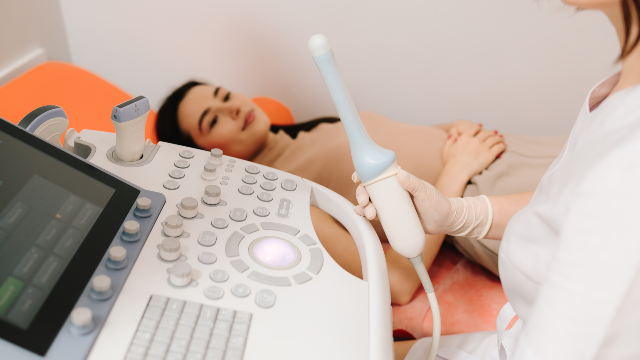
A group rather than a single procedure. Energy-based intimate treatments apply laser or radiofrequency energy to vaginal tissue, with the intention of producing a change in that tissue over the weeks after the session.
The clinic's own description is unusually careful, and worth quoting in substance: vaginal laser treatment applies laser energy to vaginal tissue and is marketed for concerns such as vaginal laxity and certain vaginal symptoms. That phrasing — marketed for, rather than proven to treat — is doing real work, and most clinic pages in this field do not make the distinction.
Sessions run roughly twenty minutes to an hour, under topical or local anesthetic. The clinic documents a recovery period of one to two weeks and a results timeline of two to eight weeks, with duration varying by treatment and by individual.
What the evidence actually says
Here the picture is consistent and unflattering.
The American College of Obstetricians and Gynecologists' patient guidance on female genital cosmetic surgery and vaginal rejuvenation states plainly that there is no good research showing that these procedures are safe or that they work well, and that there is no evidence of benefit to libido, body image or sexual pleasure. Its committee opinion on elective female genital cosmetic surgery tells clinicians to inform women of the lack of high-quality data supporting effectiveness, and to counsel on bleeding, infection, scarring and the possibility of reoperation.
Two things follow that patients often miss.
"Not proven" is not the same as "proven useless". The evidence base is thin rather than negative. Some people report that something changed for them. What is absent is the kind of study that would let anyone predict whether you will be one of them.
The absence of evidence is itself clinically relevant. When a treatment's effect is uncertain, the risks move up in importance, because you are weighing a definite possibility of harm against an uncertain possibility of benefit. That is the opposite of how these procedures are usually presented.
The clinic's published risk statement for this category is specific: energy-based treatments may cause discomfort, discharge, burns, scarring or persistent pain. Those are not trivial, and the last two are not always temporary.
Why a plausible mechanism is not enough
The explanation offered for these treatments is biologically reasonable, which is exactly what makes the gap in the evidence easy to miss.
The account runs like this: controlled energy creates a small, deliberate injury in the tissue; the body responds by remodeling; collagen and the local tissue environment change over the following weeks; and the result is tissue that behaves differently from before. Every step in that chain is a real biological process, and the same reasoning underlies treatments that are well established elsewhere in medicine.
The trouble is that a plausible chain does not establish a clinical result. Several things can be true at once: the energy reaches the tissue, the tissue responds, and the patient's symptom does not change. Medicine is full of mechanisms that worked exactly as described and produced no benefit anybody could measure, which is why the chain is where a treatment starts rather than where it is judged.
This matters practically because the mechanism is what gets explained in a consultation. It is vivid, it makes sense, and it feels like evidence. If you leave an appointment persuaded, it is worth asking yourself whether you were persuaded by findings or by a diagram.
Two further features of this field make the gap harder to see.
The outcomes are subjective. What is being measured is how something feels, which is the hardest kind of outcome to study and the easiest to influence by expectation. That is not a criticism of patients; it is why careful studies in this area use comparison groups, and why their scarcity is the specific problem.
A second opinion is cheap here, and unusually useful. In a field where recommendations rest more on clinical judgment than on trial data, two independent judgments tell you more than one does. If they agree, you have learned something; if they differ sharply, you have learned more.
Symptoms fluctuate on their own. Dryness, discomfort and a sense of laxity vary with hormonal state, stress, sleep, and the ordinary passage of weeks. Anyone who starts a treatment during a bad stretch is likely to improve somewhat afterwards whether or not the treatment did anything, because they began at a low point. Untangling that from an effect requires exactly the research design that is missing here.
Reading the claims you will meet
A short field guide, because most of what patients encounter before a consultation is not research.
Before-and-after accounts. These are the experience of people who chose to share it, which selects for those who were pleased. The ones for whom nothing changed are rarely represented. This is not dishonesty; it is what a testimonial is.
"Clinically proven". An unregulated phrase. Ask what was studied, in how many people, compared against what, and measured how. A treatment compared against nothing, in a small group, with the outcome reported by the same people who chose the treatment, is a weak foundation however the result is phrased.
Device clearance. A device being permitted for sale is not the same as being established for a particular use. Clearance routes often rest on similarity to an earlier device rather than on evidence for the indication in front of you.
Numbers of sessions. A plan that specifies several sessions before an assessment of whether the first achieved anything is a commitment made in the absence of information. Ask what happens after the first.
Confident timelines. The clinic itself documents a results window of two to eight weeks with wide individual variation. Precision beyond that is not supported by what is known.
The constructive version of all this is not suspicion. It is a single habit: whenever a claim is made, ask what observation lies behind it. In a field where the honest answer is often "clinical impression rather than trial data", a clinician who says so plainly has told you something valuable about how they exercise their judgment.
The question that usually matters more
Most people arriving at an energy-based treatment have a symptom, not an aesthetic goal. Dryness. Discomfort during intercourse. A sense of change after childbirth or around menopause.
For those, the useful first question is not which device but what is causing it.
The clinic's own material says so directly: for vaginal dryness, evaluating the underlying cause and considering evidence-based medical treatment may be more appropriate than a cosmetic energy-based procedure. It is unusual for a clinic to publish a sentence that points away from a service it offers, and it happens to be the correct clinical order.
Pain during intercourse is the clearest example. ACOG's guidance on painful sex sets out how many distinct causes sit behind that one symptom — infection, skin conditions, muscular causes, hormonal change, and others — most of which have specific treatments and none of which is addressed by applying energy to tissue. Treating the symptom without identifying the cause can leave the cause untreated and add a procedure on top.
The same applies to urinary symptoms, which are sometimes folded into the marketing of this category. ACOG's material on urinary incontinence and on pelvic support problems describes conditions with established assessments and established treatments, including non-surgical ones. A patient with stress incontinence has an answerable problem, and surgery for it is a studied field with known outcomes. Being routed from that into a cosmetic energy treatment would be a worse path, not a gentler one.
When these treatments should wait
The clinic documents clear grounds for postponing, and they are worth stating because they are the ones patients most often hope to skip.
Treatment is postponed pending medical evaluation where there is an unexplained vaginal symptom, a suspected infection, unexplained bleeding, or anything else needing diagnosis. Patients with unexplained genital pain or bleeding, suspected infection or unexplained lesions are assessed first.
That list exists because an energy-based treatment applied over an undiagnosed condition does two harms at once: it does not treat the condition, and it delays the diagnosis. Unexplained bleeding in particular is a symptom that deserves an answer before anything elective is considered.
What a careful recommendation looks like
Four markers. A consultation showing all four is a different conversation from one showing none.
It starts with an assessment, not a menu. The clinic's documented pathway begins with the symptom, your history in the specialty, previous deliveries, medications and allergies, and what you expect — and then an examination. Suitability is determined individually by a qualified clinician after evaluating symptoms, history, menopausal status and the alternatives.
It names the alternatives. Including the ones that are not procedures.
It states the limits. The clinic's own guidance to its writers is to use factual, treatment-specific descriptions and to avoid claims of assured tightening, lasting rejuvenation, better sexual response or freedom from risk. A consultation that echoes that caution is consistent with the clinic's published position; one that promises those things is not.
It accepts that you might not proceed. A recommendation you are free to decline without friction is a recommendation rather than a sale.
What nobody can tell you in advance
Whether it will work for you. The evidence does not support that prediction, and a clinician claiming otherwise is going beyond what is known.
How long any change will last. The clinic documents a results window of two to eight weeks with duration varying by treatment and individual. Nothing here is lasting by default.
Whether you will need more sessions. Ask what the plan is if the first produces no change — the answer tells you whether you are being offered a treatment or a subscription.
How you will feel about it. ACOG's committee opinion asks clinicians to consider referral for evaluation where psychological concerns are suspected, and to assess for body dysmorphic disorder where indicated. That guidance exists because distress about appearance is sometimes the thing needing attention, and a procedure does not address it.
What this means if you are flying in for it
A patient flying in for an elective treatment is in a different position from one who can come back next week, and it changes the arithmetic in three ways.
The assessment has to come first, and it may end the plan. If the examination finds a cause that needs treating, the responsible outcome is to treat that instead — which, for someone who has crossed an ocean, feels like a wasted trip and is in fact the trip doing its job. Build the possibility into your expectations before you fly, not after.
Follow-up is harder, and this category needs some. Any change appears over weeks, and the documented risks include effects that are not immediate. Having a clinician at home who knows what was done is worth arranging in advance rather than improvising from a hotel room.
Sunk effort pushes in one direction. Money and leave already spent make it harder to decline a recommendation you would have questioned at home. The practical safeguard is to decide, before departure, what you would walk away from — a plan materially larger than discussed, a same-day decision, an answer you did not follow — and to write it down while nothing is at stake.
None of this argues against treatment abroad. It argues for arriving with the questions already settled, so that the consultation is about your examination rather than about your travel plans.
Questions for the consultation
What do you think is causing my symptom? Before any discussion of treatment.
What would you do if I were not considering a procedure?
What is the evidence that this helps the specific thing I have described?
What are the risks in my case, and which of them can be lasting?
What would make you advise against this for me?
How many patients with my particular symptom have you treated this way, and what did you observe?
An honest answer to that last one is often a small number and a mixed impression. That is more useful than a confident generalization, because it tells you the recommendation is grounded in this clinician's own observation rather than in a manufacturer's material. It also gives you something concrete to weigh: a clinician who has watched a handful of comparable patients over months knows things that no brochure contains, and will usually tell you where their impression is firm and where it is not.
What happens if nothing changes?
Written questions reach the clinic through its contact page, and the clinicians who would see you are listed on the doctors page.

A fair summary
These treatments sit in an uncomfortable middle. They are not fringe — they are offered by qualified clinicians, including at this clinic, and some patients report being glad they had them. They are also not established, and the body that speaks for obstetricians and gynecologists in the United States says so without hedging.
The honest position for a patient is therefore neither "this is proven" nor "this is a scam". It is: the benefit is uncertain, the risks are real and specific, the symptom you have may well have a cause that is treatable by other means, and the right order is to find that out first.
A clinic willing to walk you through that order is one worth talking to. The order is the point, not the device.
Frequently Asked Questions
Are energy-based intimate treatments proven to work?
No. ACOG states there is no good research showing these procedures are safe or that they work well, and no evidence of benefit to libido, body image or sexual pleasure. The evidence is thin rather than negative, which is a different thing from proven.
What are the documented risks?
The clinic lists discomfort, discharge, burns, scarring and persistent pain for energy-based treatments. ACOG's clinical guidance adds bleeding, infection, scarring and the possibility of reoperation for this category generally.
How long does a session take and how long is recovery?
The clinic documents roughly twenty to sixty minutes per session under topical or local anesthetic, a recovery period of one to two weeks, and any change appearing over two to eight weeks.
I have dryness — should I start here?
The clinic's own material puts the medical assessment of dryness ahead of any cosmetic energy treatment. Start with the cause.
What about pain during intercourse?
That symptom has many distinct causes, most with specific treatments. It warrants assessment first; applying energy to tissue does not address an underlying cause.
When would treatment be postponed?
Where there is an unexplained vaginal symptom, suspected infection, unexplained bleeding, unexplained lesions, or anything requiring diagnostic evaluation. The clinic documents assessing these before proceeding.
How long will any effect last?
Not established. The clinic documents a results window of two to eight weeks with duration varying by treatment and by individual, and nothing in this category should be assumed to be lasting.
What is the single best question to ask?
What do you think is causing my symptom — asked before any treatment is discussed. The answer tells you whether you are being assessed or sold to.
The Bottom Line
- Energy-based intimate treatments are marketed for laxity and vaginal symptoms; the clinic's own wording says "marketed for" rather than proven to treat, which is the accurate framing.
- ACOG states there is no good research showing these procedures are safe or effective, and no evidence of benefit to libido, body image or sexual pleasure — thin evidence rather than disproof, which makes the documented risks weigh more heavily.
- Those risks are specific: discomfort, discharge, burns, scarring and persistent pain, with bleeding, infection and reoperation named in the clinical guidance.
- Most people arrive with a symptom rather than an aesthetic goal, and the clinic's own material points to finding the cause first — dryness, painful sex and urinary symptoms each have established assessments and treatments.
- A careful recommendation starts with an examination, names the alternatives, states the limits, and leaves you free to decline.
This article is for general informational purposes and does not constitute individualized medical advice. It is not a self-diagnosis tool, and a summary of published evidence does not establish what is appropriate for your symptoms. Only a qualified gynecologist who has examined you can advise on that.
More Articles
Continue reading our clinical guides.
Verifying Injectable Products and Dosage at a Korean Clinic
What you can actually check before a syringe is filled: the packaging, the product, the quantity, and the questions that have answers worth hearing.
Learn More
Verifying a Clinic's Safety Promises Before You Travel
A published safety policy you cannot check is a slogan. The questions that turn one into something testable, and how to read the answers you get.
Learn More
Reading Before-and-After Photos Critically Before You Book
A results gallery is a sample someone chose. What changes an outcome photograph, what a credible gallery labels, and how to use one without being misled by it.
Learn More