Personalized Medical Care & Dedicated International Patient Concierge

Medical Guide
Verifying Injectable Products and Dosage at a Korean Clinic
What you can actually check before a syringe is filled: the packaging, the product, the quantity, and the questions that have answers worth hearing.
Schedule a ConsultationVerifying Injectable Products and Dosage at a Korean Clinic
Medically reviewed by Dr. Yu-Jin Oh, MD, Board-Certified Obstetrician-Gynecologist, Golden Balance Clinic
Most of what patients worry about in cosmetic medicine cannot be checked. Surgical technique, judgment, sterility practice, what happens while you are sedated — all of it is taken largely on trust.
Injectables are the exception. The product arrives in a box, with a label, a seal and a lot number, and it is drawn up in the room while you are awake and watching. That makes this the one area where an ordinary patient can verify something real, with no training, in about ninety seconds.
This is how to use that ninety seconds, what the quantity question actually means, and what the clinic you are considering does and does not state about the products it uses.
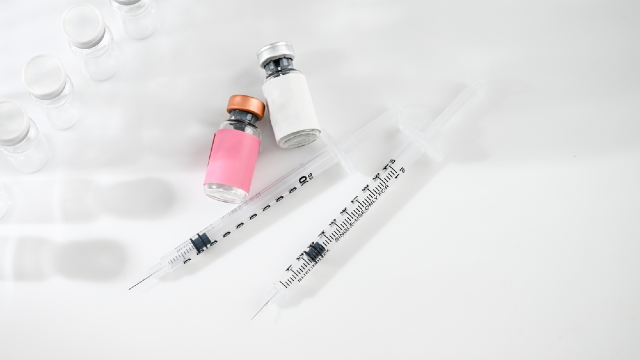
Two different problems, often confused
"Is it real?" conflates two concerns that need separate handling.
Counterfeit product. Material manufactured to imitate a known brand, outside any regulated supply chain. The contents are unknown: wrong strength, wrong substance, non-sterile, or nothing at all. This is the dangerous case and the rarer one.
Genuine product outside its intended channel. A real product that reached the clinic through an unauthorized route, or that is approved for use in one country and not another, or that was stored or transported outside its specified conditions. The vial is what it says it is; the chain behind it is not what you assume.
The United States Food and Drug Administration has published on both. Its notice that a counterfeit version of Botox was found in the United States and its later alert that counterfeit product had been found in multiple states both trace the problem to product obtained from unlicensed sources. Its announcement about illegal online marketing of botulinum toxin describes the second problem directly: product bought outside authorized channels may be unapproved, misbranded, adulterated, counterfeit, contaminated, improperly stored or transported, ineffective, or unsafe.
Those are findings about the United States market, not about Korea or any Korean clinic, and this article makes no claim about prevalence anywhere. They are included because they establish something useful: the question is legitimate, regulators treat it as serious, and the failure mode is the supply chain rather than the clinic's intentions.
The ninety-second check
Everything here is observable by a patient with no clinical knowledge. None of it is rude to ask for.
Ask to see the box before it is opened. Not the vial — the carton. It carries the product name, the manufacturer, the strength, the expiry date and a lot number. A clinic that brings an already-drawn syringe has removed the only verification step available to you.
Check that the seal is intact and broken in front of you. For toxin, reconstitution happens in the room in many practices; watch it if it does.
Read the name on the carton and say it back. You are not expected to evaluate it. You are establishing that a name exists, that it is written down, and that everyone agrees on what it is.
Note the lot number and the expiry. Photograph the carton if the clinic agrees. This is the single most useful record you can take home, because if anything happens later, the first question any clinician asks is what was injected.
Ask who makes it and where the clinic buys it. The answer to the second question is the one that matters, and the willingness to answer matters more than the content.
Ask what happens to anything left over. There is a correct answer and it is short.
A clinic that is comfortable with all six has given you a real signal, because none of them is expensive to comply with and all of them are easy to refuse.
The quantity question, explained properly
Patients ask about brands and almost never about amounts, which is backwards. Quantity determines the result far more than brand does.
Toxin is measured in units; filler is measured in volume. These are not interchangeable scales and they are not comparable between products. A unit is a measure of biological activity defined by the specific manufacturer's assay — which is precisely why unit counts cannot be transferred between brands even when the active substance is described the same way.
Too little produces nothing, and you pay for it twice. An underdosed treatment is the most common disappointment in this field, and it is usually invisible to the patient, who concludes the treatment does not work rather than that not enough was used.
Too much produces the complications people fear. The clinic's own documented list for toxin includes temporary eyelid or brow drooping, asymmetry, and unwanted weakness in nearby muscles — all of them quantity-and-placement problems rather than product problems.
No article can tell you your number. It depends on your anatomy, muscle strength, the area, and what you want. Anyone publishing a per-area figure as though it applied to readers generally is writing fiction, and this article will not do it.
What you can do is ask, in the room: how much will be used, in what units or volume, and why that amount for me? A clinician who can answer that in a sentence is telling you they have a plan. The answer also gives you something to compare against next time, which is how patients eventually learn what their own face needs.
What this clinic states, and where its statements stop
Precision matters here, so these are set out exactly.
For toxin, the documented general requirement is a verified medical botulinum toxin product, appropriate sterile injection supplies, skin-cleansing materials, and safe sharps disposal.
For filler, the documented general requirement is a properly labeled, sealed filler product supplied for professional use, together with a suitable sterile needle or cannula, cleansing materials, and appropriate sharps disposal.
The products named in the clinic's own service descriptions are wrinkle Botox, full-face skin Botox under the name Dermatoxin, and body Botox; and, under collagen stimulator services, Juvelook and Sculptra.
The authenticity commitment is scoped. The clinic's quality-control material states that it emphasizes using genuine products in appropriate quantities — and it states this about vaginal filler treatments specifically. It is a real commitment and it is written about one treatment family. Treat it as covering what it says and treat the rest as a question for your consultation rather than as a promise already made.
The specifics belong to your consultation. Injection sites, the amount used, the particular product, the dilution, who performs the injection and the follow-up plan are all decided case by case, which is why this article gives you questions on those points rather than numbers. Be skeptical of any source that offers you numbers instead: they cannot know your face.
Those questions go through the clinic's contact page before you travel, and the clinicians you would be asking about are listed on its doctors page.
Storage, and the question nobody asks

Of everything on the supply chain, storage is the part patients never raise and the part most likely to have gone wrong quietly.
Botulinum toxin and many fillers are temperature-sensitive. They are shipped cold, held cold, and in the case of toxin reconstituted shortly before use. Product that has been warm in transit, left out during a clinic day, or reconstituted much earlier than it was used may be perfectly genuine and no longer behave as it should. The FDA's own description of the risks of buying outside authorized channels lists improper storage and transport alongside counterfeiting, in the same sentence, for exactly this reason.
What makes this difficult is that a patient cannot see it. A vial that spent a day at room temperature looks identical to one that did not.
Three questions get at it anyway, and none of them requires you to understand the chemistry.
How is this stored, and where? You are listening for a specific answer — a dedicated refrigerator, monitored temperature — rather than a reassurance.
When was this reconstituted? For toxin, if the answer is "now" or "this morning", that is informative. If nobody knows, that is also informative.
Does the clinic buy directly from the manufacturer or an authorized distributor? The answer is usually yes and is occasionally illuminating.
As with the packaging check, the value is less in the content of the answer than in whether the clinic has one. Storage is a detail that well-run practices track as a matter of routine and that poorly run ones have never thought about, which makes it an unusually good question for separating the two.
And if a treatment simply does not work as expected, with no complication and no obvious explanation, this is one of the places the explanation sometimes lives — which is another reason to have the product and the date written down.
Approval across borders, without the myth
American patients ask whether a product is FDA approved, which is a reasonable question with a frequently misunderstood answer.
Approval is jurisdiction-specific and product-specific. A regulator reviews a particular product for a particular use in a particular country. A product sold in Korea has been assessed under Korean regulation. That is not the same assessment, and it is not an absence of assessment either.
"Not approved in the US" does not mean unsafe, and "approved in the US" does not mean the vial in front of you came through a channel that preserved it.
The useful question is narrower. Ask which regulator has assessed this specific product, and for what. That has a factual answer and is worth more than a yes or no about one agency.
The FDA's consumer guidance on dermal fillers is worth reading before any filler appointment anywhere — it covers what to ask, what fillers are and are not intended for, and the practices that cause the most harm. Its general page on counterfeit medicine explains how counterfeits enter a supply chain, which is the mechanism behind every case above.
The risks that are documented, whatever the product
Worth knowing before the conversation, because they shape what you should report afterwards.
For toxin: injection-site pain, redness, swelling, tenderness, bruising or headache; less commonly, temporary eyelid or brow drooping, asymmetry, and unwanted weakness of nearby muscles.
For filler: pain, tenderness, swelling, bruising, redness, itching and lumps; and less commonly infection, inflammatory reactions, nodules, allergic reactions and tissue damage.
Two things follow. Most of what happens after an injectable appointment is on the first list and resolves. And the entries on the second list are the reason the product record matters — a clinician treating a nodule or a reaction weeks later needs to know what was injected, and your photograph of the carton may be the only source.
One more, for anything injected anywhere: sudden severe pain, skin that turns white or dusky, or vision change after a facial injection are reasons to seek care immediately rather than waiting to see. Know who to contact and how, before you need to.
What to ask, in two lists
Before you travel, in writing:
What product would you use for what I have described, and who manufactures it? What is the usual quantity for my area, and what decides it? Who performs the injection, and what is their training? May I see the packaging before it is drawn up? What follow-up is included if the result is uneven? What should make me contact you afterwards, and how do I reach someone from the United States?
In the room, out loud:
May I see the box? Is this the product we discussed? How much is being used? Is it being made up now? May I photograph the carton?
Neither list is confrontational. Both are the kind of thing a careful patient asks anywhere, and the answers are usually given cheerfully.
After the appointment
Three things to do before you leave the building, which almost nobody does.
Get the product and quantity written down. Name, manufacturer, lot number, amount, and the areas treated. A line of text is enough. This is a medical record, and in six months it is the only thing that will tell you what you had.
Ask when to assess the result. Toxin takes days to take effect; filler settles over weeks. Judging either too early produces unnecessary alarm and sometimes unnecessary extra treatment.
Ask what adjustment would look like and when. The approved description for toxin is that it may temporarily soften selected expression lines — a modest, time-limited claim — and both the degree and the duration vary between people. A plan for assessing and adjusting is more useful than any promise about either.
Then keep the record somewhere you will find it. If you return to the same clinic, it tells them what worked. If you see someone at home, it tells them what to treat. And it is the only part of this whole process that you control completely.
Frequently Asked Questions
Can I really ask to see the packaging?
Yes, and it is the most useful thing you can do. Ask to see the carton before it is opened, not the drawn syringe, and note the product name, manufacturer, expiry and lot number.
What is the difference between a counterfeit and a diverted product?
A counterfeit imitates a brand outside any regulated chain and its contents are unknown. A diverted product is genuine but reached the clinic through an unauthorized route, or was stored or transported outside its specified conditions.
Why does the amount matter as much as the brand?
Because quantity and placement determine the result. Too little produces nothing visible; too much produces the drooping, asymmetry and unwanted muscle weakness that appear on the documented complication list.
Can you tell me how many units I need?
No, and nobody writing for a general audience can. It depends on your anatomy, the area and your goal. Ask in the room how much will be used and why that amount.
Is a product that is not FDA approved unsafe?
Not by itself. Approval is specific to a country, a product and a use. The more useful question is which regulator assessed this specific product, and for what.
What does the clinic actually commit to?
Its documented general requirements are a verified medical botulinum toxin product and a properly labeled, sealed filler supplied for professional use. Its explicit genuine-products commitment is written about vaginal filler treatments; ask about everything else directly.
Which products does the clinic name?
Wrinkle Botox, full-face skin Botox under the name Dermatoxin, and body Botox; and Juvelook and Sculptra under collagen stimulator services. Ask in your consultation which of them applies to you, and in what amount.
What should I keep afterwards?
The product name, manufacturer, lot number, quantity and areas treated, written down — plus a photograph of the carton if the clinic agrees. It is the only record you will have.
The Bottom Line
- Injectables are the one part of cosmetic medicine an ordinary patient can verify: ask to see the carton before it is opened, read the name, note the lot number and expiry, and watch it drawn up.
- Two different problems hide behind "is it real" — counterfeit product, and genuine product outside its intended channel — and regulators treat the supply chain as the failure point.
- Quantity matters more than brand: units for toxin, volume for filler, not comparable between products, and no article can give you your number.
- The clinic documents general requirements for toxin and filler and names several products in its own service descriptions; the particular product, amount and dilution for your case are decided at the consultation, so take those to the room as questions.
- Leave with the product name, manufacturer, lot number and quantity written down; it is the only record of what was injected, and the first thing any clinician will ask for.
This article is for general informational purposes and does not constitute individualized medical advice. It is not a self-diagnosis tool, and a verification checklist does not establish that any injectable treatment is appropriate for you. Only a qualified dermatologist or other suitably trained physician who has examined you can advise on that.
More Articles
Continue reading our clinical guides.
Verifying Injectable Products and Dosage at a Korean Clinic
What you can actually check before a syringe is filled: the packaging, the product, the quantity, and the questions that have answers worth hearing.
Learn More
Verifying a Clinic's Safety Promises Before You Travel
A published safety policy you cannot check is a slogan. The questions that turn one into something testable, and how to read the answers you get.
Learn More
Reading Before-and-After Photos Critically Before You Book
A results gallery is a sample someone chose. What changes an outcome photograph, what a credible gallery labels, and how to use one without being misled by it.
Learn More