Personalized Medical Care & Dedicated International Patient Concierge

Specialty Overview
Eyelid Surgery
Eyelid surgery is an operation on the upper or lower eyelid that may take away surplus eyelid skin or fat, move fat into a different position, or deal with a lid that sits too low, with the choice depending on how the eyelid is built and what the patient.
Schedule a ConsultationEyelid Surgery in Seoul, Republic of Korea

Medically reviewed by Dr. Eun-Young Kwak, MD, graduate of Yonsei University College of Medicine Golden Balance Clinic, Gangnam-gu, Seoul
Eyelid surgery is an operation on the upper or lower eyelid that may take away surplus eyelid skin or fat, move fat into a different position, or deal with a lid that sits too low, with the choice depending on how the eyelid is built and what the patient wants changed. It is not a single method: upper-lid, lower-lid and crease-forming operations are each planned differently. Golden Balance Clinic in Gangnam-gu, Seoul performs four of them — double eyelid surgery, upper blepharoplasty, lower blepharoplasty, and non-incisional under-eye fat repositioning.
What Is Eyelid Surgery?
Eyelid surgery is a group of surgical procedures that change the structure of the upper or lower eyelid by adjusting skin, fat, or the position of the lid itself, rather than by treating the skin surface around the eye.
The operation is carried out on the upper lid, the lower lid, or both, and each site has its own incision plan.
Access may be through the natural upper-eyelid crease, through a line just under the lower lashes, or through the inner surface of the lower lid, where no external cut is made.
Tissue may be taken away, held in a new position with sutures, or redistributed; which of these happens is a decision made at examination, not in advance.
Anesthesia ranges from local injection alone, to local with intravenous sedation, to general anesthesia, according to which operation is planned and who the patient is.
A single session usually runs between roughly 45 minutes and two and a half hours, though the longer operations in this group extend beyond that.
The American Society of Plastic Surgeons lists loose or sagging upper-lid skin, fatty deposits appearing as puffiness, and bags under the eyes among what blepharoplasty is used to treat.
Who Performs Eyelid Surgery at Golden Balance Clinic
|
Dr. Eun-Young Kwak |

Dr. Eun-Young Kwak is a Director and the doctor who leads the clinic's plastic surgery and petit centre. She graduated from Yonsei University College of Medicine. She is a member of the Korean Academy of Women's Aesthetic Medicine, the Korean Aesthetic Wellbeing Society, the Korean Society for Obesity and Plastic Surgery, and the Korean Society of Anti-Aging Medicine, and she previously served as a director of I-Love Petit Clinic and of Petit Queen Clinic. Dr. Eun-Young Kwak is the clinic doctor whose area covers the eyelid procedures described on this page. The clinic describes its care for these procedures as a sequence that begins with consultation and diagnosis, moves through planning and the operation itself, and ends with recovery follow-up under physician supervision.
Eyelid Surgery Options Available
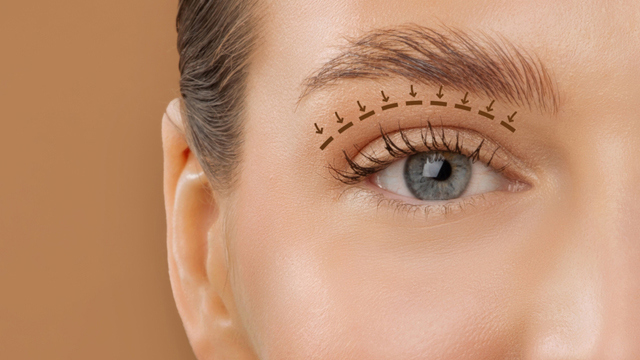
The four procedures below address different structures. They are not interchangeable, and the examination decides which one — if any — fits the concern a patient brings.
Procedure | What it addresses | Typical anesthesia | Approximate operating time |
|---|---|---|---|
Creating or defining an upper-eyelid crease, by a non-incisional buried-suture or partial-incision method | Local, sometimes with intravenous sedation | About 1–3 hours | |
Surplus upper-eyelid skin, and selected fat or muscle where appropriate | Local; sedation or general in selected cases | About 3–4 hours | |
Under-eye bags, surplus lower-lid skin, and the position or spread of fat when appropriate | Local with sedation | About 1–2 hours | |
Protruding under-eye fat and tear trough hollowing, approached from inside the lower lid | Local with sedation | About 1–2 hours |
For double eyelid surgery the clinic selects between the buried-suture and partial-incision routes according to skin thickness, the amount of fat, and the appearance the patient is asking for, with the intention of a natural and balanced outcome. For the under-eye fat procedure, the route inside the lower lid is what avoids an external skin incision; existing fat is shifted to soften the step between lid and cheek rather than being added to.
Who Is a Good Candidate for Eyelid Surgery?
Adults in suitable general health whose concern is clearly defined and can be addressed by the operation being proposed, and who hold realistic expectations of it.
People who want the appearance of an upper-eyelid crease created or sharpened, where the surgeon has first assessed lid anatomy, skin thickness, any existing unevenness, eye health and the patient's goals.
People with surplus or hooded upper-eyelid skin, assessed alongside lid function, brow position and whether the skin is reaching into the field of vision.
Adults with prominent under-eye bags, surplus lower-lid skin, or age-related change around the lower lids, confirmed as suitable at consultation.
Adults with noticeable under-eye fat protrusion, tear trough hollowing, or an uneven transition from lower lid to cheek, whose lower-lid anatomy suits a fat-repositioning approach.
Suitability is not readable from age or appearance. Surgery may have to wait, or need specialist assessment first, where there is an uncontrolled medical condition, significant dry eye or a tear-production problem, certain eye conditions, a bleeding risk, or medication affecting clotting. None of these is an automatic bar in every case.
Pronounced lower-lid laxity or significant surplus lower-lid skin can make fat repositioning on its own the wrong choice, and brow drooping may mean upper-lid skin removal alone would not reach the underlying problem.
What to Expect: Procedure, Recovery, and Results Timeline

Before anything is booked, the clinic asks patients to confirm that the specific eyelid procedure they want is offered. The consultation then covers the main concern, medical history, current medicines and supplements, allergies, previous eye procedures and any current eye symptoms. An examination follows, looking at eyelid skin, fat, lid position and eye health; depending on the case, an eye assessment or a visual-field assessment may be added. The National Eye Institute describes a visual field test as a check of peripheral, or side, vision. The proposed method, the expected outcome, the risks, the recovery and the follow-up plan are all discussed before a decision is made.
On the day, the surgeon marks the treatment area, cleans it, and gives the chosen anesthesia. An incision is placed in an appropriate eyelid crease or inside the lower lid, skin and fat are adjusted or removed as planned, and any incision is closed with sutures or supported in another suitable way. The NHS notes that most people undergoing eyelid surgery can go home the same day.
Preparation matters as much as the operation. Patients are asked for a complete list of prescription medicines, over-the-counter medicines, vitamins and supplements, along with allergies and medical conditions, and to tell the surgeon about blood-thinning medicines and any previous eye procedures. Prescribed medicines should not be stopped unless the treating clinician says so. Where anesthesia or sedation is planned, transport home needs arranging in advance.
Afterwards, the surgeon's wound-care and medication instructions govern recovery. Cold packs are used only as directed, the head is kept raised while resting, and the eyes are not rubbed or pressed. Strenuous activity and swimming stop for the period the surgeon specifies, and scheduled follow-up visits are attended.
Stage | What generally happens |
|---|---|
First 1–2 weeks | Early healing. Swelling and bruising are at their most noticeable and begin to improve. |
Weeks 2–4 | Initial healing and the reduction of swelling typically complete in this window; visible change starts to emerge. |
Weeks 4–8 | Visible results develop, with longevity depending on which procedure was performed. |
1–3 months | The eyelid shape generally becomes clearer, though scar maturation and subtle changes can continue past this point. |
Recovery is not identical across the four procedures. After double eyelid surgery, swelling and bruising improve within one to two weeks with further healing over three to six weeks, and the crease continues settling through six to eight weeks. Upper blepharoplasty has an initial recovery of one to two weeks, swelling and bruising easing over three to four weeks, and visible improvement at two to four weeks. Lower blepharoplasty takes one to two weeks for initial healing and four to six weeks for swelling and bruising to mostly subside, with results settling across four to eight weeks and lasting several years. After non-incisional under-eye fat repositioning, swelling and bruising improve within one to three weeks and results settle through six to eight weeks.
Patients travelling from abroad should plan around stitch removal. Some eyelid procedures need stitches out around 7 to 14 days after surgery, so it is worth confirming whether that appointment must happen in Korea or whether safe follow-up can be arranged at home.
Outcomes have limits worth stating plainly. MedlinePlus notes that eyelid surgery will not remove wrinkles around the eyes, lift sagging eyebrows, or get rid of dark circles under the eyes. Exact symmetry and a particular crease shape cannot be promised, and crease surgery does not by itself correct a drooping lid or a functional vision problem unless a separate condition has been assessed and treated.
Combining Eyelid Surgery with Other Treatments
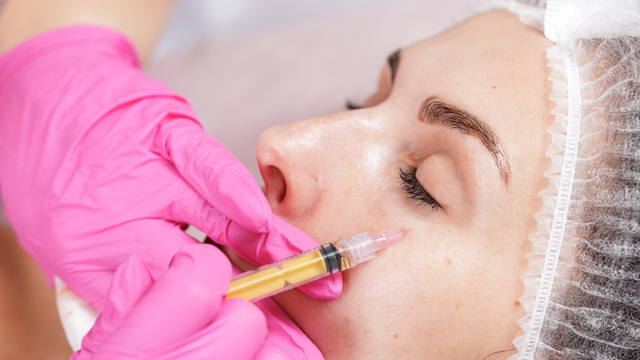
Eyelid surgery is sometimes combined with brow lift or facelift surgery, depending on anatomy, goals and safety considerations.
Upper blepharoplasty may be considered alongside a brow procedure or another eyelid operation where examination identifies a separate concern.
Lower blepharoplasty may be combined with upper blepharoplasty, brow procedures, or selected facial rejuvenation treatments.
Non-incisional under-eye fat repositioning may be combined with lower-lid skin treatment, eyelid tightening, or upper-eyelid surgery.
Injectable and energy-based treatments for the area around the eyes are offered elsewhere in the clinic and may be raised at consultation as alternatives.
Combining procedures changes the surgical plan, lengthens recovery, and raises overall risk.
Safety, Precision, and Clinic Standards
The clinic states that it carries out individualized pre-procedure consultations, limits surgeries to two per day, installs CCTV in all surgery and procedure rooms, and avoids unnecessary over-treatment. Golden Balance Clinic is registered as a Medical Institution for Attracting Foreign Patients with the Republic of Korea's Ministry of Health and Welfare, under the Medical Overseas Expansion and Foreign Patients Attraction Act. That is a registration for treating international patients; it is not a facility accreditation. English-language support is available through designated marketing, consultation, and global coordination staff, and the clinic names Scarlett Kim as its global coordinator, available from 10:00 to 20:00 KST.
The risks of eyelid surgery are set out before consent rather than afterwards. Temporary swelling, bruising, soreness, tightness, irritation, dry eyes, light sensitivity and changes in sensation may follow surgery. Complications can include infection, bleeding, visible scarring, asymmetry, difficulty closing the eyes fully, abnormal lower-eyelid position, blurred or double vision, and, rarely, serious visual injury. Which risks apply depends on the operation performed and on individual health. MedlinePlus lists diabetes, dry eye or insufficient tear production, heart disease or blood vessel disorders, high blood pressure and other circulatory disorders, and thyroid problems among the medical conditions that make blepharoplasty more risky.
A drooping upper lid is a separate matter from surplus skin, and it is assessed separately. The British Oculoplastic Surgery Society states that all patients with a ptosis should be assessed by a specialist oculoplastic surgeon, because ptosis may rarely indicate another underlying disorder. Ptosis and visual-field concerns are therefore handled as clinical questions, not as cosmetic assumptions.
Golden Balance Clinic is on the 12th floor of the Chunglim Building at 468 Gangnam-daero, Gangnam-gu, Seoul 06123, Republic of Korea. The clinic is open Monday to Sunday from 10:00 to 21:00 KST year-round, with a lunch break from 11:30 to 12:30 KST and last registration at 19:00 KST.
The Bottom Line
Eyelid surgery at Golden Balance Clinic covers four distinct operations — double eyelid surgery, upper blepharoplasty, lower blepharoplasty, and non-incisional under-eye fat repositioning.
The operation is matched to the structure causing the concern, which is why the examination of lid anatomy, skin, fat, lid position and eye health comes before any recommendation.
Anesthesia is usually local, with intravenous sedation in several of these procedures and general anesthesia in selected cases.
Initial healing generally runs two to four weeks, visible results develop over roughly four to eight weeks, and the eyelid shape becomes clearer across one to three months.
Overseas patients should settle the stitch-removal appointment and the follow-up plan before booking travel, since some procedures need stitches out at 7 to 14 days.
Frequently Asked Questions
Which eyelid procedure will I be offered?
That is decided at examination rather than in advance. The surgeon looks at eyelid skin, fat, lid position and eye health, and in some cases adds an eye or visual-field assessment, before proposing a method. Double eyelid surgery, upper blepharoplasty, lower blepharoplasty and non-incisional under-eye fat repositioning address different structures, so the concern you describe shapes which one is appropriate.
Will I be asleep during the operation?
Not necessarily. Eyelid surgery may be carried out under local anesthesia, sometimes with sedation, or under general anesthesia, and the choice follows the procedure and the patient. Upper blepharoplasty is commonly done under local anesthesia, while lower blepharoplasty and the under-eye fat procedure are commonly done under local anesthesia with sedation.
How much discomfort should I expect?
Anesthesia is used to control pain during surgery itself. Afterwards, some discomfort, irritation, swelling or bruising may occur during recovery, and this can often be managed with prescribed medication and cold compresses used as the surgeon directs. Pain that is severe or increasing is a reason to seek medical assessment rather than to wait.
How long will I need to be in Korea?
Plan around the follow-up schedule rather than around the operation alone. Some eyelid procedures require stitches to be removed roughly 7 to 14 days after surgery, so confirm with the clinic whether you must remain in Korea for that appointment or can arrange safe follow-up at home before you book return travel.
What should I tell the clinic before surgery?
Provide a full list of prescription medicines, over-the-counter medicines, vitamins, supplements, allergies and medical conditions. Mention blood-thinning medicines and any previous eye procedures specifically. Do not stop prescribed medicines unless the treating clinician instructs you to, and follow the clinic's instructions on food, drink, smoking and medication.
What will eyelid surgery not do for me?
It does not address every cause of wrinkles, dark circles or eyebrow drooping. Results vary with anatomy, healing and the procedure performed, and neither exact symmetry nor a specific crease shape can be guaranteed. Where the real problem is a drooping lid or a visual-field issue, that needs clinical assessment in its own right rather than a cosmetic assumption.
When should I contact the clinic urgently after surgery?
Seek urgent medical assessment for sudden changes in vision, severe or increasing pain, rapidly worsening swelling, or significant bleeding. These are not expected parts of recovery. For symptoms that are present but not improving as you were told to expect, raise them with the treating clinician rather than waiting for the scheduled visit.
Book a Consultation at Golden Balance Clinic
Eyelid surgery at Golden Balance Clinic is carried out in Gangnam-gu, Seoul, and begins with an examination that decides whether surgery is appropriate at all and, if so, which of the four procedures fits. Contact Golden Balance Clinic through the clinic contact page, by phone on +82-2-516-7148, or by email at info@goldenbalanceclinic.com. The clinic's before and after gallery is also available.
Disclaimer
For informational purposes only. Individual results may vary depending on each patient's medical history, physical condition, anatomy, treatment plan, and recovery. The suitability of gynecological, aesthetic, dermatological, injectable, and other medical procedures should be determined through an individual consultation with a qualified medical professional. All treatments may involve potential risks, side effects, and recovery requirements, which should be discussed before treatment. Information provided by Golden Balance Clinic does not replace professional medical advice, diagnosis, or treatment. Results may vary and individual experiences may differ.
Sources & Further Reading
NHS — patient guidance on cosmetic eyelid surgery, including what upper and lower lid surgery involves and same-day discharge.
MedlinePlus — US National Library of Medicine encyclopedia entry on eyelid lift surgery, its risks, and what it does not treat.
British Oculoplastic Surgery Society — patient information on ptosis of the upper eyelid and why specialist assessment is advised.
National Eye Institute — what a dilated eye exam includes, including visual field testing of peripheral vision.
American Society of Plastic Surgeons — overview of what blepharoplasty of the upper and lower lids is used to treat.
Related Services
Procedures available within our clinical departments.
Eyebrow Semi-Permanent Makeup
Eyebrow semi-permanent makeup is a cosmetic tattooing procedure that deposits pigment into the skin to enhance eyebrow shape, definition, and color.
Learn More
Facial Contour Micropigmentation
Facial contour micropigmentation refers to depositing pigment into the skin to create or enhance selected facial features.
Learn More
Eyeliner & Eye Enhancement PMU
Eyeliner PMU is a cosmetic tattooing procedure that deposits pigment into the skin around the eyelids to create a longer-lasting eyeliner effect.
Learn More