Personalized Medical Care & Dedicated International Patient Concierge

Specialty Overview
Gynecology & Women's Health
Gynecology and women's health care is the medical assessment and management of the female reproductive system, covering the discussion of symptoms, the examination that follows from them, and contraceptive planning.
Schedule a ConsultationGynecology and Women's Health in Seoul, Republic of Korea

Medically reviewed by Dr. Jong-Yeol Kim, board-certified obstetrician-gynecologist, and Dr. Yu-Jin Oh, board-certified obstetrician-gynecologist Golden Balance Clinic, Gangnam-gu, Seoul
Gynecology and women's health care is the medical assessment and management of the female reproductive system, covering the discussion of symptoms, the examination that follows from them, and contraceptive planning. At Golden Balance Clinic in Gangnam-gu, Seoul, that work begins with a conversation about what has changed and why, then moves to whichever examination or test the conversation makes necessary. Two services sit under this heading at the clinic: a gynecological consultation and examination, and contraception and intrauterine device services.
What Is Gynecology & Women's Health?
Gynecology and women's health is the branch of medicine that assesses and treats conditions of the female reproductive organs, and at this clinic it covers pelvic pain, pain during intercourse, pelvic floor dysfunction, urinary incontinence, and other gynecological concerns.
The entry point is a clinical discussion rather than a procedure. A clinician reviews symptoms, menstrual and reproductive history, relevant medical and surgical history, medications, and the concerns the patient arrived with.
An examination follows only where the history makes one appropriate. Depending on what the discussion uncovers, the clinician may recommend an external examination, a pelvic examination, laboratory testing, or ultrasound.
Contraceptive care under this heading centres on intrauterine contraception, which involves placing a small device inside the uterus to prevent pregnancy. Both copper devices and hormonal intrauterine systems releasing levonorgestrel fall within that category.
The pathway is diagnostic before it is therapeutic. Urinary symptoms, for instance, may call for urine tests, a bladder diary, a pelvic examination, or further investigations before anyone discusses treatment.
Anesthesia requirements are modest: a consultation and routine examination typically need none, while topical lidocaine or a local anesthetic is used for device placement.
The clinic's wider women's-health offering also includes surgical and energy-based procedures of the vulva and vagina, which are assessed and described separately from the general gynecological care covered here.
Who Performs Gynecology & Women's Health at Golden Balance Clinic
|
|
Dr. Jong-Yeol Kim | Dr. Yu-Jin Oh |


Two board-certified obstetrician-gynecologists are responsible for gynecology and women's health at Golden Balance Clinic, and both reviewed this page.
The first is Dr. Jong-Yeol Kim, whose remit covers the full span of gynecological assessment the clinic offers, from the first discussion of symptoms through to the treatment plan that follows from it.
Dr. Jong-Yeol Kim is the Medical Director of Golden Balance Clinic and a board-certified obstetrician-gynecologist with 30 years of experience. He graduated from Hallym University College of Medicine and completed his internship and residency training in obstetrics and gynecology at Hallym University Sacred Heart Hospital. He is a regular member of the Korean Society of Obstetrics and Gynecology.
The second is Dr. Yu-Jin Oh, whose society memberships in functional medicine and in medical aesthetics sit alongside her gynecological training — relevant for patients whose symptoms do not resolve into a single obvious cause.
Dr. Yu-Jin Oh is a Director and a board-certified obstetrician-gynecologist with 23 years of experience. She graduated from Jeonbuk National University Medical School, completed her internship at Samsung Medical Center Cheil General Hospital, and completed residency training in obstetrics and gynecology at Samsung Medical Center Kangbuk Samsung Hospital. She is a member of the Korean Society of Obstetrics and Gynecology, the Korean Academy of Functional Medicine, and the Korean Society of Medical Aesthetics and Dermatology.
Both hold specialist board certification in obstetrics and gynecology, and both completed residency training in the specialty at Korean teaching hospitals.
Gynecology & Women's Health Options Available
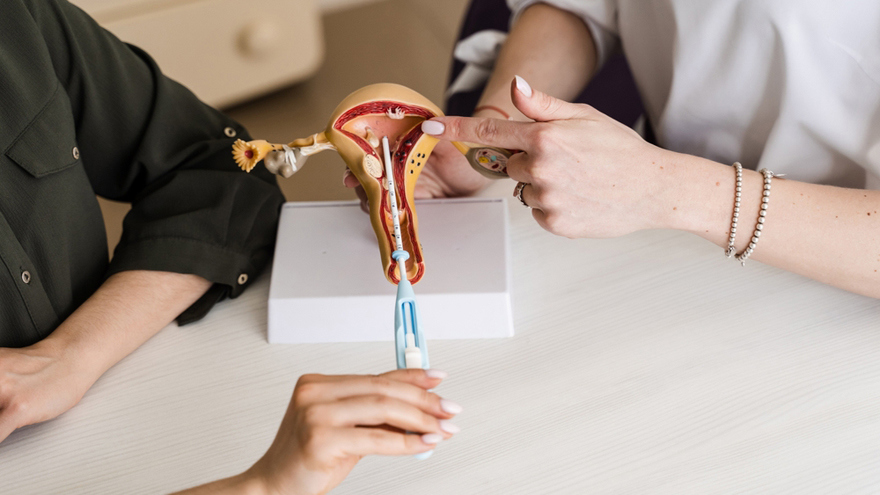
The specialty contains two distinct services, and they differ in almost every practical respect — what happens, how long it takes, what pain control is used, and what the patient is left with afterwards.
What it is | Discussion of reproductive and gynecological health, symptoms, and history, with a physical or pelvic examination where clinically indicated | Placement of a small device inside the uterus to prevent pregnancy, chosen from copper or hormonal intrauterine options |
Typical appointment length | Approximately 15 to 30 minutes | Approximately 5 to 10 minutes for the insertion itself |
Anesthesia | None typically needed | Topical lidocaine or a local anesthetic |
Who it suits | Patients with gynecological symptoms, or seeking assessment of sexual health, pelvic discomfort, urinary concerns, menstrual changes, or reproductive health | People seeking long-acting, reversible contraception who are medically eligible for the device selected |
Recovery | Around 0 to 1 day | Around 1 to 3 days |
What you leave with | Findings, an explanation of their limits, and a recommended next step | A device in place, aftercare instructions, and guidance on checking the strings |
The two are sequential more often than they are alternatives: a consultation establishes whether intrauterine contraception is appropriate at all, and the pre-insertion assessment — a pelvic examination including bimanual examination and cervical inspection — is itself part of that pathway.
Who Is a Good Candidate for Gynecology & Women's Health?
Patients with symptoms or concerns that warrant gynecological assessment, which depending on the treatment may include urinary incontinence, pelvic floor dysfunction, or painful intercourse.
Patients seeking assessment of sexual health, pelvic discomfort, urinary concerns, menstrual changes, or reproductive health, or presenting with unexplained vaginal discharge or abnormal bleeding.
People seeking long-acting, reversible contraception who are medically eligible for the device under consideration. Suitability depends on pregnancy status, reproductive and menstrual history, current symptoms, medical history, and uterine anatomy.
People who have not given birth, for whom an intrauterine device can still be a suitable option.
Patients who want advice about preventive care and reproductive health rather than treatment of an active complaint.
Candidacy is narrower in several situations. Treatment may need to be postponed or avoided because of active infection, certain medical conditions, pregnancy-related considerations, bleeding risks, or other procedure-specific contraindications. For intrauterine contraception, active pelvic infection, current purulent cervicitis, or untreated gonorrhea or chlamydia infection requires clinical assessment and generally precludes immediate insertion, and a uterine cavity distorted in a way that prevents proper placement may make a device unsuitable. Patients uncomfortable with or unable to undergo an internal examination can discuss alternatives, modifications, or postponement instead. Severe or acute symptoms may need urgent assessment or referral rather than a routine appointment. The treating clinician determines individual eligibility in every case.
What to Expect: Procedure, Recovery, and Results Timeline

Preparation starts before the visit. Patients are asked to prepare a list of symptoms, when each began, menstrual history, current medications, allergies, relevant medical history, and previous test results. It is worth asking in advance whether any specific preparation is needed for planned tests. Emptying the bladder beforehand may improve comfort during a pelvic examination. Assessment of abnormal bleeding or other concerning symptoms should not be delayed solely to schedule around menstruation.
A consultation proceeds in a fixed order. The clinician discusses symptoms, medical history, and concerns; reviews whether a physical examination is appropriate; performs the agreed examination if it is indicated; collects samples or arranges imaging where that is clinically necessary and available; and then explains the findings, any limitations on them, and the recommended follow-up or treatment.
Intrauterine device placement has its own sequence. The clinician reviews the medical history and the choice of contraceptive method, confirms that insertion is appropriate and that pregnancy can be reasonably excluded, positions the patient for a pelvic examination, and inserts a speculum to view the cervix and prepare the area. The uterine cavity is measured where needed, and the device is placed through the cervix using the manufacturer's insertion system. The strings are then trimmed as appropriate and aftercare is explained. Removal, when requested or indicated, is a separate procedure performed by a trained clinician.
Pain control differs accordingly. A consultation involving discussion alone is not painful, and a pelvic examination may cause temporary pressure or mild discomfort when a speculum is inserted. Pain beyond that should not be ignored. Insertion of an intrauterine device can cause cramping or pain ranging from mild to severe, with more significant pain possible during cervical passage or uterine placement. Pain-relief options are worth raising with the clinician before insertion rather than during it.
Stage | Gynecological Consultation & Exam | Contraception & IUD Services |
|---|---|---|
On the day | Appointment of roughly 15 to 30 minutes | Insertion of roughly 5 to 10 minutes |
First 24 hours | Usual activities can generally be resumed; recovery runs about 0 to 1 day | Mild cramping and spotting are to be expected; recovery runs about 1 to 3 days |
First week | Findings available within about 0 to 1 day, with final results generally within 1 to 7 days | Contraceptive effect may take up to about 7 days |
First months | Further investigation or treatment depends on what the assessment found | Bleeding pattern settles over time; the fuller picture emerges across roughly 3 to 6 months |
Aftercare is treatment-specific. After a routine examination, patients can generally return to their usual activities; if samples or additional procedures were taken, the clinician's specific instructions apply. After an intrauterine device is placed, mild cramping and spotting are expected, pain relief should be used only where it is appropriate for the patient's medical history, and the clinician's instructions on checking the device strings and arranging reviews should be followed. If the strings cannot be felt or seem different, backup contraception should be used and the clinic contacted promptly. Severe pain, fever, unusual discharge, very heavy bleeding, or suspected pregnancy warrant urgent assessment.
Side effects are mostly predictable. A routine pelvic examination may cause temporary pressure, mild discomfort, or anxiety, and light spotting can follow cervical sampling. Persistent bleeding, worsening pain, fever, or unusual discharge should be reported to a healthcare professional. With intrauterine devices, cramping and light spotting after insertion are common; copper devices may cause heavier or longer periods and stronger cramps in the first few months, while hormonal devices may cause irregular bleeding at first, followed by lighter or absent periods in some users. Less common complications include expulsion, pelvic infection, and uterine perforation. The NHS notes that pelvic infection after fitting usually occurs within three weeks and that a device moving or coming out usually happens within three months of fitting.
On the general category, MedlinePlus states that a progestin-releasing intrauterine device takes about seven days to start to work, and that providers generally arrange a check two to four weeks after the procedure to confirm the device is still in place. The same reference notes that an intrauterine device can prevent pregnancy for three to ten years depending on the type used.
On travel, the clinic's guidance for this specialty is a stay of approximately three to five days where a procedure is involved, with flying home after that period possible provided the treating doctor confirms it is safe. For a consultation and examination, or for contraception and intrauterine device services alone, the stated guidance is one to two days.
Combining Gynecology & Women's Health with Other Treatments
A gynecological consultation may be followed by clinically indicated investigations such as ultrasound, vaginal discharge testing, or assessment of pelvic-floor muscle function, with further treatment depending on what those find.
Whether any tests or treatments can be carried out during the same visit depends on clinical suitability, equipment availability, and appointment arrangements, so it is worth asking when booking.
Intrauterine device insertion is not ordinarily combined with another procedure as a routine requirement.
Testing for sexually transmitted infection may be performed during the same visit when indicated, and does not necessarily delay insertion where there is no known active infection that precludes placement.
Where the question is cosmetic rather than symptomatic, education about normal anatomical variation and discussion of non-surgical options comes before any consideration of elective surgery.
Safety, Precision, and Clinic Standards

The clinic states that it carries out individualized pre-procedure consultations, limits surgeries to two per day, installs CCTV in all surgery and procedure rooms, and avoids unnecessary over-treatment.
Golden Balance Clinic is registered as a Medical Institution for Attracting Foreign Patients with the Republic of Korea's Ministry of Health and Welfare, under the Medical Overseas Expansion and Foreign Patients Attraction Act. That is a registration for treating international patients; it is not a facility accreditation.
English-language support is available through designated marketing, consultation, and global coordination staff, and the clinic names Scarlett Kim as its global coordinator, available from 10:00 to 20:00 KST.
Golden Balance Clinic is on the 12th floor of the Chunglim Building at 468 Gangnam-daero, Gangnam-gu, Seoul 06123, Republic of Korea. The clinic is open Monday to Sunday from 10:00 to 21:00 KST year-round, with a lunch break from 11:30 to 12:30 KST and last registration at 19:00 KST.
Before proceeding, patients should disclose any active infection, fever, new symptoms, medication use, allergies, or relevant medical conditions; prescribed blood thinners and other medication should not be discontinued independently. No gynecological treatment is risk-free or painless, and none of this work carries a guaranteed result; a clinician who explains what a treatment can and cannot do is describing it accurately.
Patient control over the examination itself is a general principle of the category rather than a clinic-specific claim. Writing about cervical screening, the NHS states that the patient is in control of the test and can ask to stop at any time.
The Bottom Line
Gynecology and women's health at this clinic means a consultation and examination pathway, plus contraception and intrauterine device services, delivered in Gangnam-gu, Seoul.
Assessment comes first: history, symptoms, medications, and then whichever examination or test the history justifies.
A consultation runs about 15 to 30 minutes and needs no anesthesia; an intrauterine device insertion runs about 5 to 10 minutes under topical or local anesthetic.
Recovery is short — about 0 to 1 day after an examination, about 1 to 3 days after device placement — but the bleeding pattern after a device settles over months rather than days.
Both services are overseen by board-certified obstetrician-gynecologists, and eligibility for either is decided by the treating clinician, not in advance.
Frequently Asked Questions
Do I need an examination, or is the appointment just a conversation?
That depends on what the conversation finds. The clinician reviews symptoms, menstrual and reproductive history, medical and surgical history, and current medications first, and only then recommends an external examination, a pelvic examination, laboratory testing, or ultrasound if the history points that way. A consultation without an internal examination is appropriate in some circumstances.
How uncomfortable is a pelvic examination?
Discussion alone is not painful. The examination may cause temporary pressure or mild discomfort when a speculum is inserted or the pelvic organs are examined, and some patients find the situation itself uncomfortable. Pain that goes beyond that should be raised with the clinician rather than endured.
What should I tell the clinician before an examination?
Mention pain, any possibility of pregnancy, prior trauma, and any other concern before the examination begins rather than after. For a routine examination, little other preparation is needed, though avoiding vaginal products, douching, and intercourse for roughly 24 hours beforehand is advisable where cervical sampling may be done. Menstruation does not automatically make an examination impossible, but some screening tests may need to be rescheduled.
How soon does an intrauterine device start working?
That depends on the device. The clinic's stated timeline for this service is that the result may take up to seven days, which is why backup contraception may be advised during that window. The clinician confirms what applies to the specific device chosen, because the contraceptive duration and the need for backup both vary by product.
What is the difference between a copper device and a hormonal one?
Copper devices contain no hormones, and they can make periods heavier or more painful, particularly in the first few months. Hormonal devices release levonorgestrel and may reduce menstrual bleeding over time, though irregular bleeding is common at first. Which is appropriate depends on health, preferences, and contraceptive goals.
What are the alternatives if an intrauterine device is not right for me?
Alternatives include oral contraceptive pills, contraceptive implants, injections, patches, vaginal rings, and condoms, subject to availability and individual suitability. Condoms additionally reduce the risk of transmitting sexually transmitted infections. The World Health Organization describes hormonal methods as working by stopping ovulation, thickening cervical mucus, and thinning the uterine lining.
What should I watch for after an intrauterine device is placed?
Mild cramping and spotting in the first days are expected. Follow the clinician's instructions on checking the device strings; if they cannot be felt or feel different, use backup contraception and contact the clinic promptly. Severe pain, fever, unusual discharge, very heavy bleeding, or suspected pregnancy should be assessed urgently wherever you are.
Book a Consultation at Golden Balance Clinic
Gynecology and women's health care — consultation and examination, and contraception and intrauterine device services — is available at Golden Balance Clinic in Gangnam-gu, Seoul. A consultation establishes whether anything further is appropriate, so it is the right place to start. Previous results can be viewed in the clinic's before and after gallery.
Contact Golden Balance Clinic through the clinic contact page, by phone on +82-2-516-7148, or by email at info@goldenbalanceclinic.com.
Disclaimer
For informational purposes only. Individual results may vary depending on each patient's medical history, physical condition, anatomy, treatment plan, and recovery. The suitability of gynecological, aesthetic, dermatological, injectable, and other medical procedures should be determined through an individual consultation with a qualified medical professional. All treatments may involve potential risks, side effects, and recovery requirements, which should be discussed before treatment. Information provided by Golden Balance Clinic does not replace professional medical advice, diagnosis, or treatment. Results may vary and individual experiences may differ.
Sources & Further Reading
NHS — side effects and risks of intrauterine devices, including the timing of pelvic infection and expulsion after fitting
NHS — what happens at a cervical screening appointment, and the patient's ability to stop the test at any point
MedlinePlus — intrauterine devices: how long they prevent pregnancy, the seven-day onset for progestin-releasing devices, and the two-to-four-week check
MedlinePlus — overview of contraceptive categories, including barrier, hormonal, long-acting reversible, and permanent methods
World Health Organization — how hormonal contraceptive methods work, and the distinction between hormonal and non-hormonal intrauterine options
Related Services
Procedures available within our clinical departments.
Eyebrow Semi-Permanent Makeup
Eyebrow semi-permanent makeup is a cosmetic tattooing procedure that deposits pigment into the skin to enhance eyebrow shape, definition, and color.
Learn More
Facial Contour Micropigmentation
Facial contour micropigmentation refers to depositing pigment into the skin to create or enhance selected facial features.
Learn More
Eyeliner & Eye Enhancement PMU
Eyeliner PMU is a cosmetic tattooing procedure that deposits pigment into the skin around the eyelids to create a longer-lasting eyeliner effect.
Learn More