Personalized Medical Care & Dedicated International Patient Concierge

Eyelid Surgery · Consultation Required
Double Eyelid Surgery
Double eyelid surgery creates or defines a crease in the upper eyelid, and the clinic in Gangnam-gu lists two routes to it: a non-incisional buried-suture method and a partial-incision method.
Schedule a ConsultationDouble Eyelid Surgery in Seoul, Republic of Korea

Medically reviewed by Dr. Eun-Young Kwak, MD, graduate of Yonsei University College of Medicine Golden Balance Clinic, Gangnam-gu, Seoul
Double eyelid surgery creates or defines a crease in the upper eyelid, and the clinic in Gangnam-gu lists two routes to it: a non-incisional buried-suture method and a partial-incision method. Which of the two is proposed depends on how thick the eyelid skin is, how much fat sits behind it, and the appearance the patient is asking for. The operation changes the fold of the eyelid; it is not a treatment for drooping that interferes with vision, which is a separate assessment.
What Is Double Eyelid Surgery?
Double eyelid surgery is an operation that forms a supratarsal fold in the upper eyelid, either by placing buried sutures that hold the skin to deeper tissue or by making a partial incision along the planned line, so that an eyelid without a defined crease acquires one.
The clinic names two approaches: non-incisional, which works through buried sutures, and partial-incision.
Selection between them rests on skin thickness, the amount of eyelid fat, and the look the patient wants, with a natural and balanced result as the stated aim.
The appointment is usually carried out under local anesthesia, sometimes with intravenous sedation added.
Operating time runs roughly one to three hours.
The pathway at the clinic moves through consultation, diagnosis, planning, the operation and recovery follow-up, all under physician supervision.
It belongs to the group of procedures the clinic offers under Eyelid Surgery.
Crease surgery has a long technical literature behind it, and the categories the clinic uses are the categories that literature uses. Writing in Archives of Plastic Surgery, surgeons reviewing double-eyelid methods divide them into three families — non-incisional buried suture, partial incision, and full incision — and record that the non-incisional family has been gaining popularity in Korea while incisional and partial-incision techniques remain more common. The same paper sets out where each one fits: buried-suture operations suit younger patients, eyelids with minimal redundant skin and a lid that is not bulky, as well as some revision cases, whereas once upper-eyelid skin laxity passes roughly three to four millimetres, or the lid is bulky enough that muscle resection is needed, an incisional technique is the one usually chosen. That is the same logic as "skin thickness and fat decide the method", expressed in millimetres.
Eyelid anatomy is not uniform across populations, and surgical guidance says so plainly. The American Society of Plastic Surgeons, in its practice parameter for blepharoplasty, states that Asian eyelids warrant different surgical approaches depending on the desired result because of fundamental anatomic differences, and the same document lists local anesthesia, local with intravenous sedation, and general anesthesia as the three options, with the surgeon and the anesthesia provider deciding which is appropriate for the individual.
Who Performs Double Eyelid Surgery at Golden Balance Clinic

Dr. Eun-Young Kwak
Plastic Surgery/Petit Center Doctor
Crease surgery at this clinic sits with the doctor who leads its plastic surgery and petit centre.
Reading an eyelid before any line is drawn on it is the part of this work that cannot be hurried, and Dr. Eun-Young Kwak is the physician the clinic names for it.
Dr. Eun-Young Kwak is a Director and the doctor who leads the clinic's plastic surgery and petit centre. She graduated from Yonsei University College of Medicine. She is a member of the Korean Academy of Women's Aesthetic Medicine, the Korean Aesthetic Wellbeing Society, the Korean Society for Obesity and Plastic Surgery, and the Korean Society of Anti-Aging Medicine, and she previously served as a director of I-Love Petit Clinic and of Petit Queen Clinic.
Her societies span aesthetic medicine, plastic surgery and anti-aging medicine rather than a single sub-field, and the clinic's own account of her work places her across its surgical and non-surgical aesthetic services.
Double Eyelid Surgery Options Available
The clinic records two methods under this heading. The table below sets out what distinguishes them in the clinic's own description; it is not a ranking, and the choice is made at examination.
Method | How the crease is formed | Where it is described as fitting |
|---|---|---|
Non-incisional (buried suture) | Sutures are passed to hold the lid skin to deeper tissue, forming the fold without a full-length cut | Thinner lids with little redundant skin, where the fold can be held by suture alone |
Partial incision | A short incision is made along the planned line and tissue is adjusted before closure | Lids where thickness or fat means a suture-only fold is not the appropriate plan |
Whichever is used, the surgeon assesses and marks the planned crease, cleans the area and gives the selected anesthesia first. If an incision is made, tissue may be adjusted as planned and the wound is then closed.
Who Is a Good Candidate for Double Eyelid Surgery?
People who want a change in the appearance of the upper-eyelid crease and are in suitable health for the operation.
People who understand the potential risks and hold realistic expectations of what a crease can change.
People whose eyelid anatomy, skin thickness, existing asymmetry, eye health and stated goals have been assessed by the surgeon before a method is recommended.
Suitability is decided case by case: surgery may need to be postponed, or need further assessment, where there is an active eye or eyelid infection, an uncontrolled medical condition, significant dry-eye symptoms, a bleeding risk, or medicines that affect clotting.
Expectations that cannot reasonably be met are themselves a reason to pause and discuss rather than proceed.
None of those are automatic exclusions. They are the items an examination is for, and the clinic's record treats them as considerations for medical assessment rather than as a checklist that disqualifies anyone in advance.
What to Expect: Procedure, Recovery, and Results Timeline
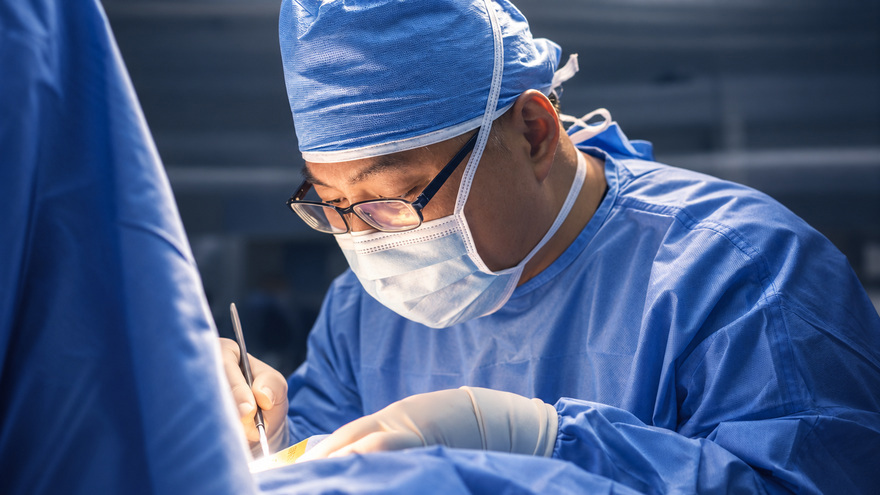
Arranging the appointment starts with confirming that the clinic performs the operation you have in mind. From there you describe the crease you want, your concerns, your medical history, your current medicines, your allergies and any previous eye procedures. An examination follows, covering eyelid anatomy, skin, existing asymmetry and eye health. Only then are the recommended technique, the expected result, the risks, the recovery and the follow-up plan discussed.
Preparation is largely about disclosure. Give the surgeon your medical history, your allergies, your previous eye procedures and a complete list of prescription medicines, over-the-counter medicines and supplements. Medicines that may affect bleeding need discussing, and no prescribed medication should be stopped unless the treating clinician instructs it. The clinic's instructions about food, drink, smoking and transport after anesthesia apply to the day itself.
On the day, the surgeon assesses and marks the planned crease, cleans the treatment area and administers the selected anesthesia. The fold is then formed either with sutures or through an incision, depending on the chosen method, and where an incision is used the surgeon may adjust tissue before closing the wound.
Stage | What the clinic records |
|---|---|
Operating time | Approximately 1 to 3 hours |
Anesthesia | Usually local, sometimes with intravenous sedation |
Swelling and bruising | Improve within 1 to 2 weeks |
Further healing | Over 3 to 6 weeks |
Results visible | Over 2 to 4 weeks |
Crease settling | Continues over 6 to 8 weeks |
Clearer final shape | Generally over 1 to 3 months |
Stay in Korea | Approximately 7 to 10 days |
Flying home | Generally after approximately 7 to 10 days, once healing is satisfactory and the surgeon has cleared travel |
Aftercare follows the surgeon's wound-care and medication instructions. Cold packs are used only as directed, the head is kept elevated when resting if that advice is given, the eyes are not rubbed or pressed, and strenuous activity waits until you are cleared. Scheduled follow-up appointments are part of the plan rather than optional. Sudden vision changes, severe or increasing pain, significant bleeding or rapidly worsening symptoms call for urgent medical attention, not for waiting until the next appointment.
What the operation can honestly offer is bounded. It may create or define an upper-eyelid crease and change how the eyes look. The final shape depends on individual anatomy, on healing and on the technique used, and neither exact symmetry nor a particular crease shape can be guaranteed. Nor does the operation necessarily correct eyelid drooping or a functional vision problem; those need a separate condition to be assessed and treated on its own terms.
Possible effects include swelling, bruising, soreness, temporary irritation or dryness, asymmetry, visible scarring, altered eyelid sensation, and dissatisfaction with the resulting crease. Less common but serious complications can include infection, bleeding, difficulty closing the eyes and visual problems, and the risks vary by technique and by individual health. The International Society of Aesthetic Plastic Surgery, in its informed-consent document for blepharoplasty, makes the same points in consent language: it records that the eyelid regions are normally asymmetrical and that variation between the two sides may remain after surgery, that abnormal or visibly discoloured scars occur in rare cases, that alterations in tear production may be transitory or permanent and are not always predictable, that blindness after the operation is extremely rare but can follow internal bleeding around the eyeball, and that no guarantee can be given as to the result that may be obtained.
Combining Double Eyelid Surgery with Other Treatments
Correction of eyelid drooping may be considered in selected cases where the clinical assessment identifies a separate need for it.
Removal of excess upper-eyelid skin may likewise be considered where the examination finds it, rather than as a default addition.
Combining procedures changes the surgical plan, the risks and the recovery requirements, which is why the decision belongs to the examination and not to a booking form.
Safety, Precision, and Clinic Standards
The statements below are the clinic's own, reproduced as the clinic publishes them.
The clinic states its philosophy as: "We are committed to personalized 1:1 treatment plans tailored to each patient's condition and prioritize safety above all else in every procedure."
The clinic states that it carries out individualized pre-procedure consultations, limits surgeries to two per day, installs CCTV in all surgery and procedure rooms, and avoids unnecessary over-treatment.
Golden Balance Clinic is registered as a Medical Institution for Attracting Foreign Patients with the Republic of Korea's Ministry of Health and Welfare, under the Medical Overseas Expansion and Foreign Patients Attraction Act. That is a registration for treating international patients; it is not a facility accreditation.
English-language support is available through designated marketing, consultation, and global coordination staff, and the clinic names Scarlett Kim as its global coordinator, available from 10:00 to 20:00 KST.
Golden Balance Clinic is on the 12th floor of the Chunglim Building at 468 Gangnam-daero, Gangnam-gu, Seoul 06123, Republic of Korea. The clinic is open Monday to Sunday from 10:00 to 21:00 KST year-round, with a lunch break from 11:30 to 12:30 KST and last registration at 19:00 KST.
Travelling for an elective operation adds questions that have nothing to do with the eyelid. The Royal College of Surgeons of England, in its guidance for people considering cosmetic surgery abroad, advises not agreeing to surgery before meeting the surgeon who will carry it out, making sure the surgeon speaks a language you know well enough to discuss the operation and have your questions answered, and being clear before surgery about what the aftercare covers, what happens if something does not go to plan, and how long the surgeon and hospital will continue to provide support. It also advises having the contact details of a named doctor who can deal with complications rather than a general helpline, and notes that ordinary travel or holiday insurance will not cover problems arising from planned treatment abroad.
The Bottom Line
The operation forms or defines an upper-eyelid crease; the clinic lists a non-incisional buried-suture method and a partial-incision method.
Skin thickness, eyelid fat and the appearance the patient wants decide which method is proposed, and that decision follows an examination.
Expect roughly one to three hours in theatre, usually under local anesthesia and sometimes with intravenous sedation.
Swelling and bruising improve over one to two weeks, the crease becomes visible over two to four weeks, and the shape goes on settling for six to eight weeks and often into the first three months.
Exact symmetry and a specific crease shape cannot be guaranteed, and the operation does not by itself correct eyelid drooping or a vision problem.
Frequently Asked Questions
How is the choice between the suture method and the partial incision actually made?
By examining the eyelid. The surgeon looks at how thick the skin is, how much fat is present behind it, what asymmetry already exists and what appearance you are asking for, and recommends from there. The published surgical literature draws the same line at roughly three to four millimetres of skin laxity, above which an incisional technique is the usual choice.
Will the two eyes match afterwards?
They may differ. Eyelids are not naturally identical, and the clinic's record states that neither exact symmetry nor a particular crease shape can be guaranteed, because the result depends on anatomy, healing and technique. Temporary differences between the two sides during early recovery are common and are not the final answer.
How long before I look like myself again?
Swelling and bruising generally improve within one to two weeks, with healing continuing over three to six weeks. The crease becomes visible across two to four weeks and keeps settling through weeks six to eight, with the shape usually clearer somewhere in the first one to three months. Subtle swelling and scar change can continue past that point.
What does recovery ask of me day to day?
Follow the wound-care and medication instructions you are given, use cold packs only as directed, keep your head raised when resting if advised, and leave your eyes alone — no rubbing, no pressing. Strenuous activity waits until the surgeon clears it, and the follow-up visits are part of the treatment.
How many days should I plan to be in Korea?
Around seven to ten days for this operation, which allows recovery time, stitch removal if it is needed, and the post-operative review. Flying home is generally possible after that same seven to ten days, provided healing is satisfactory and the surgeon has cleared you for travel.
What would make the surgeon postpone the operation?
An active eye or eyelid infection, an uncontrolled medical condition, significant dry-eye symptoms, a bleeding risk, or medicines that affect clotting. None of these rules anyone out automatically; each one means the case needs individual assessment first. Expectations the operation cannot meet are also a reason to pause and talk rather than book.
Does this operation fix a droopy eyelid?
Not on its own. The record is explicit that crease surgery does not necessarily correct eyelid drooping or functional vision problems, and that a separate condition has to be assessed and treated in its own right. If drooping is your main concern, say so at the consultation so the examination covers it.
What should I tell the clinic before the day?
Your medical history, your allergies, any previous eye procedures, and every prescription medicine, over-the-counter medicine and supplement you take, with particular attention to anything affecting bleeding. Do not stop a prescribed medicine on your own judgement. Follow the clinic's instructions about food, drink, smoking and transport after anesthesia.
Book a Consultation at Golden Balance Clinic
Double Eyelid Surgery is carried out at the clinic in Gangnam-gu, Seoul, and the examination of your eyelids is what decides whether the suture method or the partial incision is proposed, or whether the operation suits you at all. A before-and-after gallery is published by the clinic at clinic's gallery.
Contact Golden Balance Clinic through the clinic contact page, by phone on +82-2-516-7148, or by email at info@goldenbalanceclinic.com.
Disclaimer
For informational purposes only. Individual results may vary depending on each patient's medical history, physical condition, anatomy, treatment plan, and recovery. The suitability of gynecological, aesthetic, dermatological, injectable, and other medical procedures should be determined through an individual consultation with a qualified medical professional. All treatments may involve potential risks, side effects, and recovery requirements, which should be discussed before treatment. Information provided by Golden Balance Clinic does not replace professional medical advice, diagnosis, or treatment. Results may vary and individual experiences may differ.
Sources & Further Reading
Archives of Plastic Surgery — peer-reviewed account of double-eyelid technique families (non-incisional buried suture, partial incision, full incision) and the indications that separate them, including the three-to-four-millimetre skin-laxity threshold.
American Society of Plastic Surgeons — practice parameter for blepharoplasty: anatomic differences in Asian eyelids calling for different surgical approaches, and the three anesthesia options.
International Society of Aesthetic Plastic Surgery — informed-consent document for blepharoplasty: normal eyelid asymmetry, abnormal scarring, tear-production changes, the extreme rarity of blindness, and the absence of any guarantee of result.
Royal College of Surgeons of England — guidance for patients considering cosmetic surgery abroad: meeting the operating surgeon first, language and communication, aftercare scope, a named doctor for complications, and the limits of travel insurance.
Other Services
Explore additional treatments offered by our specialists.
Eyebrow Semi-Permanent Makeup
Eyebrow semi-permanent makeup is a cosmetic tattooing procedure that deposits pigment into the skin to enhance eyebrow shape, definition, and color.
Learn More
Facial Contour Micropigmentation
Facial contour micropigmentation refers to depositing pigment into the skin to create or enhance selected facial features.
Learn More
Eyeliner & Eye Enhancement PMU
Eyeliner PMU is a cosmetic tattooing procedure that deposits pigment into the skin around the eyelids to create a longer-lasting eyeliner effect.
Learn More