Personalized Medical Care & Dedicated International Patient Concierge

Body Contouring & Weight Management · Consultation Required
Fat-Dissolving Injections
Fat-Dissolving Injections are a non-surgical treatment in which a substance is injected beneath the skin of a chosen area so that the fat cells there are disrupted.
Schedule a ConsultationFat-Dissolving Injections in Seoul, Republic of Korea

Medically reviewed by Dr. Eun-Young Kwak, MD, graduate of Yonsei University College of Medicine Golden Balance Clinic, Gangnam-gu, Seoul
Fat-Dissolving Injections are a non-surgical treatment in which a substance is injected beneath the skin of a chosen area so that the fat cells there are disrupted. How that substance works, which areas it is suited to, how much it achieves and what it can go wrong with all depend on the specific product, so the category name describes a method rather than one fixed treatment. The target is a small, defined pocket of fat, not body weight.
What Is Fat-Dissolving Injection Treatment?
Fat-Dissolving Injection treatment is the placing of an injectable substance into subcutaneous fat in a marked area, with the aim of breaking down fat cells there so that the local contour changes over the following weeks.
An appointment generally runs around 15 to 30 minutes.
The area is marked and cleansed first, and the injections are placed across it rather than in a single spot.
Stinging, burning, tenderness and a pinching sensation during injection are all possible; whether a topical anesthetic, a local anesthetic, ice or another measure is used depends on the product and the protocol, and nobody should be told the treatment is painless.
The effect builds gradually, and more than one session is often needed before the result can be judged.
The treatment sits inside the group the clinic lists as Body Contouring & Weight Management at its Gangnam-gu premises.
Regulators describe the category in plainer terms than the marketing around it usually does. The United States Food and Drug Administration, writing for consumers, explains injection lipolysis as a nonsurgical procedure involving a series of injections under the skin to break down fat cells in the areas around the injection sites. The same agency notes that it has received reports of consumers who used fat-dissolving injections it had not evaluated and who suffered adverse reactions as a result, among them permanent scars, serious infections, skin deformities, cysts, and deep, painful knots. Some had been injected by personnel who might not have been properly licensed; others bought the drugs online and injected themselves, which the agency tells consumers plainly not to do.
The same source is useful on why technique is not a detail. It states that improper or unsafe injection practices by unlicensed personnel could increase the risk for scarring and skin infections, and that safe and effective use of these products depends on the correct number and location of injections, proper needle placement, and proper administration technique.
What happens in the tissue afterwards is described in the dermatological literature. A review in the Journal of Cutaneous and Aesthetic Surgery sets out the mechanism as follows: after a lipolytic solution is injected, the wall of the fat cell is destroyed, which sets off a cascade of inflammatory necrosis and a reduction in the size of the fat cells, and that same cascade draws in and stimulates fibroblasts so that more collagen is laid down. The inflammation is also why the area can be sore for a while; the review records discomfort and swelling lasting anywhere from two days to two weeks.
Who Performs Fat-Dissolving Injections at Golden Balance Clinic

Dr. Eun-Young Kwak
Plastic Surgery/Petit Center Doctor
Injectable body work at this clinic sits with one doctor, and she is the reviewer of this page.
Judging whether a bulge is fat at all — rather than loose skin or something that needs investigating — is the part of this treatment that decides everything after it, and Dr. Eun-Young Kwak is the doctor who makes that call here.
Dr. Eun-Young Kwak is a Director and the doctor who leads the clinic's plastic surgery and petit centre. She graduated from Yonsei University College of Medicine. She is a member of the Korean Academy of Women's Aesthetic Medicine, the Korean Aesthetic Wellbeing Society, the Korean Society for Obesity and Plastic Surgery, and the Korean Society of Anti-Aging Medicine, and she previously served as a director of I-Love Petit Clinic and of Petit Queen Clinic.
Her membership of a society concerned with obesity and plastic surgery is relevant to this page in particular, because the honest version of this treatment is one that keeps body shape and body weight firmly apart.
Who Is a Good Candidate for Fat-Dissolving Injections?
Adults with localized subcutaneous fat, realistic expectations and good general health, assessed individually before anything is agreed.
Adults whose fullness in the target area is caused by fat rather than by loose skin or by another condition — a distinction made by examining the area, not by looking at a photograph.
Suitability also turns on the product chosen, the treatment area, the condition of the skin and the medical history behind it.
Treatment should be avoided or postponed during pregnancy and breastfeeding, and whenever there is active infection or inflammation at the site to be injected.
An allergy to the ingredients of the product, a bleeding disorder or another relevant medical condition each calls for a clinician's opinion first, and product-specific contraindications have to be checked every time.
People with significant skin laxity, or with generalized obesity rather than a localized deposit, may need an entirely different approach.
Independent bodies set the candidacy bar in similar terms. The American Academy of Dermatology states that good candidates for non-invasive fat removal have a small bulge of fat that remains despite diet and exercise and a weight that falls within the normal range for their height, and it advises anyone considering it to see a doctor with training in the procedure who treats patients with it frequently. It adds that where loose skin is also present, a clinician may recommend addressing that first, because doing so can improve what the fat treatment is able to achieve.
What to Expect: Procedure, Recovery, and Results Timeline

The appointment opens with questions rather than with a needle: medical history, allergies, current medicines, previous aesthetic procedures, pregnancy or breastfeeding status, and what the patient hopes to change. The treatment area is then examined to establish whether the fullness is localized fat, loose skin or something else. Before consent is taken, the product, the expected benefit, the alternatives, the risks and the likely number of sessions are explained.
Preparing well is mostly a matter of being complete. Give a full medical and medication history, disclose allergies and any previous injections, and mention any history of bleeding problems; blood thinners should be named rather than assumed to be irrelevant. Ask whether any medicine or supplement needs adjusting, and never stop a prescribed medicine on your own initiative. Alcohol and strenuous exercise may need to be set aside if the clinician advises it, and irritating skincare should be kept off the area.
The procedure itself runs in six steps: the consultation; assessment of the target area and confirmation that the treatment suits it; preparation, which means marking and cleansing; the injection, administered with an appropriate technique; a check of the treated area for any immediate reaction; and aftercare instructions with guidance on follow-up.
Stage | What the clinic's record states |
|---|---|
Session length | Approximately 15 to 30 minutes |
Pain control | Depends on the product and the protocol; may be topical, local, ice or another measure |
Swelling, bruising or tenderness | Usually improves within 1 to 2 weeks |
First visible fat reduction | From about 2 to 6 weeks |
Final assessment | Around 8 to 12 weeks, longer for some products or where sessions are repeated |
Time in Korea | Roughly 2 to 3 days for consultation, treatment and any follow-up |
Flying home | Generally after about 2 to 3 days, subject to the treating clinician's clearance |
Aftercare is short but specific. Follow the written instructions the clinic gives you, and do not manipulate or massage the treated area unless you have been told to. Ask directly when exercise, alcohol, skincare products and other treatments can be resumed, because the answer varies with the product and the site. Seek prompt medical assessment for increasing pain, spreading redness, fever, skin discoloration, difficulty swallowing, weakness of the face, or anything else that worries you.
Results are worth stating narrowly. The treatment may reduce fat in the particular area injected, the change is generally gradual, and multiple sessions may be required. It is not a treatment for overall obesity, and the outcome varies with the area, the product and the individual response. Where weight stays stable afterwards, the local reduction may be long-lasting.
Side effects commonly include pain, swelling, bruising, redness, tenderness, numbness, firmness and temporary lumps. The more serious possibilities are infection, persistent nodules, skin ulceration or tissue damage, scarring, nerve injury and uneven contours, and which of them apply depends on the substance used and where it is injected. The published literature names the same pattern: the Journal of Cutaneous and Aesthetic Surgery review records bruising from injury to local blood vessels, nerve injury from injecting close to a nerve — which can show as an asymmetrical smile when the face is treated — ulceration where injection has been too superficial, and, rarely, difficulty swallowing.
Professional sources are useful on what recovery actually feels like. The American Society of Plastic Surgeons describes injection lipolysis as having no downtime while noting that patients may experience swelling, bruising, pain, redness and areas of hardness that typically soften with time, that most patients have at least two treatments spaced four to six weeks apart, and that during the period of swelling the treated area can look fuller than it did beforehand.
Safety, Precision, and Clinic Standards
What the clinic says about its own conduct is reproduced here in its own words rather than summarised.
The clinic states its philosophy as: "We are committed to personalized 1:1 treatment plans tailored to each patient's condition and prioritize safety above all else in every procedure."
The clinic states that it carries out individualized pre-procedure consultations, limits surgeries to two per day, installs CCTV in all surgery and procedure rooms, and avoids unnecessary over-treatment.
Golden Balance Clinic is registered as a Medical Institution for Attracting Foreign Patients with the Republic of Korea's Ministry of Health and Welfare, under the Medical Overseas Expansion and Foreign Patients Attraction Act. That is a registration for treating international patients; it is not a facility accreditation.
English-language support is available through designated marketing, consultation, and global coordination staff, and the clinic names Scarlett Kim as its global coordinator, available from 10:00 to 20:00 KST.
Golden Balance Clinic is on the 12th floor of the Chunglim Building at 468 Gangnam-daero, Gangnam-gu, Seoul 06123, Republic of Korea. The clinic is open Monday to Sunday from 10:00 to 21:00 KST year-round, with a lunch break from 11:30 to 12:30 KST and last registration at 19:00 KST.
The Bottom Line
A substance is injected into a marked pocket of subcutaneous fat to disrupt the fat cells there; the area treated and the effect depend on the product used.
An appointment runs roughly fifteen to thirty minutes, and pain control is decided by the product and the protocol rather than promised in advance.
Swelling, bruising and tenderness usually settle within one to two weeks; visible reduction appears from two to six weeks and is assessed at around eight to twelve.
The treatment addresses a localized deposit and is not a treatment for obesity or a substitute for weight management.
Reported complications run from lumps and numbness to infection, persistent nodules, skin ulceration, scarring, nerve injury and uneven contours.
Frequently Asked Questions
Will this help me lose weight?
No, and that is the most important thing to understand before booking. The treatment is aimed at a localized deposit in one marked area, and the clinic's record is explicit that it is not a weight-loss treatment for overall obesity. Where weight gain is generalized, lifestyle-based weight management is the more appropriate route.
How much does it hurt?
Discomfort is generally mild to moderate, and people describe stinging, burning or a pinching feeling during the injections themselves. Tenderness, swelling and soreness afterwards are common and temporary. How much you feel depends on the product and the area, and pain-control measures may be available — ask what is planned rather than assuming nothing or everything.
How many sessions will I need?
More than one is usual, because the effect builds gradually rather than arriving at once. The number depends on the product, the area and how your body responds, which is why the likely course is discussed before consent rather than after the first injection.
When should treatment be postponed?
When there is active infection or inflammation where the needle would go, and during pregnancy and breastfeeding. An allergy to the product's ingredients, a bleeding disorder or another relevant medical condition means a clinician has to weigh it first. Tell the clinic about every medication and supplement, blood thinners above all.
What should I watch for once I am home?
Increasing pain, spreading redness, fever, changes in skin colour, difficulty swallowing or weakness in the face all warrant prompt medical assessment rather than waiting to see. Ordinary swelling and bruising that are gradually improving are a different matter. If something looks wrong after you return to the United States, seek local care first and tell the clinic afterwards.
Can I fly home straight away?
Plan on roughly two to three days in Korea, covering the consultation, the treatment and any follow-up. Flying home is generally possible within that window, depending on swelling and on the clearance of the practitioner who treated you. Allow extra time if the swelling is significant.
What else could I consider instead?
Depending on the cause and the area, alternatives include cryolipolysis, radiofrequency-based fat reduction, laser-based fat reduction and liposuction. These differ in how invasive they are, in who they suit and in what they risk, so they are not interchangeable. For generalized weight gain, lifestyle-based weight management is the more appropriate conversation.
Book a Consultation at Golden Balance Clinic
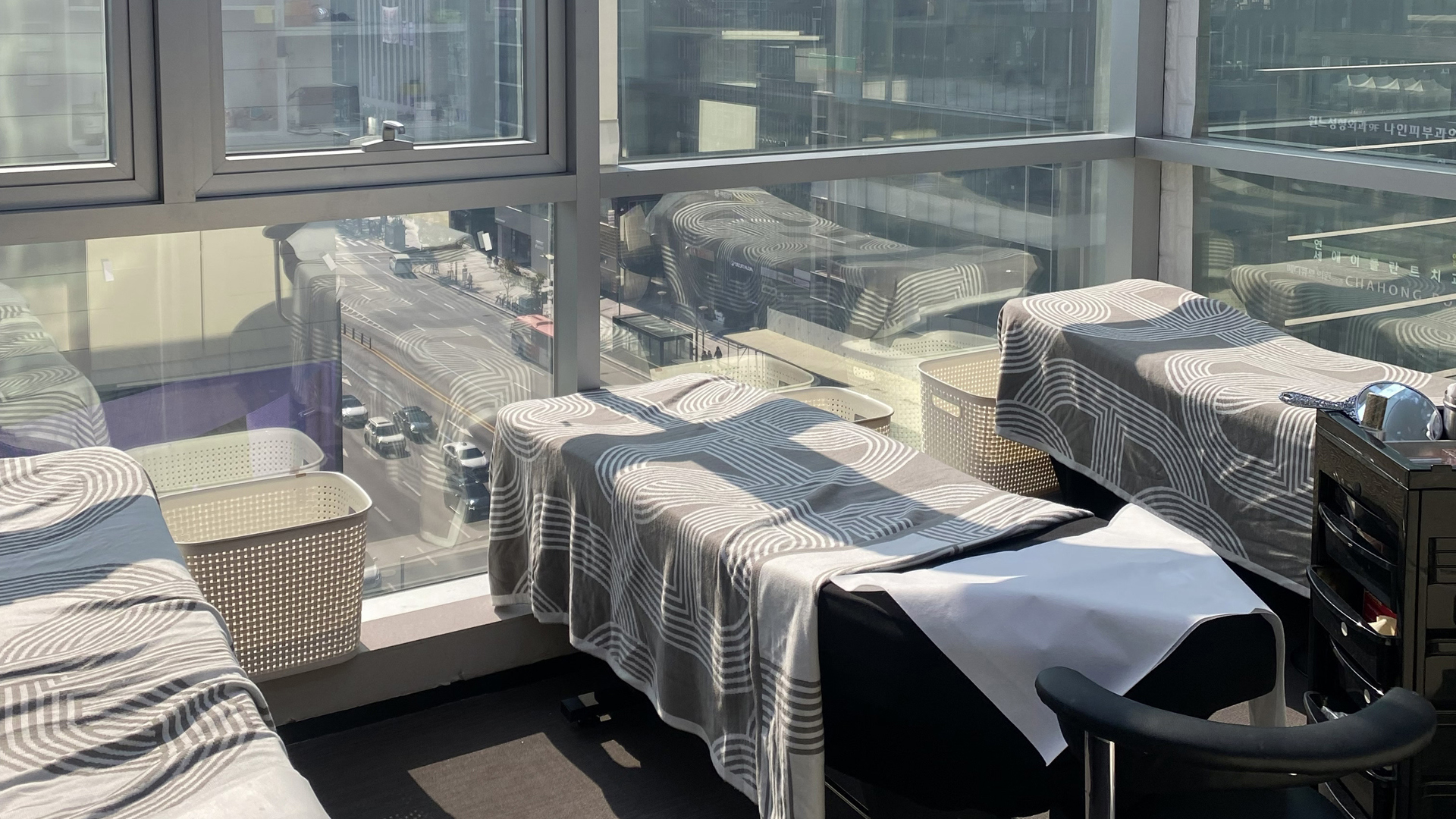
Fat-Dissolving Injections are given at the clinic's premises in Gangnam-gu, Seoul, and the first appointment exists to establish whether the fullness you want treated is fat at all. Patient images the clinic has published itself are collected at clinic's gallery.
Contact Golden Balance Clinic through the clinic contact page, by phone on +82-2-516-7148, or by email at info@goldenbalanceclinic.com.
Disclaimer
For informational purposes only. Individual results may vary depending on each patient's medical history, physical condition, anatomy, treatment plan, and recovery. The suitability of gynecological, aesthetic, dermatological, injectable, and other medical procedures should be determined through an individual consultation with a qualified medical professional. All treatments may involve potential risks, side effects, and recovery requirements, which should be discussed before treatment. Information provided by Golden Balance Clinic does not replace professional medical advice, diagnosis, or treatment. Results may vary and individual experiences may differ.
Sources & Further Reading
Food and Drug Administration — consumer information on injection lipolysis: what the procedure is, the adverse reactions reported to the agency, and why the number, location, depth and technique of the injections govern how safely it can be done.
Journal of Cutaneous and Aesthetic Surgery — review of lipolysis for the face and neck: the mechanism in the fat cell, the duration of post-injection discomfort and swelling, and the complications reported, including nerve injury and superficial ulceration.
American Society of Plastic Surgeons — patient information on injection lipolysis: the recovery pattern, the fuller appearance during the swelling phase, and the usual spacing of repeat treatments.
American Academy of Dermatology — patient guidance on non-invasive fat removal: who makes a good candidate, what to look for in the person performing it, and why loose skin may need treating first.
Other Services
Explore additional treatments offered by our specialists.
Eyebrow Semi-Permanent Makeup
Eyebrow semi-permanent makeup is a cosmetic tattooing procedure that deposits pigment into the skin to enhance eyebrow shape, definition, and color.
Learn More
Facial Contour Micropigmentation
Facial contour micropigmentation refers to depositing pigment into the skin to create or enhance selected facial features.
Learn More
Eyeliner & Eye Enhancement PMU
Eyeliner PMU is a cosmetic tattooing procedure that deposits pigment into the skin around the eyelids to create a longer-lasting eyeliner effect.
Learn More