Personalized Medical Care & Dedicated International Patient Concierge

Gynecology & Women's Health · Consultation Required
Gynecological Consultation & Exam
A gynecological consultation and exam in Seoul is an appointment in which a doctor discusses reproductive and gynecological health, the symptoms that prompted the visit, relevant medical history and any personal concerns, and then determines whether a.
Schedule a ConsultationGynecological Consultation and Exam in Seoul, Republic of Korea
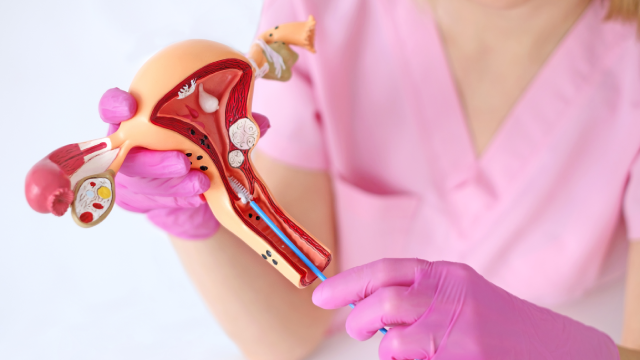
Medically reviewed by Dr. Jong-Yeol Kim, board-certified obstetrician-gynecologist, and Dr. Yu-Jin Oh, board-certified obstetrician-gynecologist Golden Balance Clinic, Gangnam-gu, Seoul
A gynecological consultation and exam in Seoul is an appointment in which a doctor discusses reproductive and gynecological health, the symptoms that prompted the visit, relevant medical history and any personal concerns, and then determines whether a physical or pelvic examination is appropriate. The appointment at Golden Balance Clinic in Gangnam-gu runs roughly 15 to 30 minutes and typically requires no anesthesia. What it produces is not a treatment but an assessment: a working view of what may be behind a symptom, and a recommendation about what should happen next.
What Is Gynecological Consultation & Exam?
A gynecological consultation and exam is a structured discussion of reproductive and gynecological health — symptoms, medical history and the patient's own concerns — followed, where the clinical picture calls for it, by a physical or pelvic examination.
The examination is conditional rather than automatic. Whether one is recommended at all depends on the patient's symptoms, history and clinical needs, and that decision is made during the appointment rather than before it.
Nothing numbs the area. No anesthesia is typically needed, which is one reason the visit fits inside a short appointment slot.
Where the discussion raises a question the conversation alone cannot settle, the clinician may recommend an external examination, a pelvic examination, laboratory testing, or ultrasound.
The visit normally takes about 15 to 30 minutes, and ordinary activity resumes within about a day.
At Golden Balance Clinic the service sits within Gynecology & Women's Health, and its purpose is to establish what is going on before anyone discusses treatment.
Patients arrive with a wide spread of reasons. Pelvic pain, painful intercourse, abnormal vaginal discharge, abnormal bleeding and urinary symptoms are all common starting points, and some come for advice on preventive care and reproductive health rather than because something is wrong. Changes in the character of vaginal discharge — its smell, colour or texture — can indicate an infection, and the NHS advises against self-diagnosis in favour of being seen. The World Health Organization similarly lists unusual bleeding between periods, after menopause or after sexual intercourse, and increased or foul-smelling discharge, among the symptoms that should prompt someone to consult a health-care professional.
Who Performs Gynecological Consultation & Exam at Golden Balance Clinic
|
|
Dr. Jong-Yeol Kim | Dr. Yu-Jin Oh |


The clinic's two obstetrician-gynecologists carry this service between them, and both of them reviewed this page.
Dr. Jong-Yeol Kim heads the medical side of the clinic, and the breadth of his training in obstetrics and gynecology is directly relevant to an appointment whose whole purpose is to narrow a broad symptom down to a likely cause.
Dr. Jong-Yeol Kim is the Medical Director of Golden Balance Clinic and a board-certified obstetrician-gynecologist with 30 years of experience. He graduated from Hallym University College of Medicine and completed his internship and residency training in obstetrics and gynecology at Hallym University Sacred Heart Hospital. He is a regular member of the Korean Society of Obstetrics and Gynecology.
Dr. Yu-Jin Oh brings a second specialist perspective, and her memberships outside gynecology are worth noting for patients whose symptoms have not resolved into one clear diagnosis elsewhere.
Dr. Yu-Jin Oh is a Director and a board-certified obstetrician-gynecologist with 23 years of experience. She graduated from Jeonbuk National University Medical School, completed her internship at Samsung Medical Center Cheil General Hospital, and completed residency training in obstetrics and gynecology at Samsung Medical Center Kangbuk Samsung Hospital. She is a member of the Korean Society of Obstetrics and Gynecology, the Korean Academy of Functional Medicine, and the Korean Society of Medical Aesthetics and Dermatology.
Both doctors perform this service; the clinic does not assign it to one of them.
Gynecological Consultation & Exam Options Available
Not every appointment follows the same shape. The clinic describes a consultation without an internal examination as appropriate in some circumstances, and the choice between the two is made with the patient rather than imposed on her.
Consultation only | Consultation with examination | |
|---|---|---|
What happens | History-taking and discussion of symptoms, concerns and options | The same discussion, followed by an external or pelvic examination |
When it is used | When the clinical question can be answered from history, or when an internal examination is not appropriate or not wanted | When the findings so far make an examination the next useful step |
Physical sensation | None beyond ordinary conversation | Temporary pressure or mild discomfort is possible |
Typical follow-on | Urine testing, vaginal swab testing, blood tests or ultrasound, depending on the clinical question | Sample collection or imaging, where clinically necessary and available |
Investigations are a third layer rather than a separate appointment type, and they are arranged on the strength of what the consultation finds.
Who Is a Good Candidate for Gynecological Consultation & Exam?
Patients experiencing gynecological symptoms of any kind.
Patients seeking assessment of sexual health.
Patients with pelvic discomfort.
Patients with urinary concerns.
Patients noticing menstrual changes.
Patients who want their reproductive health assessed rather than a specific symptom treated.
Two groups should expect the appointment to be adapted. Patients who are uncomfortable with an internal examination, or unable to undergo one, can discuss alternatives, modifications or postponement with the clinician — the examination is negotiable, and saying so in advance changes the plan rather than ending it. Separately, severe or acute symptoms may require urgent assessment or referral rather than a routine appointment, which matters for anyone planning to hold a symptom until a scheduled trip.
What to Expect: Procedure, Recovery, and Results Timeline

The clinician works through the symptom picture, the menstrual and reproductive history, any past medical or surgical history that bears on it, what medication is being taken, and whatever the patient came in worried about. From there the appointment follows five steps: discussing symptoms, medical history and concerns; reviewing whether a physical examination is appropriate; performing the agreed examination if it is indicated; collecting samples or arranging imaging if that is clinically necessary and available; and explaining the findings, their limitations, and any recommended follow-up or treatment.
Where an internal examination does go ahead, the mechanics are the same as those used in cervical sampling elsewhere. The NHS describes a smooth, tube-shaped instrument called a speculum being placed in the vagina and opened so that the cervix is visible, with a soft brush used to take a small sample of cells; it also notes that a patient is in control of the procedure and can ask for it to stop at any time. That whole appointment, in the NHS description of its screening programme, takes about ten minutes.
Preparation is mostly a matter of arriving with information. Bring a list of symptoms and when they started, your menstrual history, current medications, allergies, relevant medical history and any previous test results, and ask in advance whether a planned test needs specific preparation. Emptying the bladder beforehand may make a pelvic examination more comfortable. For a routine examination there is otherwise no need for extensive preparation, though where cervical sampling may be performed it helps to avoid inserting vaginal products, douching or having vaginal intercourse for roughly 24 hours beforehand.
Stage | What happens |
|---|---|
The appointment | Approximately 15 to 30 minutes |
Anesthesia | None typically needed |
Immediately after | Usual activities generally resume; specific instructions apply if samples or additional procedures were taken |
Recovery | Around 0 to 1 day |
Findings | Around 0 to 1 day |
Final results | Within approximately 1 to 7 days |
The honest limit of the appointment is worth stating. A consultation may help identify possible causes of symptoms, determine whether further investigations are needed, and guide appropriate treatment or referral — but the outcome depends on the underlying condition and on the accuracy and scope of the assessment. Some answers only arrive after a test. The NHS notes that getting a pelvic pain diagnosis can take time, because the symptoms resemble those of several other common conditions, and that sharing as much information as possible with the doctor is what shortens the process.
Side effects are mild and short-lived. An internal examination may cause temporary pressure, discomfort, embarrassment or mild spotting in some circumstances, and a little bleeding after cells are taken from the cervix is ordinary — the NHS says it should stop within a few hours. Any additional procedure or test carries its own risks, which are explained before it is done. Anything that does not settle within a day or two, or that worsens, deserves a doctor's attention rather than a wait. Patients should also tell the clinician beforehand about pain, the possibility of pregnancy, prior trauma, or anything else that bears on how the examination is carried out.
Combining Gynecological Consultation & Exam with Other Treatments
A consultation is frequently followed by clinically indicated investigations — ultrasound, vaginal discharge testing, or assessment of pelvic-floor muscle function.
What follows those investigations depends entirely on the findings; the consultation does not commit anyone to a treatment.
Same-day testing or treatment is not a given: it turns on whether the case is clinically suitable, whether the necessary equipment is free, and how the appointment was arranged — worth confirming in advance for a short trip.
The clinic's information on painful intercourse describes an assessment that may draw on a gynecological examination, ultrasound where indicated, vaginal discharge testing, and additional assessment of pelvic-floor muscle tension.
Safety, Precision, and Clinic Standards
The clinic states that it carries out individualized pre-procedure consultations, limits surgeries to two per day, installs CCTV in all surgery and procedure rooms, and avoids unnecessary over-treatment.
Golden Balance Clinic is registered as a Medical Institution for Attracting Foreign Patients with the Republic of Korea's Ministry of Health and Welfare, under the Medical Overseas Expansion and Foreign Patients Attraction Act. That is a registration for treating international patients; it is not a facility accreditation.
English-language support is available through designated marketing, consultation, and global coordination staff, and the clinic names Scarlett Kim as its global coordinator, available from 10:00 to 20:00 KST.
Golden Balance Clinic is on the 12th floor of the Chunglim Building at 468 Gangnam-daero, Gangnam-gu, Seoul 06123, Republic of Korea. The clinic is open Monday to Sunday from 10:00 to 21:00 KST year-round, with a lunch break from 11:30 to 12:30 KST and last registration at 19:00 KST.
Both doctors hold specialist board certification in obstetrics and gynecology. Both completed residency training in the specialty at Korean teaching hospitals.
The Bottom Line
The appointment is a discussion first and an examination second, and the second part happens only where the first makes it useful.
It runs about 15 to 30 minutes, needs no anesthesia, and leaves ordinary activity undisturbed.
Findings generally arrive within a day, with final results in roughly one to seven days.
Patients who do not want an internal examination can say so and have the appointment adapted rather than cancelled.
The output is a direction — further tests, a treatment plan, or a referral — not a treatment in itself.
Frequently Asked Questions
Will the appointment hurt?
A consultation that consists of discussion alone is not painful. If a pelvic examination is carried out, you may feel temporary pressure or mild discomfort as the speculum is placed or as the clinician examines the pelvic organs. Pain is a different matter and should not be ignored — say so at the time, and the clinician can stop or change what they are doing.
How long should I plan to be in Korea for this?
Allow roughly one to two days for the consultation, the examination and any tests that follow from it. Patients can generally fly home within one to two days, provided the necessary tests have been completed and no further evaluation or treatment is required. If a finding does call for more work, that timeline changes, which is an argument for keeping the return flight flexible.
Can I be seen if I am on my period?
Menstruation does not automatically rule out an examination. Some screening tests may need to be rescheduled, so it is worth mentioning when you book. What should not happen is delaying the assessment of abnormal bleeding or another concerning symptom purely to avoid overlapping with a period.
What should I bring to the appointment?
A written list helps more than memory: your symptoms and when they began, your menstrual history, the medications you take, your allergies, relevant medical history, and the results of any previous tests. Ask whether a planned test has its own preparation requirements. Emptying your bladder shortly beforehand can make a pelvic examination more comfortable.
What can I expect to feel afterwards?
Most patients notice nothing beyond the appointment itself and return to their usual activities the same day. Pressure, slight discomfort or a flutter of nerves during the examination is usual, and a trace of spotting sometimes follows if cells were sampled from the cervix. Bleeding that keeps going, pain that intensifies, a temperature, or discharge that looks or smells wrong are all reasons to be seen.
Is the examination compulsory?
No. Whether a physical examination is appropriate is reviewed during the appointment, and a consultation without an internal examination is appropriate in some circumstances. Patients who are uncomfortable with an internal examination, or unable to undergo one, can discuss alternatives, modifications or postponement with the clinician.
Can the clinic run tests during the same visit?
Sometimes. Depending on the clinical question, the clinician may consider urine testing, vaginal swab testing, blood tests or ultrasound, and samples or imaging may be arranged where clinically necessary and available. Whether any of it lands on the same day turns on how suitable the case is clinically, what equipment happens to be free, and how the visit was booked, so confirm it in advance if your schedule is tight.
Book a Consultation at Golden Balance Clinic

A gynecological consultation and exam is carried out at the clinic in Gangnam-gu, Seoul, and an enquiry before travelling is the usual way international patients confirm what the appointment will cover and how much time to allow.
Contact Golden Balance Clinic through the clinic contact page, by phone on +82-2-516-7148, or by email at info@goldenbalanceclinic.com.
Disclaimer
For informational purposes only. Individual results may vary depending on each patient's medical history, physical condition, anatomy, treatment plan, and recovery. The suitability of gynecological, aesthetic, dermatological, injectable, and other medical procedures should be determined through an individual consultation with a qualified medical professional. All treatments may involve potential risks, side effects, and recovery requirements, which should be discussed before treatment. Information provided by Golden Balance Clinic does not replace professional medical advice, diagnosis, or treatment. Results may vary and individual experiences may differ.
Sources & Further Reading
NHS — how a speculum and soft brush are used to take a cervical sample, the length of the appointment, the patient's ability to stop the test, and the light spotting that can follow.
NHS — cervical screening as a test to check the health of the cervix, offered to everyone with a cervix.
NHS — why diagnosing pelvic pain can take time, and why sharing as much information as possible with the doctor matters.
NHS — changes in the smell, colour or texture of discharge as a possible sign of infection, and the advice not to self-diagnose.
World Health Organization — the symptoms, including unusual bleeding and foul-smelling discharge, that should prompt a consultation with a health-care professional.
Other Services
Explore additional treatments offered by our specialists.
Eyebrow Semi-Permanent Makeup
Eyebrow semi-permanent makeup is a cosmetic tattooing procedure that deposits pigment into the skin to enhance eyebrow shape, definition, and color.
Learn More
Facial Contour Micropigmentation
Facial contour micropigmentation refers to depositing pigment into the skin to create or enhance selected facial features.
Learn More
Eyeliner & Eye Enhancement PMU
Eyeliner PMU is a cosmetic tattooing procedure that deposits pigment into the skin around the eyelids to create a longer-lasting eyeliner effect.
Learn More