Personalized Medical Care & Dedicated International Patient Concierge

Semi-Permanent Makeup · Consultation Required
Hairline & Scalp Micropigmentation (SMP)
Scalp micropigmentation is a cosmetic procedure that deposits small amounts of pigment into the superficial scalp skin using fine needles, forming tiny impressions designed to resemble hair follicles.
Schedule a ConsultationHairline and Scalp Micropigmentation (SMP) in Seoul, Republic of Korea

Medically reviewed by Dr. Eun-Young Kwak, MD, graduate of Yonsei University College of Medicine Golden Balance Clinic, Gangnam-gu, Seoul
Scalp micropigmentation is a cosmetic procedure that deposits small amounts of pigment into the superficial scalp skin using fine needles, forming tiny impressions designed to resemble hair follicles. The effect is the appearance of a closely shaved hairstyle, added visual density in thinning areas, or a receding hairline that draws less attention. It does not grow new hair or increase the actual number of hair follicles, and everything else on this page follows from that one limit.
What Is Hairline & Scalp Micropigmentation (SMP)?
Scalp micropigmentation is a cosmetic procedure that deposits small amounts of pigment into the superficial scalp skin using fine needles, creating follicle-like impressions that add the appearance of density.
Each session may take approximately two to five hours, which is longer than most cosmetic tattooing of the face.
A specialised digital micropigmentation device or precision tattoo machine is used, fitted with fine needles or sterile, single-use needle cartridges.
The supporting kit includes scalp-mapping tools for hairline design, pigment-mixing supplies for matching hair and skin tones, disposable pigment cups, gloves and other infection-control materials.
Density and shade are built up gradually across the planned areas rather than laid down in a single pass.
It is commonly performed without general anesthesia; some clinics use topical anesthetic products where appropriate and others do not.
The treatment is listed under Semi-Permanent Makeup at the clinic's Gangnam-gu address.
Before considering any cosmetic route, it is worth knowing where the hair loss itself comes from. The National Health Service advises seeing a GP to get an idea about what is causing your hair loss before thinking about going to a commercial hair clinic, and notes that some types of hair loss are permanent, such as male and female pattern baldness, while others — caused by illness, stress, cancer treatment, weight loss or iron deficiency — may be temporary and recover on their own. Its own list of hair-loss treatments includes permanent make-up, described as a tattoo used to look like short hair and eyebrows, alongside medical treatments, wigs and hair transplantation. The same page is candid that no treatment for hair loss is 100% effective.
That context matters because pigment in the scalp is difficult to undo. The American Society of Plastic Surgeons explains that tattoo ink particles are too big to be cleared by the normal immune system and are thus considered permanent. Lasers break them into fragments small enough for the body to disperse, but that takes anywhere from one to ten treatments depending on a tattoo's design, size and colors, with some shades resisting removal entirely. A six-week gap is recommended between laser sessions so the wounds can heal. None of that makes micropigmentation a bad choice; it makes the hairline design a decision worth taking slowly.
Who Performs Hairline & Scalp Micropigmentation (SMP) at Golden Balance Clinic

Dr. Eun-Young Kwak
Plastic Surgery/Petit Center Doctor
Where a hairline should sit on a particular head is a judgement call, and it is made in the consultation rather than at the machine.
Dr. Eun-Young Kwak is the performing doctor for this treatment and reviewed this page.
Dr. Eun-Young Kwak is a Director and the doctor who leads the clinic's plastic surgery and petit centre. She graduated from Yonsei University College of Medicine. She is a member of the Korean Academy of Women's Aesthetic Medicine, the Korean Aesthetic Wellbeing Society, the Korean Society for Obesity and Plastic Surgery, and the Korean Society of Anti-Aging Medicine, and she previously served as a director of I-Love Petit Clinic and of Petit Queen Clinic.
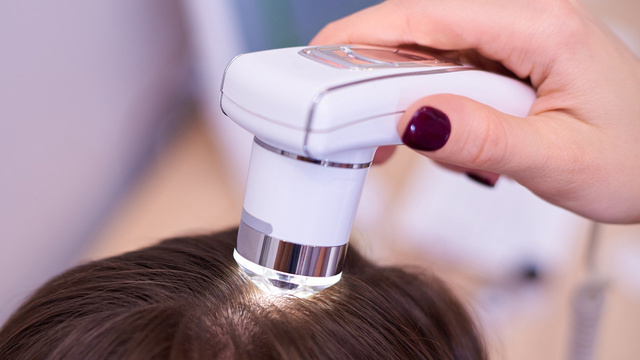
The assessment covers hair-loss history, medical conditions, medications, allergies, previous scalp procedures, and what you want the result to look like. The scalp itself is examined for skin conditions, thinning patterns, scars and existing hair density. The proposed hairline, pigment shade and treatment area are discussed, and photographs may be taken with your consent. Part of the practitioner's job here is to explain the limitations, the risks, the maintenance you should expect, and whether a dermatology or hair-restoration assessment should come first.
Who Is a Good Candidate for Hairline & Scalp Micropigmentation (SMP)?
Adults with stable hair loss or thinning who want the appearance of greater scalp density.
People who prefer a closely shaved look and want that look to read more evenly.
Individuals with a receding or uneven hairline.
Selected patients seeking camouflage of healed scalp scars.
Candidates should have realistic expectations, suitable scalp skin, and an understanding that results depend on skin condition, pigment choice, technique and practitioner skill.
People with active scalp infections, open wounds or significant inflammation should postpone treatment.
Certain skin disorders, a history of problematic scarring or keloids, pigment allergies, bleeding disorders, or medications that affect bleeding or healing may call for additional assessment.
What to Expect: Procedure, Recovery, and Results Timeline
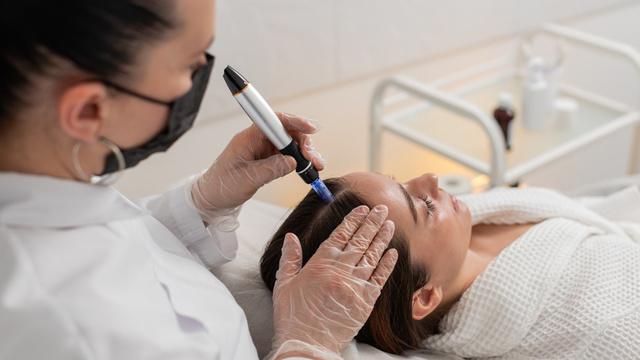
Preparation is mostly disclosure. Provide a complete medical and medication history, including allergies, scalp conditions and any previous hair-restoration procedures, and follow the clinic's instructions for scalp cleansing. Alcohol and anything likely to irritate the scalp should be avoided ahead of the appointment, on the clinic's recommended timing. Do not stop prescribed medication to prepare for this — that decision belongs to the clinician who prescribed it.
The session itself runs in a defined order: the medical history and scalp condition are reviewed, the treatment area is cleaned and the proposed hairline or coverage zones are mapped, an appropriate pigment shade is selected and tested for suitability where indicated, and pigment is then deposited into the superficial scalp skin with a fine-needle device. Follicle-like impressions are built up across the planned areas, with density and shade adjusted as the work proceeds. Aftercare instructions and follow-up sessions close the appointment. Discomfort is usually described as mild to moderate and varies by individual and by treatment area.
Stage | What to expect |
|---|---|
Session length | Approximately 2 to 5 hours |
Anesthesia | Commonly performed without general anesthesia; topical products are used by some practitioners |
Redness and sensitivity | Generally improve within 1 to 2 weeks |
Appearance assessable | After about 2 to 4 weeks, once the skin has healed and pigment has settled |
Coverage effect assessed | Within 4 to 6 weeks, with pigment longevity varying by individual |
Stay in Korea | Approximately 2 to 3 days for an initial session and assessment |
Further sessions | Additional sessions may require additional trips |
Plan for the possibility of more than one visit from the outset. The record for this treatment states that multiple sessions may require additional trips, and that additional sessions may be needed once the first round has settled. Flying home after roughly two to three days is possible for an uncomplicated session, provided the clinic confirms travel is appropriate.
Aftercare is undemanding but not optional. Keep the treated area clean according to the clinic's instructions, and avoid scratching, picking, excessive sweating, swimming and direct sun exposure for the recommended period. Normal scalp care resumes when the practitioner says it does.
The realistic outcome is cosmetic: the appearance of a fuller scalp, a more defined hairline, or a closely shaved hairstyle, with reduced visual contrast between hair and scalp and camouflage of selected scars. Results depend on the practitioner's technique and on your own skin and hair characteristics. Touch-up sessions may be required to maintain the appearance.
The risks on record are temporary redness, tenderness, swelling, itching and pinpoint bleeding, and then the longer list: infection, allergic or inflammatory reactions, pigment migration or uneven distribution, color changes over time, an unnatural-looking hairline, asymmetry, and dissatisfaction with the result. Scarring or keloid formation is possible in susceptible individuals. Correcting or removing pigment can be difficult and may require multiple treatments.
Infection is the risk that depends most on how the room is run. A Centers for Disease Control and Prevention report on tattoo-associated infection found that gloves alone were not the point: in most of the clusters examined gloves were reportedly worn, while glove changes between clients, hand hygiene, skin antisepsis and the disinfection of equipment and surfaces were neglected. Sterilized or single-use equipment, used under standard precautions, is what it recommends.
Combining Hairline & Scalp Micropigmentation (SMP) with Other Treatments
It may be combined with hair transplantation, or used to camouflage selected healed transplant scars.
Timing is set by the treating clinician after the scalp has healed adequately, not by the patient's travel schedule.
Alternatives rather than additions include medical hair-loss treatments, hair transplantation, hair fibers, scalp concealers, wigs and hair systems, which differ in purpose, effectiveness, maintenance and suitability.
Safety, Precision, and Clinic Standards
The statements below are published by the clinic about its own practice and are reproduced as written.
The clinic states its philosophy as: "We are committed to personalized 1:1 treatment plans tailored to each patient's condition and prioritize safety above all else in every procedure."
The clinic states that it carries out individualized pre-procedure consultations, limits surgeries to two per day, installs CCTV in all surgery and procedure rooms, and avoids unnecessary over-treatment.
Golden Balance Clinic is registered as a Medical Institution for Attracting Foreign Patients with the Republic of Korea's Ministry of Health and Welfare, under the Medical Overseas Expansion and Foreign Patients Attraction Act. That is a registration for treating international patients; it is not a facility accreditation.
English-language support is available through designated marketing, consultation, and global coordination staff, and the clinic names Scarlett Kim as its global coordinator, available from 10:00 to 20:00 KST.
Golden Balance Clinic is on the 12th floor of the Chunglim Building at 468 Gangnam-daero, Gangnam-gu, Seoul 06123, Republic of Korea. The clinic is open Monday to Sunday from 10:00 to 21:00 KST year-round, with a lunch break from 11:30 to 12:30 KST and last registration at 19:00 KST.
Choosing where to have a cosmetic procedure is its own decision, and there is sensible published advice on it. The National Health Service is blunt that every cosmetic procedure carries risk, surgical or otherwise, that poor execution can cause serious complications, and that a disappointing result can affect mental health. Its practical advice is to be clear about your own reasons, to pick a reputable and qualified practitioner trained and experienced in the specific procedure, to ask which products will be used and what might go wrong, to be skeptical of what turns up on social media, and to take the time you need — you can walk away if you are not completely comfortable.
The Bottom Line
Pigment is placed in the superficial scalp as follicle-like impressions to add the appearance of density or redefine a hairline.
It does not grow new hair or increase the actual number of hair follicles.
Sessions run around two to five hours, and more than one session is commonly needed.
Redness and sensitivity generally improve within one to two weeks; the effect can be assessed within four to six weeks.
Correcting or removing scalp pigment is difficult, which is why the hairline design is agreed carefully in advance.
Frequently Asked Questions
Will this make my hair grow back?
No. The procedure deposits pigment to create the look of follicles; it does not grow new hair or increase the actual number of hair follicles you have. If regrowth is the goal, that is a different conversation, and the NHS advises establishing what is causing your hair loss with a doctor before approaching a commercial hair clinic.
How many sessions will I need, and can they be done in one trip?
More than one session is usual, and the record is explicit that multiple sessions may require additional trips. An initial session and assessment is planned for roughly two to three days in Korea. Ask the clinic to map out the likely number of sessions at the consultation so you can plan travel around it rather than discovering the schedule afterwards.
Does it hurt?
Mild to moderate discomfort is what most people report, and it varies with individual pain tolerance and with the area being worked on. There is no general anesthesia; some practitioners use a topical anesthetic product where appropriate, and others work without one. Sessions are long, so ask in advance which approach will be used.
Can it cover a scar from a hair transplant?
Selected healed scalp scars can be camouflaged, and the treatment may be combined with hair transplantation for that purpose. The decision on timing belongs to the treating clinician, who needs the scalp to have healed adequately first. Scarred skin behaves differently from unscarred skin, so this is assessed individually.
What does the scalp look like in the first fortnight?
Redness, tenderness, mild swelling, itching and light flaking are the common temporary effects. These generally improve within one to two weeks. The appearance can usually be assessed more reliably after two to four weeks, once the skin has healed and the pigment has settled into its final tone.
What if I decide later that I do not like it?
That is the risk worth weighing hardest, because pigment removal or correction can be difficult and may require multiple treatments. Ink sits deeper than the body can clear on its own; laser work typically runs to several appointments, and certain shades prove stubborn. An unnatural-looking hairline, asymmetry and dissatisfaction are all on the recorded risk list, which is the argument for agreeing the design slowly.
Book a Consultation at Golden Balance Clinic
Hairline and scalp micropigmentation is performed at Golden Balance Clinic in Gangnam-gu, Seoul, in sessions of roughly two to five hours, with the hairline and coverage zones mapped before pigment is placed. A gallery of before-and-after images published by the clinic sits at Before-After page.
Contact Golden Balance Clinic through the clinic contact page, by phone on +82-2-516-7148, or by email at info@goldenbalanceclinic.com.
Disclaimer
For informational purposes only. Individual results may vary depending on each patient's medical history, physical condition, anatomy, treatment plan, and recovery. The suitability of gynecological, aesthetic, dermatological, injectable, and other medical procedures should be determined through an individual consultation with a qualified medical professional. All treatments may involve potential risks, side effects, and recovery requirements, which should be discussed before treatment. Information provided by Golden Balance Clinic does not replace professional medical advice, diagnosis, or treatment. Results may vary and individual experiences may differ.
Sources & Further Reading
National Health Service — hair loss: the advice to see a GP before approaching a commercial hair clinic, which types of hair loss are permanent, the list of treatments including permanent make-up described as a tattoo used to look like short hair, and the statement that no treatment is 100% effective.
American Society of Plastic Surgeons — tattoo removal: why ink particles are not cleared by the immune system, the number of laser sessions typically required, and the colors that resist removal.
Centers for Disease Control and Prevention — clusters of skin and soft tissue infections among tattoo recipients, the infection-control failures identified, and the recommendation to use sterilized or single-use equipment.
National Health Service — advice before any cosmetic procedure, including that all carry risk, how to choose a qualified practitioner, what to ask, and taking time to decide.
Other Services
Explore additional treatments offered by our specialists.
Eyebrow Semi-Permanent Makeup
Eyebrow semi-permanent makeup is a cosmetic tattooing procedure that deposits pigment into the skin to enhance eyebrow shape, definition, and color.
Learn More
Facial Contour Micropigmentation
Facial contour micropigmentation refers to depositing pigment into the skin to create or enhance selected facial features.
Learn More
Eyeliner & Eye Enhancement PMU
Eyeliner PMU is a cosmetic tattooing procedure that deposits pigment into the skin around the eyelids to create a longer-lasting eyeliner effect.
Learn More