Personalized Medical Care & Dedicated International Patient Concierge

Specialty Overview
Semi-Permanent Makeup
Semi-permanent makeup is a cosmetic procedure that places pigment into the superficial layers of the skin so that a feature looks more defined or more even in colour without daily cosmetics being applied to it.
Schedule a ConsultationSemi-Permanent Makeup in Seoul, Republic of Korea
Medically reviewed by Dr. Eun-Young Kwak, MD, graduate of Yonsei University College of Medicine Golden Balance Clinic, Gangnam-gu, Seoul
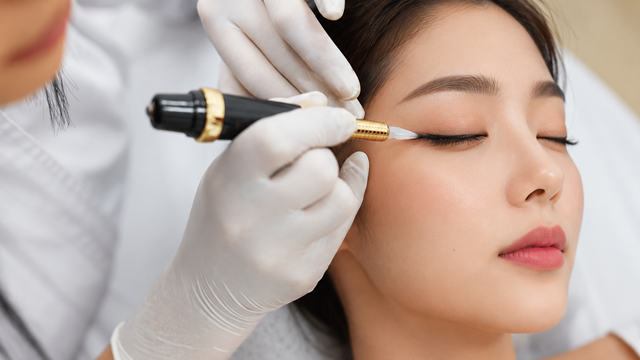
Semi-permanent makeup is a cosmetic procedure that places pigment into the superficial layers of the skin so that a feature looks more defined or more even in colour without daily cosmetics being applied to it. Pigment is deposited with a fine manual blade or a cosmetic tattoo machine, and because the colour fades over time rather than holding still, touch-up appointments are part of the plan from the beginning. Golden Balance Clinic in Gangnam-gu, Seoul works across seven areas of this field, from brow and lash-line work through scalp micropigmentation to areola restoration and stretch mark camouflage.
What Is Semi-Permanent Makeup?
Semi-permanent makeup is cosmetic tattooing: pigment is placed into the upper layers of skin to mimic the effect of applied makeup or to blend an area of skin with the colour around it, and it fades gradually instead of washing off.
The techniques grouped under this name include microblading, powder and ombré brow shading, hair-stroke work, lip blush, and semi-permanent eyeliner.
Placement is made with either a manual tool fitted with a blade or a digital cosmetic tattoo machine fitted with sterile single-use needles or cartridges.
A topical numbing product may be used depending on the area, the product, and the practitioner's protocol; patients commonly describe scratching, pressure, or mild discomfort.
An appointment commonly runs about one to three hours, and scalp sessions sit at the longer end of that range.
The pigment is not permanent in the way a decorative tattoo is, but neither is it easy to undo: colour may shift or fade unevenly, and removing it can be difficult.
The US Food and Drug Administration describes permanent makeup as a type of tattoo applied to look like makeup, such as eyeliner, lip liner, or eyebrows, and states that it has not approved any pigments for injection into the skin for cosmetic purposes. Pigment rules differ from country to country.
Who Performs Semi-Permanent Makeup at Golden Balance Clinic
|
Dr. Eun-Young Kwak |

Dr. Eun-Young Kwak is a Director and the doctor who leads the clinic's plastic surgery and petit centre. She graduated from Yonsei University College of Medicine. She is a member of the Korean Academy of Women's Aesthetic Medicine, the Korean Aesthetic Wellbeing Society, the Korean Society for Obesity and Plastic Surgery, and the Korean Society of Anti-Aging Medicine, and she previously served as a director of I-Love Petit Clinic and of Petit Queen Clinic. Dr. Eun-Young Kwak is the clinic doctor whose stated areas of work — plastic surgery, the petit centre, dermatological procedures, and anti-aging care — cover this field. In its account of each semi-permanent makeup treatment, the clinic refers to the person carrying out the work as the practitioner, and sets out that this practitioner reviews medical history, allergies, medications, skin type and previous cosmetic procedures, agrees the shape and shade, and obtains informed consent before any pigment is placed.
Semi-Permanent Makeup Options Available
Seven treatments are offered, and they are not variants of one another: each one addresses a different area of the body, carries its own session length, and settles on its own schedule.
Treatment | What it addresses | Session length | How results settle |
|---|---|---|---|
Brow shape, definition, and colour, including the look of sparse areas | About 1–3 hours | Colour settles over 4–6 weeks; longevity varies with skin type and pigment retention | |
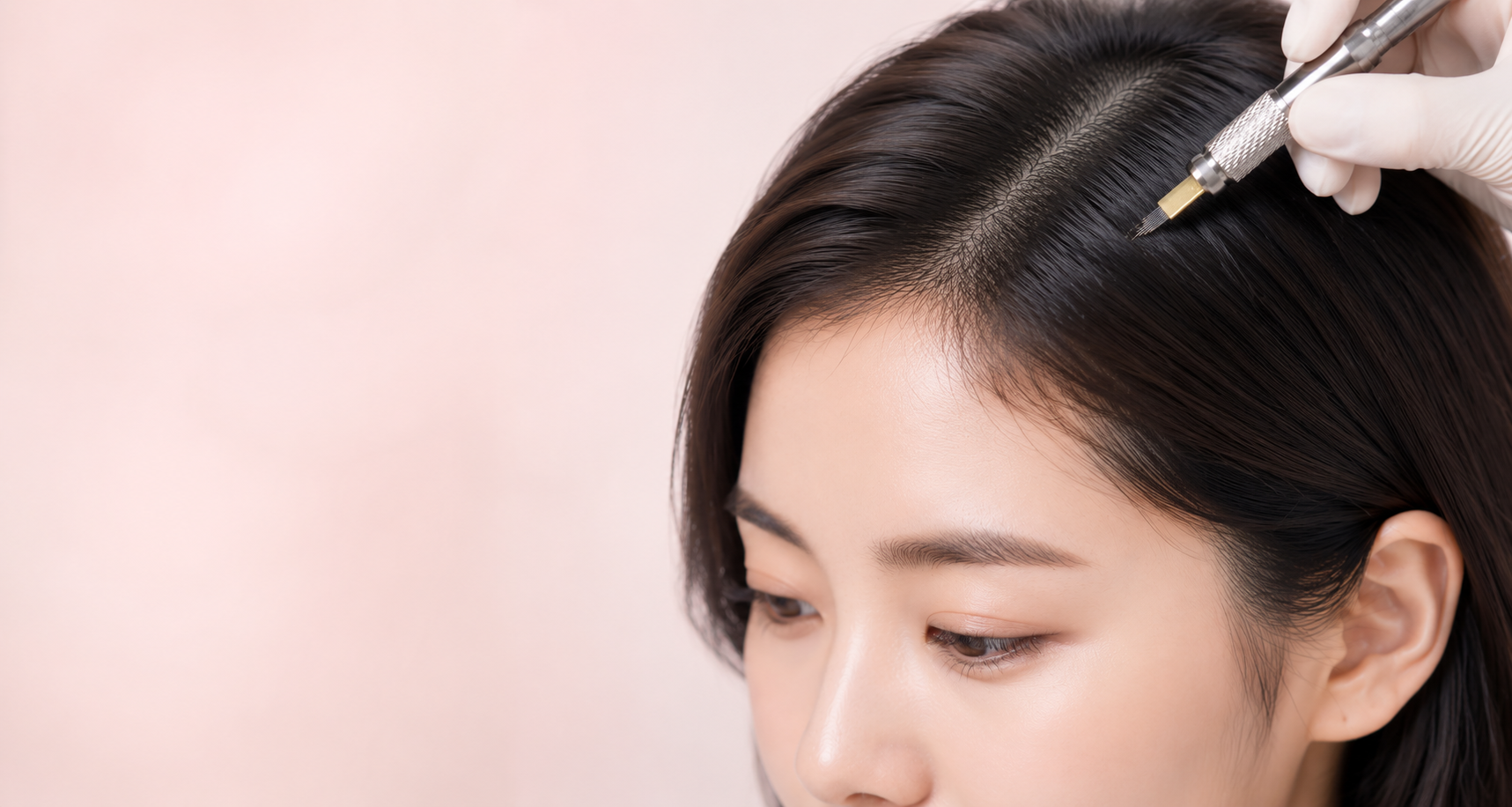
The appearance of scalp density, hairline definition, and selected healed scalp scars | About 2–5 hours per session | Coverage can be assessed at 4–6 weeks; pigment longevity varies by individual | |
Lip Blush | Natural lip colour, lip border definition, and the evenness of lip tone | About 1.5–3 hours for an initial appointment | Colour settles within 4–6 weeks; the clinic records that results may last 4–8 weeks or longer depending on individual factors and touch-ups |
The definition of the lash line | About 1–2 hours | Initial results may show at 2–4 weeks, with pigment settling over 4–8 weeks | |
Emphasis of selected facial features through pigment | About 1–2 hours | Initial results may show at 2–4 weeks; longevity depends on skin type and aftercare | |
Colour, definition, and visual symmetry of the areola, including after breast surgery or reconstruction | About 1–2 hours per session | Pigment healing and colour settling may take 4–8 weeks | |
The colour contrast between mature stretch marks and the skin around them | About 1–3 hours | Initial results may become noticeable at 2–4 weeks, with the final appearance depending on skin response and touch-ups |
Three of these deserve a word of their own. Scalp micropigmentation builds up tiny impressions designed to resemble hair follicles, which can make a receding hairline less noticeable or reduce the contrast between hair and scalp; it does not grow new hair and does not increase the number of follicles a person has. Hereditary hair loss is the most common cause of hair loss worldwide, and the American Academy of Dermatology notes that both men and women develop it; where the pattern of loss is still changing, the clinic's account of the consultation includes explaining whether dermatology or hair-restoration assessment is advisable first.
Areola micropigmentation adds pigment to create, restore, or enhance the look of the pigmented area around the nipple, and is one of the steps that may follow mastectomy or breast reconstruction. It can improve the visible colour, shape, and symmetry of the areola; it does not recreate the projection or the physical structure of a nipple. The British Association of Plastic, Reconstructive and Aesthetic Surgeons describes areola tattooing as a stage that may follow nipple reconstruction, and notes that some women choose to have the tattoo without nipple reconstruction at all. Whether to have it, and when, is a personal decision that belongs with the patient and the team looking after her.
Stretch mark camouflage works on colour, not on texture: skin-tone pigments are used to blend mature marks with the surrounding skin, and the procedure does not remove stretch marks or restore the skin's original surface. The NHS states that stretch marks usually fade over time but may not disappear completely, and that treatments may make them look better without getting rid of them. Camouflage is a cosmetic option for someone who wants less colour difference, not a correction of anything that needs correcting.
Who Is a Good Candidate for Semi-Permanent Makeup?
Adults seeking a subtle, longer-lasting cosmetic enhancement, with realistic expectations, suitable skin in the treatment area, and no contraindication to the procedure.
People who understand that symmetry and colour can vary between the two sides and between individuals, and that touch-ups are often needed.
For scalp micropigmentation: adults whose hair loss or thinning is stable, people who prefer a closely shaved look, those with a receding or uneven hairline, and selected patients seeking camouflage of healed scalp scars.
For lip blush: adults with healthy lips who are comfortable with the possibility of colour variation, fading, and further sessions.
For areola micropigmentation: adults whose breast surgery or reconstruction has fully healed, with stable skin, realistic expectations, and medical clearance where it is required.
For stretch mark camouflage: people whose marks are fully healed and stable; recently formed red or purple marks may need to mature first.
Treatment may need to be postponed for anyone with an active skin or eye infection, an open wound, or irritation in the area to be treated.
Individual medical assessment is needed for a history of keloid scarring, pigment allergies, bleeding disorders, immune-related conditions, impaired wound healing, or certain medications; pregnancy and breastfeeding may also affect eligibility under the provider's policy.
Anyone with a history of cold sores should raise it before a lip procedure.
Two of those entries have an evidence base worth naming. The NHS advises that keloid scars cannot be prevented and that people more likely to get them are recommended to avoid tattoos and piercings, which is why a keloid history changes the conversation about any pigment procedure. And because cold sores are caused by the herpes simplex virus, which the NHS explains stays in the skin for life, a lip procedure in someone with that history is planned with preventive antiviral medication in mind.
What to Expect: Procedure, Recovery, and Results Timeline
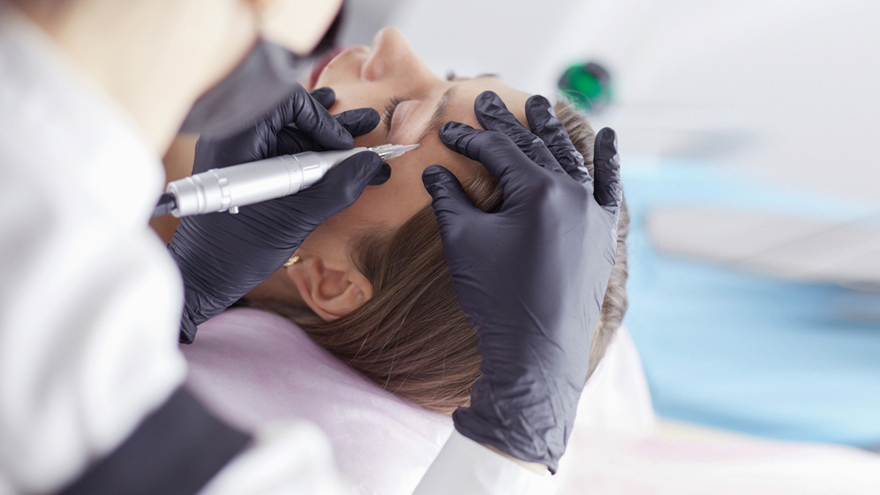
The consultation comes first. The practitioner reviews medical history, allergies, medications, skin type, previous cosmetic procedures, and what the patient wants the result to look like. The treatment area, pigment shade, shape, and technique are agreed before informed consent is taken. A patch test may be recommended where it is appropriate.
On the day, the area is cleaned and prepared and the shape is mapped. A pigment is selected and a topical numbing product may be applied. Pigment is then deposited into the skin with a fine manual tool or a machine, in controlled passes. The area is cleaned again at the end and written aftercare instructions are given. Scalp work is built up in planned zones with density and shade adjusted as the session goes on.
Before the appointment, avoid tanning and heavy sun exposure, keep the area free of irritation, and leave off irritating skincare — retinoids and exfoliants included — around the site for the period the practitioner specifies. Disclose allergies, medical conditions, medications, previous cosmetic tattooing, and any history of cold sores before a lip procedure. Do not stop a prescribed medicine, including a blood thinner, without advice from the clinician who prescribed it.
Afterwards, do not pick or scratch scabs. Avoid swimming, saunas, heavy sweating, and direct sun on the area through the initial healing period, and keep unapproved products off the treated skin. Seek medical advice if pain worsens, redness spreads, pus develops, or a fever starts. For eyeliner work, significant eye pain, vision changes, or worsening swelling are reasons to seek care promptly.
Stage | What typically happens |
|---|---|
During the appointment | About 1–3 hours for most treatments; 2–5 hours for a scalp session |
First 1–2 weeks | Mild redness, swelling, tenderness, itching, and flaking or scabbing may occur and generally settle |
1–2 weeks | Initial results become visible, though colour at this point is not the final colour |
2–4 weeks | For eyeliner, facial contour, and stretch mark camouflage, initial results may begin to show |
4–6 weeks | Colour settles for most treatments and the healed result can be assessed; a touch-up may be recommended |
4–8 weeks | Pigment settling for eyeliner and for areola work; longevity varies by individual and aftercare |
Common temporary effects are redness, swelling, tenderness, itching, and flaking or scabbing in the treated area. The risks that matter more are infection, allergic reactions, pigment migration, uneven colour, scarring, and a result the patient is not happy with. Pigment colour may change or fade over time, and removal can be difficult. The FDA notes that an ink can be contaminated even when the container is sealed, that scar tissue or granulomas may form after tattooing, and that some tattoo removal procedures may leave permanent scarring and may fail to remove the tattoo completely — the clearest reason to treat a decision about pigment as one that is hard to reverse.
Combining Semi-Permanent Makeup with Other Treatments
More than one area may be treated, such as brows and eyeliner, or brows and lip blush, where this is suitable and allowed under clinic policy; combining lengthens the appointment and increases aftercare.
The practitioner decides whether treatments are best performed in one session or separately; lip filler and lip blush, for example, may need separate visits.
Scalp micropigmentation may be combined with hair transplantation, or used to camouflage selected healed transplant scars, with timing set by the treating clinician after the scalp has healed adequately.
Areola micropigmentation may be combined with nipple reconstruction, breast reconstruction, or scar revision as part of the overall appearance of the nipple-areola complex after breast surgery.
Texture-focused treatments such as microneedling or fractional laser are generally considered before stretch mark camouflage, with the skin allowed to heal fully before pigment is applied.
Patients considering eyelid surgery or laser treatments around the eyes should ask about safe timing, since other procedures may change the appearance of existing pigment.
Injectables and petit procedures, lifting and skin tightening, body contouring and weight management, dermatology and laser treatments, and IV and vitamin therapy are other areas the clinic offers and can be raised at the same consultation.
Reducing or removing existing cosmetic pigment is assessed separately under the clinic's dermatology and laser care.
Safety, Precision, and Clinic Standards
The clinic states that it carries out individualized pre-procedure consultations, limits surgeries to two per day, installs CCTV in all surgery and procedure rooms, and avoids unnecessary over-treatment. Golden Balance Clinic is registered as a Medical Institution for Attracting Foreign Patients with the Republic of Korea's Ministry of Health and Welfare, under the Medical Overseas Expansion and Foreign Patients Attraction Act. That is a registration for treating international patients; it is not a facility accreditation. Sterile, single-use needles or cartridges and appropriate hygiene protocols are described by the clinic as essential to this work, and patients are invited to ask how equipment is sterilized, whether single-use components are used, and how pigments are stored and handled. The clinic states its philosophy as: "We are committed to personalized 1:1 treatment plans tailored to each patient's condition and prioritize safety above all else in every procedure." Golden Balance Clinic was established in 2000. English-language support is available through designated marketing, consultation, and global coordination staff, and the clinic names Scarlett Kim as its global coordinator, available from 10:00 to 20:00 KST.
The Bottom Line
Semi-permanent makeup places pigment into the upper layers of skin; it fades rather than staying fixed, and it is difficult to remove, so it is a decision worth taking slowly.
Golden Balance Clinic works across seven areas: brows, scalp and hairline, lips, lash line, facial contour, areola, and stretch mark camouflage.
Most appointments run about one to three hours, with scalp sessions taking two to five; colour generally settles over four to six weeks and a touch-up is often recommended.
Symmetry, final colour, and how long results last vary with skin type, technique, pigment, lifestyle, and healing, and no particular outcome can be promised.
Candidacy is decided at an individual consultation, and several histories — keloid scarring, pigment allergy, bleeding or immune conditions, cold sores before lip work — change what is appropriate.
Frequently Asked Questions
How long does an appointment take, and how many days should I plan to be in Seoul?
Most semi-permanent makeup appointments run about one to three hours, and a scalp micropigmentation session may take two to five. The clinic suggests allowing roughly one to two days in Korea for the procedure and any follow-up it requires. Flying home after one to two days is appropriate provided there are no complications and the practitioner confirms it.
Does it hurt?
Some discomfort, a scratching sensation, or sensitivity is normal, and how much varies with the area treated and with individual pain tolerance. A topical numbing product may be used to reduce discomfort, depending on the area, the product, and the practitioner's protocol. Lip and areola work are described as causing mild to moderate discomfort in some patients, with scar tissue in the area affecting how sensitive it feels.
How long do the results last?
Colour generally settles over about four to six weeks, and the healed result is assessed from that point. Longevity after that varies by procedure and by individual — the clinic records a range of four to eight weeks or longer for lip blush, for instance, while pigment retention elsewhere depends on skin type and aftercare. Touch-up sessions are commonly needed to keep an appearance where the patient wants it.
Can it be undone if I change my mind?
Not easily. Pigment may change colour or fade unevenly over time, and removal or correction can be difficult and may take several treatments. Any approach to reducing existing pigment is assessed separately, and the FDA notes that removal procedures may leave permanent scarring and may fail to remove a tattoo completely.
Who should postpone or avoid treatment?
Anyone with an active skin infection, an open wound, or irritation in the area should postpone. A history of keloid scarring, pigment allergies, bleeding disorders, immune-related conditions, or certain medications calls for individual medical assessment first. Pregnancy and breastfeeding may also affect eligibility under the provider's policy.
Does scalp micropigmentation regrow hair?
No. It deposits small amounts of pigment into the superficial scalp skin in impressions designed to resemble hair follicles, which can add the look of density or make a hairline more defined. It does not grow new hair and does not increase the number of follicles. Where the cause or pattern of hair loss is unclear, the clinic's consultation covers whether a dermatology or hair-restoration assessment should come first.
What should I do if something looks wrong after I get home?
Seek medical advice locally if pain worsens, redness spreads, pus develops, or you have a fever — and, for eyeliner work, if you have significant eye pain, vision changes, or worsening swelling. The clinic can also be reached by phone on +82-2-516-7148 or by email at info@goldenbalanceclinic.com, and its contact page is linked in the booking section below.
Book a Consultation at Golden Balance Clinic
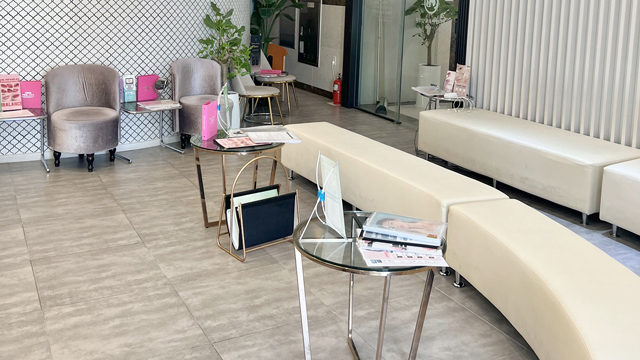
Semi-Permanent Makeup services at Golden Balance Clinic in Gangnam-gu, Seoul, begin with an individual consultation with a doctor to discuss suitability, shape and shade, risks, and aftercare before any decisions are made.
Golden Balance Clinic is located on the 12th floor of Chunglim Building, 468 Gangnam-daero, Gangnam-gu, Seoul 06123, Republic of Korea. The clinic is open daily, Monday through Sunday, from 10:00 AM to 9:00 PM (KST) year-round, with a lunch break from 11:30 AM to 12:30 PM. Registration closes at 7:00 PM.
Contact Golden Balance Clinic through the clinic's contact page, by phone at +82-2-516-7148, or by email at info@goldenbalanceclinic.com
Disclaimer
For informational purposes only. Individual results may vary depending on each patient's medical history, physical condition, anatomy, treatment plan, and recovery. The suitability of gynecological, aesthetic, dermatological, injectable, and other medical procedures should be determined through an individual consultation with a qualified medical professional. All treatments may involve potential risks, side effects, and recovery requirements, which should be discussed before treatment. Information provided by Golden Balance Clinic does not replace professional medical advice, diagnosis, or treatment. Results may vary and individual experiences may differ.
Sources & Further Reading
U.S. Food and Drug Administration — consumer update on tattoo and permanent makeup safety, including ink contamination, granulomas, and the limits of tattoo removal.
British Association of Plastic, Reconstructive and Aesthetic Surgeons — patient guide to nipple reconstruction and areola tattooing after breast reconstruction.
NHS — what stretch marks are, how they change over time, and what treatments can and cannot do.
NHS — keloid scars, who is more likely to develop them, and the advice about tattoos and piercings.
NHS — cold sores and the herpes simplex virus that causes them.
American Academy of Dermatology — causes of hair loss, including hereditary pattern hair loss in men and women.
Related Services
Procedures available within our clinical departments.
Eyebrow Semi-Permanent Makeup
Eyebrow semi-permanent makeup is a cosmetic tattooing procedure that deposits pigment into the skin to enhance eyebrow shape, definition, and color.
Learn More
Facial Contour Micropigmentation
Facial contour micropigmentation refers to depositing pigment into the skin to create or enhance selected facial features.
Learn More
Eyeliner & Eye Enhancement PMU
Eyeliner PMU is a cosmetic tattooing procedure that deposits pigment into the skin around the eyelids to create a longer-lasting eyeliner effect.
Learn More