Personalized Medical Care & Dedicated International Patient Concierge

Non-Surgical Intimate Rejuvenation · Consultation Required
Intimate & Areola Brightening
Intimate and areola brightening covers cosmetic treatments intended to reduce the appearance of pigmentation in selected intimate areas and around the areolas, the pigmented skin surrounding the nipples.
Schedule a ConsultationIntimate and Areola Brightening in Seoul, Republic of Korea

Medically reviewed by Dr. Jong-Yeol Kim, board-certified obstetrician-gynecologist, and Dr. Yu-Jin Oh, board-certified obstetrician-gynecologist Golden Balance Clinic, Gangnam-gu, Seoul
Intimate and areola brightening covers cosmetic treatments intended to reduce the appearance of pigmentation in selected intimate areas and around the areolas, the pigmented skin surrounding the nipples. Depending on the area and on what is causing the pigmentation, treatment may involve topical brightening agents, carefully selected chemical peels, or certain energy-based treatments. Pigment in these areas is a normal feature of human skin, and treatment is an elective cosmetic choice rather than a correction of anything abnormal.
What Is Intimate and Areola Brightening?
Intimate and areola brightening is the cosmetic treatment of pigmented skin in intimate areas and around the areolas, aimed at reducing how visible that pigmentation is and producing a more even-looking tone in the treated area.
Three method families are described: topical brightening agents, carefully selected chemical peels, and certain energy-based treatments.
The method chosen depends on skin type, skin sensitivity and clinical assessment, not on a fixed protocol.
A session may take approximately fifteen to forty-five minutes.
Topical anesthesia may be used.
It is among the treatments offered under Non-Surgical Intimate Rejuvenation at the clinic in Gangnam-gu, Seoul.
Pigmentation in these areas comes from several directions at once, and none of them is a disorder. The clinic's record names hormonal change, friction, ageing and natural skin variation among the reasons the appearance differs between people and changes over a lifetime, and it records personal aesthetic preference as a factor in why someone asks about treatment. Both of those belong in the consultation: what is actually there, and what the person wants, discussed separately.
Where pigmentation follows inflammation or injury, the mechanism is well described. DermNet explains that postinflammatory pigmentation follows injury or an inflammatory disorder of the skin, with melanin deposited in skin cells or in the dermis, and that it occurs in anyone but tends to be more intense and longer-lasting in darker skin. The same reference notes that chemical peels, laser treatments and intense pulsed light may help epidermal pigmentation but can equally aggravate it by injuring the epidermis, that they are ineffective against pigment sitting in the dermis, and that more severe injury produces postinflammatory hypopigmentation, which is usually permanent. That is the single most important reason why the method here is chosen cautiously rather than ambitiously.
The topical route has its own profile. DermNet describes hydroquinone as a skin-lightening agent used for hyperpigmentation that lightens epidermal but not dermal pigment, reports that it is available only on prescription in New Zealand and many other countries, and lists irritant contact dermatitis at higher concentrations, allergic reaction to a preservative used in commercial formulations, and exogenous ochronosis after high concentrations applied repeatedly over years among its adverse effects. It also states that the safety of topical hydroquinone has not been established in pregnancy and lactation. Products of this kind are not interchangeable with whatever is available online.
That last point has a public health dimension. The World Health Organization describes skin lightening or skin bleaching as a dangerous practice often associated with the risk of exposure to mercury salts used to inhibit melanin production, states that mercury-containing skin lightening products are hazardous to health and have been banned in many countries, and notes that even where tight controls exist such products may still be advertised and available to consumers over the internet and by other means. The clinic's own record says the same thing in fewer words: avoid unregulated bleaching products and any treatment that promises dramatic or permanent whitening.
Who Performs Intimate and Areola Brightening at Golden Balance Clinic
|
|
Dr. Jong-Yeol Kim | Dr. Yu-Jin Oh |

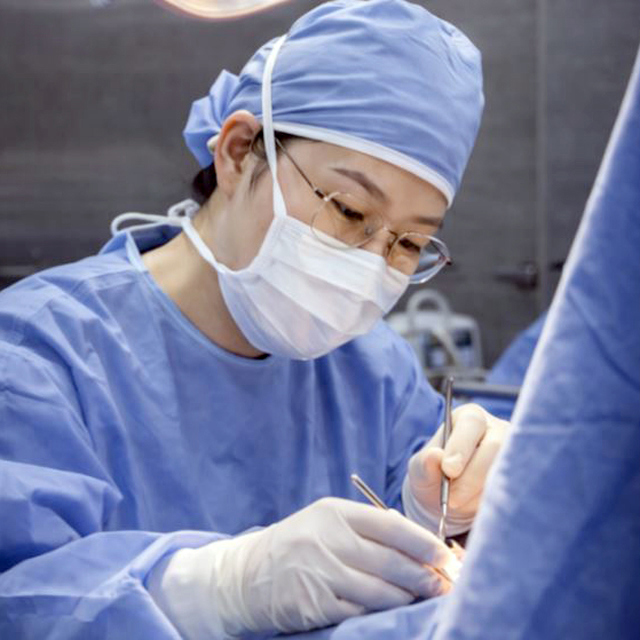
The clinic's two board-certified obstetrician-gynecologists are the doctors behind this treatment, and the examination of the pigmented area is the part of the work that decides everything else.
A medical directorship and thirty years in obstetrics and gynecology are what Dr. Jong-Yeol Kim brings to deciding whether a pigmented area is a candidate for cosmetic treatment or a reason to look further.
Dr. Jong-Yeol Kim is the Medical Director of Golden Balance Clinic and a board-certified obstetrician-gynecologist with 30 years of experience. He graduated from Hallym University College of Medicine and completed his internship and residency training in obstetrics and gynecology at Hallym University Sacred Heart Hospital. He is a regular member of the Korean Society of Obstetrics and Gynecology.
Membership of the Korean Society of Medical Aesthetics and Dermatology sits alongside the obstetric and gynecological training that Dr. Yu-Jin Oh brings to the treatment of sensitive skin.
Dr. Yu-Jin Oh is a Director and a board-certified obstetrician-gynecologist with 23 years of experience. She graduated from Jeonbuk National University Medical School, completed her internship at Samsung Medical Center Cheil General Hospital, and completed residency training in obstetrics and gynecology at Samsung Medical Center Kangbuk Samsung Hospital. She is a member of the Korean Society of Obstetrics and Gynecology, the Korean Academy of Functional Medicine, and the Korean Society of Medical Aesthetics and Dermatology.
Both doctors perform this service; the clinic does not assign it to one of them. The doctor who sees you is the one who examines the area, decides which method is appropriate for your skin, and raises a referral if anything about the pigmentation needs a dermatological opinion first.
Who Is a Good Candidate for Intimate and Areola Brightening?
Adults with stable, benign pigmentation who want to change how the selected area looks.
Adults whose skin condition, skin tone, medical history, sensitivity and proposed treatment method have all been considered together.
Unsuitable or to be postponed: active skin infection, irritation, open wounds, or inflammation in the treatment area.
Needing additional assessment first: unexplained or changing pigmentation, a history of abnormal scarring, significant skin sensitivity, or allergy to the proposed products.
What to Expect: Procedure, Recovery, and Results Timeline

Assessment starts with history and ends with a method. The clinician reviews medical history, skin concerns, previous treatments, medications, allergies and relevant hormonal or dermatological factors, then examines the area to judge the pigmentation and the condition of the skin. Unusual, asymmetric, changing or otherwise suspicious pigmented lesions may need dermatological assessment before any cosmetic treatment. Suitable options, expected outcomes, risks, aftercare and the possibility of limited results are all discussed before a decision.
Preparation protects the skin you are about to treat. Follow the clinic's instructions about cleansing and about what may be applied to the area, and if you are told to, avoid waxing, shaving, exfoliation and irritating skincare products immediately beforehand, along with harsh cleansers, fragranced products and strong acids for whatever period the clinic specifies. Tell the clinician about allergies, medications, pregnancy or breastfeeding, previous reactions and recent procedures. Do not use unregulated bleaching products or apply unapproved creams to intimate skin at any point.
The session itself runs through six steps: consultation and assessment of the treatment area; selection of an appropriate method; gentle cleansing of the skin; application of the chosen topical product, peel or energy-based treatment according to protocol; application of a soothing or protective product if needed; and aftercare instructions with follow-up guidance. The exact steps vary according to the treatment used.
Stage | What the clinic's record states |
|---|---|
Session length | Approximately 15 to 45 minutes |
Anesthesia | Topical anesthesia may be used |
Redness and sensitivity settling | Usually within 1 week |
Skin recovery | 1 to 2 weeks |
Initial brightening appearing | Within 2 to 4 weeks |
Stay in Korea | Approximately 1 to 2 days, longer if multiple sessions or further evaluation are recommended |
Flying home | Generally within 1 to 2 days, depending on the treatment, recovery and the practitioner's advice |
Aftercare is where a good outcome is protected or lost. Keep the treated area clean and follow the cleansing and moisturising routine you are given. Avoid friction, harsh cleansers, exfoliants, fragranced products and other potential irritants until the skin has recovered, and avoid sexual activity or other sources of friction when the treating clinician advises it. Use sun protection on treated skin that is exposed. Do not repeat treatment or add further brightening agents until you are told it is appropriate.
Short-term effects to expect are temporary redness, stinging, dryness, tenderness, irritation and peeling, and some treatments may cause temporary changes in skin colour. The more serious possibilities are specific to the method: chemical peels and energy-based procedures can cause burns, blistering, scarring, infection or uneven pigmentation if unsuitable methods or settings are used, and postinflammatory hyperpigmentation or hypopigmentation may occur, particularly in more deeply pigmented skin. Sensitive intimate skin requires particular caution throughout.
Independent dermatological guidance on peels points the same way. DermNet records that patients with Fitzpatrick skin types IV to VI have an increased risk of dyspigmentation and of hypertrophic and keloid scarring, so that chemical peels must be performed cautiously and with full informed consent, that lighter peels are used on darker skin because of the risk of postinflammatory pigmentation, and that blotchy pigmentation after a peel is most likely in those with darker skin or with a pre-existing pigmentation problem. It also notes that complications of peels are uncommon when the health professional performing them is properly trained and experienced, and that scarring arising from infection or from picking scabs can be permanent.
The final outcome is generally judged once the skin has recovered and any recommended course is complete, which may take several weeks to a few months depending on the method and the number of sessions. How much the appearance changes depends on the underlying cause, the skin type, the method and individual response, and limited improvement is one of the possible results that should be discussed in advance.
Combining Intimate and Areola Brightening with Other Treatments
The intimate areas and the areolas may be discussed together when both are suitable for treatment.
Combining different methods, or adding other intimate cosmetic procedures, requires individual assessment rather than a standard pairing.
Observation without treatment is a legitimate option, and so are clinician-recommended topical products alone.
The safest choice depends on the cause of the pigmentation and on how sensitive the area is.
Safety, Precision, and Clinic Standards
The paragraphs below are the clinic's own statements about how it practises, quoted as the clinic puts them.
The clinic states its philosophy as: "We are committed to personalized 1:1 treatment plans tailored to each patient's condition and prioritize safety above all else in every procedure."
The clinic states that it carries out individualized pre-procedure consultations, limits surgeries to two per day, installs CCTV in all surgery and procedure rooms, and avoids unnecessary over-treatment.
Golden Balance Clinic is registered as a Medical Institution for Attracting Foreign Patients with the Republic of Korea's Ministry of Health and Welfare, under the Medical Overseas Expansion and Foreign Patients Attraction Act. That is a registration for treating international patients; it is not a facility accreditation.
English-language support is available through designated marketing, consultation, and global coordination staff, and the clinic names Scarlett Kim as its global coordinator, available from 10:00 to 20:00 KST.
Golden Balance Clinic is on the 12th floor of the Chunglim Building at 468 Gangnam-daero, Gangnam-gu, Seoul 06123, Republic of Korea. The clinic is open Monday to Sunday from 10:00 to 21:00 KST year-round, with a lunch break from 11:30 to 12:30 KST and last registration at 19:00 KST.
The Bottom Line
The treatment aims to reduce the appearance of pigmentation and produce a more even-looking tone in the treated area.
Topical agents, carefully selected chemical peels and certain energy-based treatments are the three method families, chosen by assessment.
A session takes roughly fifteen to forty-five minutes, with topical anesthesia available.
Redness and sensitivity usually settle within a week, skin recovery takes one to two weeks, and initial brightening appears at two to four weeks.
Risks include burns, blistering, scarring, infection and uneven pigmentation from unsuitable methods or settings, with particular caution needed for sensitive intimate skin.
Frequently Asked Questions
Is darker pigmentation in these areas a problem that needs fixing?
No. Pigmentation in intimate areas and around the areolas is a normal feature of skin and varies naturally between people and across a lifetime, with hormonal change, friction and ageing all contributing. This is an elective cosmetic treatment for people who want to change how an area looks. Choosing not to have it is not a decision that needs justifying.
Which method would be used on me?
That depends on your skin type, how sensitive the area is, and what the clinical assessment finds — the options are topical brightening agents, carefully selected chemical peels, and certain energy-based treatments. The choice is made at the consultation and should be explained to you along with the alternatives. A method that suits one person's skin is not automatically right for another's.
What does a session feel like?
Discomfort is usually mild with many topical treatments, though temporary stinging, warmth or sensitivity can occur. Chemical peels and energy-based procedures can be more uncomfortable, depending on their intensity and on how sensitive the treated area is. Topical anesthesia may be used.
When should I expect to see anything?
Initial brightening may appear within two to four weeks, and results vary from person to person. The final outcome is usually assessed once the skin has recovered and any recommended course is finished, which can take several weeks to a few months. Limited improvement is a possible result and should be part of the conversation beforehand.
What are the main risks?
Temporary redness, stinging, dryness, tenderness, peeling and irritation are the common short-term effects. Peels and energy-based procedures carry a risk of burns, blistering, scarring, infection or uneven pigmentation when unsuitable methods or settings are used, and pigmentation can increase or decrease after inflammation, particularly in more deeply pigmented skin. Intimate skin is sensitive and is treated with that in mind.
Why can't I just buy a cream?
Because the ingredients and the regulation vary enormously. Prescription-strength lightening agents have their own side effects and are controlled for that reason, and products sold without regulation have been found to contain substances that are hazardous to health. Anything promising dramatic or permanent whitening is a reason to walk away.
When would treatment be postponed?
If there is active skin infection, irritation, an open wound or inflammation in the area, treatment waits. Pigmentation that is unexplained, asymmetric or changing may need a dermatological opinion before anything cosmetic is done, and a history of abnormal scarring, marked skin sensitivity or allergy to the proposed products calls for extra assessment.
Book a Consultation at Golden Balance Clinic
Intimate and Areola Brightening is offered at the clinic in Gangnam-gu, Seoul, and the consultation exists to establish what the pigmentation is before deciding whether to treat it at all. Photographs documenting earlier treatments are hosted by the clinic at clinic's gallery.
Contact Golden Balance Clinic through the clinic contact page, by phone on +82-2-516-7148, or by email at info@goldenbalanceclinic.com.
Disclaimer
For informational purposes only. Individual results may vary depending on each patient's medical history, physical condition, anatomy, treatment plan, and recovery. The suitability of gynecological, aesthetic, dermatological, injectable, and other medical procedures should be determined through an individual consultation with a qualified medical professional. All treatments may involve potential risks, side effects, and recovery requirements, which should be discussed before treatment. Information provided by Golden Balance Clinic does not replace professional medical advice, diagnosis, or treatment. Results may vary and individual experiences may differ.
Sources & Further Reading
DermNet — how pigmentation follows injury or inflammation of the skin, why physical treatments can aggravate it as well as help it, and why more severe injury can leave usually permanent loss of pigment.
DermNet — chemical peels as a treatment class: the raised risk of dyspigmentation and scarring in Fitzpatrick types IV to VI, the use of lighter peels on darker skin, and the complications that follow infection or picking.
DermNet — hydroquinone as a topical lightening agent: what it acts on, its prescription status in many countries, its adverse effects, and its unestablished safety in pregnancy and lactation.
World Health Organization — mercury in skin lightening products: the use of mercury salts to inhibit melanin production, the resulting health hazard, and the continued online availability of banned products.
Other Services
Explore additional treatments offered by our specialists.
Eyebrow Semi-Permanent Makeup
Eyebrow semi-permanent makeup is a cosmetic tattooing procedure that deposits pigment into the skin to enhance eyebrow shape, definition, and color.
Learn More
Facial Contour Micropigmentation
Facial contour micropigmentation refers to depositing pigment into the skin to create or enhance selected facial features.
Learn More
Eyeliner & Eye Enhancement PMU
Eyeliner PMU is a cosmetic tattooing procedure that deposits pigment into the skin around the eyelids to create a longer-lasting eyeliner effect.
Learn More