Personalized Medical Care & Dedicated International Patient Concierge

Non-Surgical Intimate Rejuvenation · Consultation Required
Labia Majora Filler
Labia majora filler is an injectable treatment intended to add volume to the outer folds of the vulva, and hyaluronic acid is one of the filler materials described for it in clinical literature.
Schedule a ConsultationLabia Majora Filler in Seoul, Republic of Korea

Medically reviewed by Dr. Jong-Yeol Kim, board-certified obstetrician-gynecologist, and Dr. Yu-Jin Oh, board-certified obstetrician-gynecologist Golden Balance Clinic, Gangnam-gu, Seoul
Labia majora filler is an injectable treatment intended to add volume to the outer folds of the vulva, and hyaluronic acid is one of the filler materials described for it in clinical literature. It is not an injection into the vaginal canal, and it is not a surgical procedure. How much the published evidence can promise is modest, and that limitation belongs in the description rather than in the small print.
What Is Labia Majora Filler?
Labia majora filler is the injection of a filler material into the outer vulval folds in order to increase localized volume and change the contour of that area.
Hyaluronic acid is the material class named in the clinical literature on this treatment; the specific product is a matter for the consultation.
An appointment may take around fifteen to thirty minutes in total.
A suitable local anesthetic may be considered, depending on the person and the plan.
No incision is made and no tissue is removed, which is what separates it from surgical augmentation of the same area.
It is listed among the treatments in Non-Surgical Intimate Rejuvenation at the clinic in Gangnam-gu, Seoul.
The research base behind the treatment is real but small, and it is worth knowing its shape. A 2024 pilot study published in Cureus treated ten post-menopausal women with three sessions of an injectable solution containing low-molecular-weight hyaluronic acid and an amino acid mixture, injecting the full length of each labium majus. At twelve weeks after the final session, every participant was rated as showing an aesthetic improvement of twenty-five per cent or more by an independent physician, and statistically significant improvement was measured in skin firmness and net elasticity. The authors describe hyaluronic acid filler injection as easy, minimally invasive, repeatable and reversible, and report that the twenty-seven adverse effects recorded during the study were mild erythema, swelling and burning at the injection area, all of which resolved within forty-eight hours.
What that study cannot do is as important as what it shows. Its authors state plainly that the small number of subjects and the absence of a control group limit any clinically meaningful conclusion, and they call for larger studies to confirm the preliminary findings. That is the general condition of the literature on this procedure: evidence remains limited compared with many established cosmetic treatments, which is why the clinic's record declines to promise a particular appearance or perfect symmetry.
Who Performs Labia Majora Filler at Golden Balance Clinic
|
|
Dr. Jong-Yeol Kim | Dr. Yu-Jin Oh |

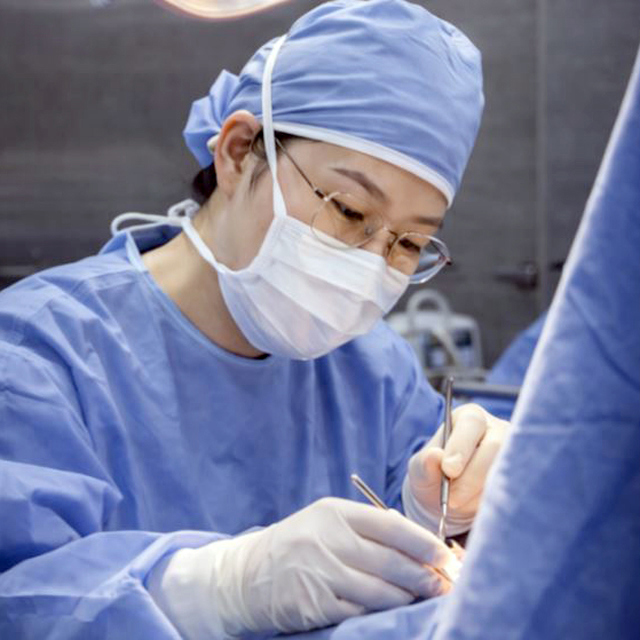
The clinic's two obstetrician-gynecologists are the doctors behind this treatment, and both reviewed what is written here.
Three decades in obstetrics and gynecology, and a medical directorship, stand behind what Dr. Jong-Yeol Kim brings to an assessment of the vulval tissue before any product is chosen.
Dr. Jong-Yeol Kim is the Medical Director of Golden Balance Clinic and a board-certified obstetrician-gynecologist with 30 years of experience. He graduated from Hallym University College of Medicine and completed his internship and residency training in obstetrics and gynecology at Hallym University Sacred Heart Hospital. He is a regular member of the Korean Society of Obstetrics and Gynecology.
Alongside her gynecological training, Dr. Yu-Jin Oh holds a membership in medical aesthetics and dermatology, a combination that sits close to where injectable treatment of the vulva actually lives.
Dr. Yu-Jin Oh is a Director and a board-certified obstetrician-gynecologist with 23 years of experience. She graduated from Jeonbuk National University Medical School, completed her internship at Samsung Medical Center Cheil General Hospital, and completed residency training in obstetrics and gynecology at Samsung Medical Center Kangbuk Samsung Hospital. She is a member of the Korean Society of Obstetrics and Gynecology, the Korean Academy of Functional Medicine, and the Korean Society of Medical Aesthetics and Dermatology.
Both doctors perform this service; the clinic does not assign it to one of them. The gynecologist in front of you at the consultation is the one who examines the outer folds, judges whether an injection would do anything useful, and says so if it would not.
Who Is a Good Candidate for Labia Majora Filler?
Adults whose concern is reduced volume in the labia majora and who understand the expected cosmetic changes, the limitations and the risks.
Adults whose suitability has been established by individual assessment from a qualified medical professional.
Adults for whom the discussion of normal anatomical variation has already happened, rather than been skipped.
People with active infection or inflammation in the treatment area may need to wait until it has settled.
Allergies, pregnancy, breastfeeding, bleeding risks, medications and other medical conditions all call for individual assessment.
Many women who worry about the appearance of the vulva turn out to need reassurance rather than treatment. An NHS patient information leaflet on female genital appearance, produced for St Michael's Hospital in Bristol, exists precisely to show how wide the normal range is, and records that the majority of the time a woman who seeks help about this will be reassured she is normal and will not require any treatment. The same leaflet notes that accurate representations of female genitalia are rare in the media, and that changing habits such as shaving and waxing pubic hair can make the labia more visible. None of that decides any individual case, but it is a fair starting point for a conversation.
The alternatives recorded for this treatment follow the same logic. They include no treatment, counselling about normal anatomical variation, and medical assessment where symptoms point to an underlying condition. Surgical augmentation of the labia majora is a different procedure entirely, with its own risks and its own recovery requirements, and comparing the two is a consultation task rather than a reading task.
What to Expect: Procedure, Recovery, and Results Timeline
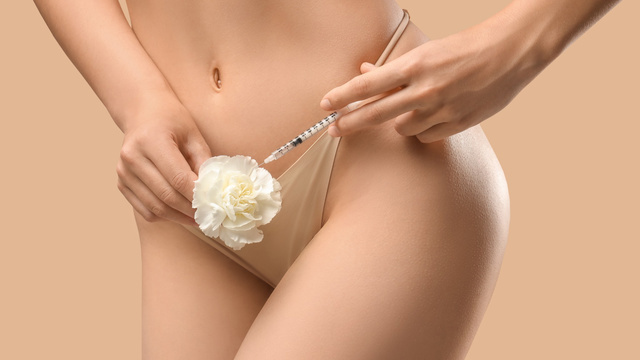
The consultation does most of the deciding. A clinician goes through medical history, allergies, medications, any previous procedures and what the patient is hoping for, then assesses the external genital area. Suitability, alternatives, expected outcomes and potential complications are discussed, and informed consent is taken only after that discussion rather than before it.
Before the appointment the clinician needs a complete picture: conditions you are being treated for, allergies, prescription medicines and over-the-counter supplements, whether you are pregnant or breastfeeding, and any earlier procedure in the same region. Current irritation or infection should be raised at that point too. Preparation instructions are individualized, and no prescribed medicine should be stopped without medical advice.
On the day, the sequence runs: treatment goals and medical history are discussed; the area is examined and suitability confirmed; the filler is explained and consent obtained; the treatment area is cleaned and prepared; a qualified clinician administers the selected filler using an appropriate technique; and aftercare instructions are given, with follow-up arranged if it is needed.
Stage | What to expect |
|---|---|
Appointment length | Approximately 15 to 30 minutes |
Anesthesia | A suitable local anesthetic may be considered |
Results visible | Immediately after treatment |
Results settling | Over 2 to 4 weeks |
Swelling and bruising | Usually improve within 1 to 2 weeks |
Stay in Korea | Approximately 3 to 5 days for treatment, early recovery and any follow-up |
Flying home | Within 3 to 5 days, if recovery is satisfactory and the treating practitioner approves travel |
Recovery asks for very little and one specific restriction. Follow the hygiene and activity instructions you are given, and avoid unnecessary pressure or friction on the treated area for as long as you are advised to. The symptoms that warrant an unscheduled medical check are pain that is increasing, swelling that is getting worse, fever, redness that is spreading, and any discoloration of the skin.
Timing of the final appearance deserves a careful answer. Volume is visible straight away, but temporary swelling affects how the area looks in the first days, and the clinic's record puts the settling period at two to four weeks. The honest qualification is that the precise timing cannot be confirmed without knowing the product and the technique used, so the treating clinician should be the one to say when the area can be assessed reliably — and no specific result or duration should be promised in advance of that.
Side effects reported for this treatment are temporary swelling, bruising, tenderness and discomfort, with redness and itching also possible. The complications that matter more are infection, lumps, asymmetry, product displacement, inflammatory and allergic reactions, filler migration, tissue injury, and dissatisfaction with the outcome; serious complications can occur. Hyaluronic acid and vaginal tightening are often mentioned together in marketing, and they should not be: improved sexual function, increased sensation, treatment of urinary symptoms and permanent results are all outside what this treatment can be said to do.
Injectable fillers as a class carry risks that do not depend on where they are placed. The Food and Drug Administration lists bruising, redness, swelling, pain, tenderness and itching among the common risks, and notes a less common pattern in which inflammation such as swelling or redness develops near the injection site following viral or bacterial illnesses or infections, vaccinations, or dental procedures. It also records that the safety of these products is unknown when used during pregnancy and while breast feeding, and advises patients to tell the provider beforehand about inflamed or infected skin, a bleeding disorder, a history of severe allergy, or an allergy to local anesthetic such as lidocaine — several of these products contain lidocaine, and some contain hyaluronic acid derived from bacterial fermentation.
Deciding slowly is also sound practice. The National Health Service advises anyone considering a cosmetic procedure to research it thoroughly, understand all the costs involved including aftercare, choose a practitioner who is trained and experienced in that specific procedure, and ask about the products used and what could go wrong. It adds that a cooling-off period should be offered after any consultation with a practitioner, and that nobody is obliged to go ahead.
Safety, Precision, and Clinic Standards
The clinic's statements about how it works are reproduced below in its own words.
The clinic states its philosophy as: "We are committed to personalized 1:1 treatment plans tailored to each patient's condition and prioritize safety above all else in every procedure."
The clinic states that it carries out individualized pre-procedure consultations, limits surgeries to two per day, installs CCTV in all surgery and procedure rooms, and avoids unnecessary over-treatment.
Golden Balance Clinic is registered as a Medical Institution for Attracting Foreign Patients with the Republic of Korea's Ministry of Health and Welfare, under the Medical Overseas Expansion and Foreign Patients Attraction Act. That is a registration for treating international patients; it is not a facility accreditation.
English-language support is available through designated marketing, consultation, and global coordination staff, and the clinic names Scarlett Kim as its global coordinator, available from 10:00 to 20:00 KST.
Golden Balance Clinic is on the 12th floor of the Chunglim Building at 468 Gangnam-daero, Gangnam-gu, Seoul 06123, Republic of Korea. The clinic is open Monday to Sunday from 10:00 to 21:00 KST year-round, with a lunch break from 11:30 to 12:30 KST and last registration at 19:00 KST.
The Bottom Line
Filler is injected into the outer folds of the vulva to increase volume and alter contour; hyaluronic acid is the material class the literature describes.
The appointment is short, around fifteen to thirty minutes, and a suitable local anesthetic may be considered.
Volume is visible immediately and the area settles over two to four weeks, while swelling and bruising usually improve within one to two weeks.
Published evidence is limited compared with many established cosmetic treatments, and a particular appearance or perfect symmetry cannot be guaranteed.
Possible complications include infection, lumps, asymmetry, product displacement, inflammatory and allergic reactions, filler migration and tissue injury.
Frequently Asked Questions
What material is injected?
Hyaluronic acid is the filler material described for this treatment in clinical literature, and it is the class the published studies use. Which specific product is appropriate for you is a question for the consultation, where the clinician should name it and explain why it was chosen. Asking what is being injected, and what the plan would be if something went wrong, is reasonable in any clinic.
How strong is the evidence behind it?
Modest. The published work consists largely of small studies, including a pilot of ten post-menopausal women whose own authors say that the sample size and the lack of a control group limit any clinically meaningful conclusion. Evidence remains limited compared with many established cosmetic treatments, and that is part of what should be explained before consent rather than discovered afterwards.
Does it do anything other than change volume?
It is not offered as a treatment for vaginal tightening, for sexual function, for sensation or for urinary symptoms, and no permanent result should be promised. The stated effect is an increase in localized volume and a change in the contour of the labia majora. Any claim that reaches beyond that is a reason to ask more questions, not fewer.
Will it hurt?
The procedure may cause discomfort, tenderness or pain, and how much depends on the technique, the injection area and individual sensitivity. A suitable local anesthetic may be considered. Pain-control options are worth discussing with the treating clinician in advance rather than on the day.
When does the result look settled?
Volume is visible immediately, and the area generally settles over two to four weeks as temporary swelling resolves. The exact timing cannot be stated without knowing the product and the technique, so the treating clinician should say when the result can be judged reliably. Swelling and bruising usually improve within one to two weeks.
What aftercare is involved?
Hygiene and activity instructions from the clinician, and avoiding unnecessary pressure or friction on the treated area for as long as you are advised to. Contact a doctor without waiting if pain increases, swelling worsens, you develop a fever, redness spreads, or the skin changes colour. Those are not expected parts of recovery.
How long should I stay in Korea?
Around three to five days covers the procedure, the early part of recovery and any follow-up. Flying home within that period is usually possible, provided recovery is satisfactory and the treating practitioner approves travel. Confirm the dates with the clinic before committing to flights.
What if a problem appears after I get home?
Use the clinic's contact page, phone number or email address, all given in the section below, and describe what you are seeing. If the symptom is severe or getting worse, seek medical care where you are first and contact the clinic in parallel. Distance makes early contact more useful, not less.
Book a Consultation at Golden Balance Clinic
Labia Majora Filler is offered at the clinic in Gangnam-gu, Seoul, and whether the outer folds would benefit from any injection at all is decided by examination. Clinic photographs from earlier treatments sit at clinic's gallery.
Contact Golden Balance Clinic through the clinic contact page, by phone on +82-2-516-7148, or by email at info@goldenbalanceclinic.com.
Disclaimer
For informational purposes only. Individual results may vary depending on each patient's medical history, physical condition, anatomy, treatment plan, and recovery. The suitability of gynecological, aesthetic, dermatological, injectable, and other medical procedures should be determined through an individual consultation with a qualified medical professional. All treatments may involve potential risks, side effects, and recovery requirements, which should be discussed before treatment. Information provided by Golden Balance Clinic does not replace professional medical advice, diagnosis, or treatment. Results may vary and individual experiences may differ.
Sources & Further Reading
Cureus — pilot study of a low-molecular-weight hyaluronic acid injectable for labia majora rejuvenation and augmentation: the twelve-week outcomes, the mild and short-lived adverse effects recorded, and the authors' own statement of the study's limits.
Food and Drug Administration — information on dermal fillers as a class: the common risks, the delayed inflammation pattern following illness, vaccination or dental work, the unknown safety in pregnancy and breastfeeding, and the conditions to disclose before injection.
NHS — advice before any cosmetic procedure, surgical or non-surgical, covering research, practitioner choice, the questions to ask, and the cooling-off period.
University Hospitals Bristol — patient information leaflet on normal variation in female genital appearance, including how often a woman seeking help about it is reassured that she is normal.
Other Services
Explore additional treatments offered by our specialists.
Eyebrow Semi-Permanent Makeup
Eyebrow semi-permanent makeup is a cosmetic tattooing procedure that deposits pigment into the skin to enhance eyebrow shape, definition, and color.
Learn More
Facial Contour Micropigmentation
Facial contour micropigmentation refers to depositing pigment into the skin to create or enhance selected facial features.
Learn More
Eyeliner & Eye Enhancement PMU
Eyeliner PMU is a cosmetic tattooing procedure that deposits pigment into the skin around the eyelids to create a longer-lasting eyeliner effect.
Learn More