Personalized Medical Care & Dedicated International Patient Concierge

Dermatology & Laser Treatments · Consultation Required
Laser Hair Removal
Laser hair removal uses concentrated light absorbed by pigment in hair follicles to reduce hair growth.
Schedule a ConsultationLaser Hair Removal in Seoul, Republic of Korea
Medically reviewed by Dr. Eun-Young Kwak, MD, graduate of Yonsei University College of Medicine, and Dr. Yu-Jin Oh, board-certified obstetrician-gynecologist Golden Balance Clinic, Gangnam-gu, Seoul
Laser hair removal uses concentrated light absorbed by pigment in hair follicles to reduce hair growth. Multiple sessions are generally needed because hair grows in different cycles, and only follicles in the right phase respond to a given treatment. What the treatment offers is reduction — hair that is less dense, finer and less noticeable — rather than a single permanent fix.
What Is Laser Hair Removal?
Laser hair removal is a course of light-based treatments that target the pigment inside hair follicles in order to reduce how much hair grows back in a treated area.
A session runs roughly 15 to 60 minutes, depending on the size of the area.
Protective eyewear is worn, and numbing may be considered where it is useful.
Darker hair often responds better, because the laser is aiming at pigment.
Many patients need six or more sessions, and maintenance treatments may be required.
The clinic groups it with its other Dermatology & Laser Treatments services in Gangnam-gu.
The physics behind that is worth a paragraph, because it explains almost every limitation that follows. The Australian Radiation Protection and Nuclear Safety Agency describes light-based treatments as working by targeting chromophores — the pigments that give hair and skin their colour — which absorb the emitted light and are destroyed or damaged in the process, after which the body's natural healing takes over. For hair, the outcome is destruction of the follicle. That also explains why the agency warns that treatment outcomes depend heavily on hair and skin colour, and that depending on those traits a light-based procedure can be completely ineffective, only partially effective, or carry a much larger risk of injury.
Hair colour is the blunt limit. North Bristol NHS Trust's laser service states plainly that laser treatment does not work on white or blonde hair, and that different laser types suit different skin types — one being better for controlling dark hair on fair skin, another being safe to use on darker skin and most effective on coarse, dark hair while less effective on fine hair.
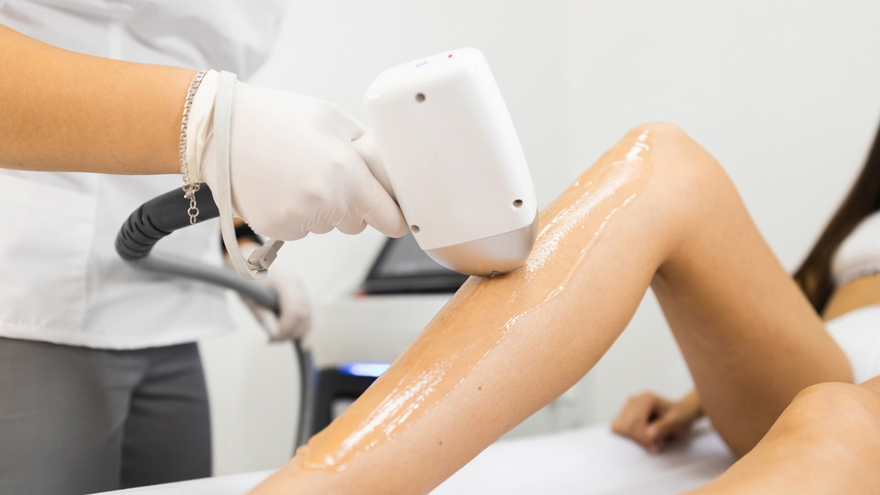
The schedule has a reason too. The American Academy of Dermatology notes that removing hair usually requires a series of treatments and that most patients can have laser hair removal once every four to six weeks, with the dermatologist deciding when the next one is safe. It also describes what happens in the room: the area is cleansed, some patients receive a numbing gel, everyone present wears protective eyewear, and the skin is held taut while it is treated. Many patients say the pulses feel like warm pinpricks or a rubber band being snapped against the skin.
Who Performs Laser Hair Removal at Golden Balance Clinic

Dr. Eun-Young Kwak
Plastic Surgery/Petit Center Doctor
Two doctors share this part of the clinic's practice, and both of them reviewed what is written here.
The Director in charge of the centre where this work sits is Dr. Eun-Young Kwak. Both doctors perform this service; the clinic does not assign it to one of them. Asking at the time of booking is the way to find out who will see you.
Dr. Eun-Young Kwak is a Director and the doctor who leads the clinic's plastic surgery and petit centre. She graduated from Yonsei University College of Medicine. She is a member of the Korean Academy of Women's Aesthetic Medicine, the Korean Aesthetic Wellbeing Society, the Korean Society for Obesity and Plastic Surgery, and the Korean Society of Anti-Aging Medicine, and she previously served as a director of I-Love Petit Clinic and of Petit Queen Clinic.
The other doctor on this work is Dr. Yu-Jin Oh, who holds a membership in a Korean society for medical aesthetics and dermatology.
Dr. Yu-Jin Oh is a Director and a board-certified obstetrician-gynecologist with 23 years of experience. She graduated from Jeonbuk National University Medical School, completed her internship at Samsung Medical Center Cheil General Hospital, and completed residency training in obstetrics and gynecology at Samsung Medical Center Kangbuk Samsung Hospital. She is a member of the Korean Society of Obstetrics and Gynecology, the Korean Academy of Functional Medicine, and the Korean Society of Medical Aesthetics and Dermatology.
Before anything is switched on, the clinician examines the skin and the hair, goes through your medical history and medications, talks through expected results and side effects, and settles on the appropriate laser and treatment settings.
Laser Hair Removal Options Available
Hair removal is a crowded field, and the clinic's record sets out how the alternatives differ.
Method | What the record says |
|---|---|
Laser | Targets pigment in the follicle for long-term reduction; several sessions needed |
Shaving | Inexpensive and temporary |
Waxing | Removes hair from the root, but may cause irritation and ingrown hairs |
Depilatory creams | Dissolve hair temporarily and may irritate the skin |
Electrolysis | Treats individual follicles and may suit hair colours that respond poorly to lasers, but can be time-consuming |
That last row matters more than it looks. If your hair is blonde, white, grey or one of the reds that respond poorly, a laser has little to aim at — and the alternative that treats each follicle individually is the one that does not depend on pigment at all.
Who Is a Good Candidate for Laser Hair Removal?
Adults seeking long-term hair reduction who can safely undergo laser treatment.
People whose skin tone, hair colour and thickness, treatment area, medical history and medications have been assessed together.
People with darker hair, which often responds better because the laser targets pigment.
A recent tan, or active skin irritation or infection in the area, may mean postponing.
A history of keloids, cold sores or abnormal scarring, or use of certain medications, requires assessment first.
Blonde, white, grey and some red hairs may respond poorly.
What to Expect: Procedure, Recovery, and Results Timeline

Getting the skin ready starts well before the appointment. Avoid tanning, sunbeds and sunless tanning products, and protect the area with broad-spectrum SPF 30+ sunscreen. Tell the clinician about your medications, any recent tanning, cold sores, keloids and previous skin reactions, and follow the clinic's instructions about shaving and skin products. Waxing, plucking and electrolysis are off the table beforehand, because all three remove the hair root the laser needs to find.
Queensland Health's guidance on light-based cosmetic services underlines why that preparation is not fussiness: an active tan in the targeted area heightens the risk of a negative reaction, and it advises stopping all natural, spray and fake tanning two weeks before a service. The same guidance lists the adverse outcomes an incorrectly performed light-based service can cause, including burns, permanent scarring, eye damage, pigmentation changes, infection, blistering and increased hair growth.
The session itself is brief and orderly. The treatment area is cleaned and protective eyewear is worn, numbing may be considered if needed, and the clinician applies laser pulses to the skin, targeting the hair follicles. Afterwards the area is checked and aftercare instructions are given. Expect a sensation like warm pinpricks or a rubber-band snap; some patients receive a topical numbing gel.
Stage | What to expect |
|---|---|
Session length | Approximately 15 to 60 minutes |
Visits for one treatment | One to two |
Comfort | Warm pinpricks or a rubber-band snap; topical numbing gel for some patients |
Redness and irritation | Usually resolving within 1 to 2 days |
Hair shedding | Over 1 to 4 weeks after a session |
Course | Many patients need six or more sessions |
Stay in Korea | A single day can cover one session if the consultation fits the same visit |
Flying home | Usually that day or the day after, provided you feel well and the skin has not reacted badly |
Afterwards, keep direct sunlight and tanning equipment away from the treated skin, use sun protection, and follow the skin-care instructions you are given. A cool compress may help with mild redness and swelling.
As for results: hair can become less dense, finer and less noticeable, with reduction improving over repeated sessions and maintenance as needed. Some reduction may be noticeable after the first session, but the final outcome develops across the course as hair grows through its different cycles. Results vary between people, which is why no schedule should be read as a promise.
Temporary redness, swelling and discomfort around the treated follicles are the common side effects. The wider picture from the independent sources fills in the rare end: the American Academy of Dermatology lists blistering, cold-sore outbreaks, infections, scarring and skin lightening or darkening as uncommon when the treatment is done by or under the supervision of a dermatologist, adding that skin colour tends to return to normal in time though some changes are lasting. The Australian Radiation Protection and Nuclear Safety Agency makes a related point about pigment change — that hyperpigmentation may improve over time while hypopigmentation generally does not — and notes that a temporary increase in hair growth, and regrowth that is finer and lighter, are among the expected effects of hair-reduction treatment.
Combining Laser Hair Removal with Other Treatments
The clinic's record does not present laser hair removal as a treatment that is routinely combined with other cosmetic procedures.
Anything else you are considering for the same area belongs in the consultation, where the clinician can judge the timing.
Between sessions, shaving or cutting the hair is the usual advice; waxing, plucking and depilatory creams work against the treatment.
Safety, Precision, and Clinic Standards
The clinic's own statements about how it operates are reproduced below in its wording.
The clinic states its philosophy as: "We are committed to personalized 1:1 treatment plans tailored to each patient's condition and prioritize safety above all else in every procedure."
The clinic states that it carries out individualized pre-procedure consultations, limits surgeries to two per day, installs CCTV in all surgery and procedure rooms, and avoids unnecessary over-treatment.
Golden Balance Clinic is registered as a Medical Institution for Attracting Foreign Patients with the Republic of Korea's Ministry of Health and Welfare, under the Medical Overseas Expansion and Foreign Patients Attraction Act. That is a registration for treating international patients; it is not a facility accreditation.
English-language support is available through designated marketing, consultation, and global coordination staff, and the clinic names Scarlett Kim as its global coordinator, available from 10:00 to 20:00 KST.
Golden Balance Clinic is on the 12th floor of the Chunglim Building at 468 Gangnam-daero, Gangnam-gu, Seoul 06123, Republic of Korea. The clinic is open Monday to Sunday from 10:00 to 21:00 KST year-round, with a lunch break from 11:30 to 12:30 KST and last registration at 19:00 KST.
The Bottom Line
Light is absorbed by pigment in the follicle, so hair colour and skin tone drive both the result and the risk.
Hair cycles mean a course rather than a session; many patients need six or more.
A visit takes about 15 to 60 minutes, and redness usually settles within one to two days.
Shedding happens over one to four weeks; reduction builds across the course, and maintenance may be needed.
Blonde, white, grey and some red hairs respond poorly, and a recent tan is a reason to wait.
Frequently Asked Questions
Why does hair colour matter so much?
The light is absorbed by pigment, so a follicle with little pigment gives it nothing to work on. Darker hair generally responds better for exactly that reason, while blonde, white, grey and some red hairs may respond poorly. If that describes your hair, say so at the consultation — the method that treats follicles individually does not rely on pigment.
How many sessions will I need?
Many patients need six or more, and maintenance treatments may be required afterwards. The number depends on the area, your hair's colour and thickness and how it responds. Because hair grows in cycles, each session catches a different portion of the follicles, which is why the course is spread out rather than compressed.
Does it hurt?
Most people describe a mild stinging, often compared to a rubber band snapping against the skin, or to warm pinpricks. How much you feel depends on the area treated, the thickness of the hair and your own sensitivity. Some patients receive a topical numbing gel.
What happens to the hair afterwards?
Shedding occurs over one to four weeks following a session, so treated hairs work their way out rather than vanishing on the day. Hair that regrows tends to be finer and less noticeable, and reduction improves as you work through the course.
Why all the warnings about tanning?
A tan puts extra pigment in the skin itself, which competes with the follicle for the laser's energy and raises the risk of a burn or a pigment change. That is why the preparation list rules out sunbeds and sunless tanning products as well as sun exposure, and why a recent tan can mean postponing a session.
What should I avoid doing between sessions?
Waxing, plucking and electrolysis, because each removes the hair root that the next treatment needs to target. Shaving or cutting the hair is the usual way to manage it in the meantime. Keep sun protection on the area throughout the course.
How should I plan a trip around this?
A one-day stay may be sufficient for a single session if the consultation and treatment can be done the same day, and you can generally fly home that day or the next provided you feel well and have no significant skin reaction. Since multiple sessions are usually required, a full course normally means returning rather than extending one visit.
What counts as a reason to contact someone afterwards?
Mild redness and irritation settling within a day or two is ordinary. Blistering, significant pain, spreading redness or any reaction you were not told to expect is a reason to seek medical advice rather than wait for the next appointment. When that happens at home rather than in Seoul, the clinic's details are below, and a doctor where you live can assess the area.
Book a Consultation at Golden Balance Clinic
Hair reduction is provided at the clinic's premises in Gangnam-gu, Seoul, and the assessment of skin tone, hair colour and medical history comes first because it sets both the settings and the realistic expectation. Photographs taken at the clinic are published at clinic's gallery.
Contact Golden Balance Clinic through the clinic contact page, by phone on +82-2-516-7148, or by email at info@goldenbalanceclinic.com.
Disclaimer
For informational purposes only. Individual results may vary depending on each patient's medical history, physical condition, anatomy, treatment plan, and recovery. The suitability of gynecological, aesthetic, dermatological, injectable, and other medical procedures should be determined through an individual consultation with a qualified medical professional. All treatments may involve potential risks, side effects, and recovery requirements, which should be discussed before treatment. Information provided by Golden Balance Clinic does not replace professional medical advice, diagnosis, or treatment. Results may vary and individual experiences may differ.
Sources & Further Reading
American Academy of Dermatology — what happens during a session, the four-to-six-week interval between treatments, the warm-pinprick sensation, and the common and rare side effects.
Australian Radiation Protection and Nuclear Safety Agency — how light-based treatments target chromophores, why hair and skin colour determine effectiveness and risk, and the difference between hyperpigmentation and hypopigmentation after treatment.
North Bristol NHS Trust — laser treatment does not work on white or blonde hair, and different laser types suit different skin types and hair textures.
Queensland Government — the adverse outcomes an incorrectly performed light-based service can cause, and the advice to stop all tanning two weeks beforehand.
Other Services
Explore additional treatments offered by our specialists.
Eyebrow Semi-Permanent Makeup
Eyebrow semi-permanent makeup is a cosmetic tattooing procedure that deposits pigment into the skin to enhance eyebrow shape, definition, and color.
Learn More
Facial Contour Micropigmentation
Facial contour micropigmentation refers to depositing pigment into the skin to create or enhance selected facial features.
Learn More
Eyeliner & Eye Enhancement PMU
Eyeliner PMU is a cosmetic tattooing procedure that deposits pigment into the skin around the eyelids to create a longer-lasting eyeliner effect.
Learn More