Personalized Medical Care & Dedicated International Patient Concierge

Body Contouring & Weight Management · Consultation Required
Laser Lipolysis & Body Contouring
Laser Lipolysis & Body Contouring is a heading that covers two genuinely different approaches to localized fat and body shape.
Schedule a ConsultationLaser Lipolysis and Body Contouring in Seoul, Republic of Korea

Medically reviewed by Dr. Eun-Young Kwak, MD, graduate of Yonsei University College of Medicine Golden Balance Clinic, Gangnam-gu, Seoul
Laser Lipolysis & Body Contouring is a heading that covers two genuinely different approaches to localized fat and body shape. Laser lipolysis uses laser energy and may be carried out as a minimally invasive procedure, while non-invasive body contouring delivers its energy from outside the skin and breaks nothing open. Which of the two is proposed, if either is, follows from the technology involved, the area in question, the medical history behind it and a physician's assessment.
What Is Laser Lipolysis and Body Contouring?
Laser Lipolysis & Body Contouring is the use of laser or other energy, delivered either beneath the skin or across its surface, to reduce a localized fat deposit and alter the shape of the treated area.
A session runs approximately 30 to 90 minutes, depending on the method and the area.
Non-invasive treatment may need no anesthesia at all, though warmth, tingling or discomfort are normal sensations during it; a minimally invasive laser procedure may require local anesthesia or another appropriate method.
The change is not immediate: contour results develop over roughly four to eight weeks.
An in-person assessment may be required before treatment is agreed, particularly where the minimally invasive route is being considered.
The service belongs to the group the clinic lists as Body Contouring & Weight Management at its Gangnam-gu premises.
The single most useful thing a regulator says about this category is what it is not for. The United States Food and Drug Administration, in its consumer material on non-invasive body contouring technologies, states that non-invasive body contouring does not treat obesity or improve your health, and that it will not result in weight loss or contribute to the health benefits associated with weight loss. The same material warns that these procedures may not always produce the desired effect, that the result may only be temporary, that not everyone responds, and that more than one treatment may be needed. It also records that complications reported across the device class include pain or discomfort, redness, swelling, bruising and nodules — lumpiness that can be felt but not seen.
Where light is the energy being used, the agency is more specific. It explains that some body contouring devices use powerful light, such as lasers, to heat tissue, most often in the infra-red range, and that carefully controlled application can heat the tissue under the skin without burning its surface, which is thought to damage fat cells. Its cautions are concrete: light-based procedures can injure the eyes and the provider should supply protective goggles; the approach may not suit someone who is tanned or planning sun exposure, whose skin darkens after any injury, or who is sensitive to light or taking medicines that cause such sensitivity; and reported complications include blisters and burns alongside the milder effects.
Laser Lipolysis & Body Contouring Options Available
The clinic's record treats these as two distinct routes rather than one treatment with a setting.
Minimally invasive laser lipolysis | Non-invasive body contouring | |
|---|---|---|
How the energy reaches the fat | Through a small entry point, beneath the skin | Through an applicator on the skin surface |
Anesthesia | Local anesthesia or another appropriate method may be required | Often none; warmth or tingling may be felt |
Added risks beyond the shared ones | Entry-site scarring, infection, bleeding, anesthesia-related risks | Those common to energy delivered across the skin |
Assessment | In-person assessment may be required before it is agreed | Assessment of the area, skin condition and fat distribution |
A narrative review published in Aesthetic Plastic Surgery compares the same two families directly. It reports that laser-assisted lipolysis shows clinical advantages including faster recovery times, reduced postoperative pain and improved skin tightening, especially where the amount of fat is small to moderate, and concludes that while it is not a replacement for traditional liposuction in all cases it offers meaningful benefits as a stand-alone or adjunct procedure. Of the non-invasive route it records no downtime and a reduced risk of complications, set against limited efficacy compared with invasive methods, a likely need for multiple treatments, and unsuitability for large-volume fat removal. Its authors also note a critical need for long-term comparative studies.
Who Performs Laser Lipolysis & Body Contouring at Golden Balance Clinic

Dr. Eun-Young Kwak
Plastic Surgery/Petit Center Doctor
One doctor carries the clinic's body contouring work, and she reviewed this page.
Choosing between energy delivered under the skin and energy delivered across it is a medical decision about a particular body rather than a menu choice, and Dr. Eun-Young Kwak is the physician who makes it at this clinic.
Dr. Eun-Young Kwak is a Director and the doctor who leads the clinic's plastic surgery and petit centre. She graduated from Yonsei University College of Medicine. She is a member of the Korean Academy of Women's Aesthetic Medicine, the Korean Aesthetic Wellbeing Society, the Korean Society for Obesity and Plastic Surgery, and the Korean Society of Anti-Aging Medicine, and she previously served as a director of I-Love Petit Clinic and of Petit Queen Clinic.
Who Is a Good Candidate for Laser Lipolysis & Body Contouring?
Adults with localized fat deposits who are medically suitable for the method proposed and who hold realistic expectations of it.
People already near a stable body weight — body contouring is not a substitute for weight loss and is not a treatment for obesity.
Candidates whose suitability has been determined by a qualified physician rather than inferred from photographs or online questionnaires.
Treatment may be unsuitable where there are certain medical conditions, an active infection or a skin problem in the area to be treated, or a pregnancy.
Implanted devices, current medication and concerns about healing may each affect eligibility, and the physician must review both the medical history and the instructions that come with the selected device.
Professional guidance frames candidacy the same way. The American Academy of Dermatology describes the treatable concern as a small bulge of fat that remains despite diet and exercise in a person whose weight falls within the normal range for their height, and it is candid about how modest the change is: liposuction delivers more-dramatic results, whereas with non-invasive fat removal the results are subtle. On timing it reports that where a device is used, some change may be noticed as early as three weeks, with most people seeing the full effect between three and six months after the last treatment.
What to Expect: Procedure, Recovery, and Results Timeline
The consultation follows a fixed shape. Treatment goals, medical history, medicines, allergies and previous procedures are discussed; the area is examined and the skin condition, the fat distribution and general suitability assessed; the available options, the expected outcome, the risks, the recovery and the alternatives are explained; an individualized plan and a schedule are agreed; and preparation instructions are given, with follow-up arranged where appropriate.
Preparation is about disclosure and restraint in equal measure. Tell the clinic about your medical history, every medicine and supplement you take, your allergies, any implanted devices and, where relevant, pregnancy. Follow the instructions given on skin preparation, sun exposure and medication adjustments, and do not impose restrictions on yourself that do not apply to the method actually chosen.
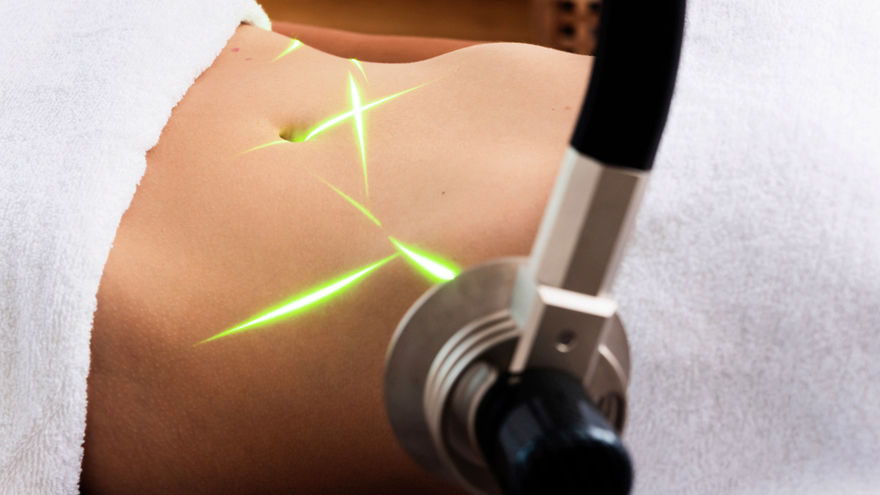
On the day, the two routes diverge. For laser lipolysis the physician assesses and marks the area, prepares the skin and administers appropriate anesthesia; where the technique is minimally invasive a small entry point may be used so that laser energy can be delivered beneath the skin; the area is then checked and aftercare explained. For non-invasive body contouring the area is assessed and prepared, an external device delivers energy according to its protocol, and the area is checked afterwards. The exact steps vary with the technique.
Stage | What the clinic's record states |
|---|---|
Session length | Approximately 30 to 90 minutes |
Initial recovery and reduction of swelling | Typically within 1 to 4 weeks |
Visible contouring results | Developing over 4 to 8 weeks |
Final result assessed | Approximately 2 to 3 months, depending on method and individual healing |
Longevity | Dependent on weight stability and lifestyle |
Time in Korea | Approximately 2 to 3 days for non-invasive treatment, with follow-up allowed for |
Flying home | Generally within 2 to 3 days for non-invasive treatment, on the practitioner's advice |
Afterwards, follow the physician's instructions on skin care, activity and the management of any post-treatment symptoms, and contact the clinic if a symptom is severe, worsening or simply not what you were told to expect.
The honest description of the outcome is deliberately unflashy. Depending on the technology and on individual suitability, treatment may aim to reduce localized fat, improve the appearance of body contours or address skin laxity. Outcomes vary with the device, the area, the baseline anatomy and the individual response, and no particular degree of fat reduction, skin tightening or absence of downtime can be promised. Side effects include redness, swelling, tenderness, bruising and temporary changes in sensation; burns, skin changes and contour irregularities are possible; and a minimally invasive procedure adds entry-site scarring, infection, bleeding and the risks that come with anesthesia.
The American Society of Plastic Surgeons describes the non-invasive form in terms worth holding alongside all of that. It states that laser lipolysis uses laser energy delivered through an applicator and that fat cells are preferentially heated and disrupted without impacting other types of cells in the skin or other structures, that the procedure is done without anesthesia, and that the complication rate is low, with reports of temporary redness, tenderness and swelling. On results it reports that these may first be visible at six weeks and are apparent by three months.
Combining Laser Lipolysis & Body Contouring with Other Treatments
Radiofrequency may be combined with it for skin tightening where that is clinically appropriate.
High-intensity focused ultrasound may be combined with it for the same purpose and on the same condition.
Whether a combination is suitable, in what order and with what interval, is confirmed by the treating physician rather than decided in advance.
Safety, Precision, and Clinic Standards
The clinic's statements about its own practice are reproduced below in its own words.
The clinic states its philosophy as: "We are committed to personalized 1:1 treatment plans tailored to each patient's condition and prioritize safety above all else in every procedure."
The clinic states that it carries out individualized pre-procedure consultations, limits surgeries to two per day, installs CCTV in all surgery and procedure rooms, and avoids unnecessary over-treatment.
Golden Balance Clinic is registered as a Medical Institution for Attracting Foreign Patients with the Republic of Korea's Ministry of Health and Welfare, under the Medical Overseas Expansion and Foreign Patients Attraction Act. That is a registration for treating international patients; it is not a facility accreditation.
English-language support is available through designated marketing, consultation, and global coordination staff, and the clinic names Scarlett Kim as its global coordinator, available from 10:00 to 20:00 KST.
Golden Balance Clinic is on the 12th floor of the Chunglim Building at 468 Gangnam-daero, Gangnam-gu, Seoul 06123, Republic of Korea. The clinic is open Monday to Sunday from 10:00 to 21:00 KST year-round, with a lunch break from 11:30 to 12:30 KST and last registration at 19:00 KST.
The Bottom Line
Two different routes sit under one heading: laser energy delivered beneath the skin through a small entry point, and energy delivered across the skin from outside.
Sessions run roughly thirty to ninety minutes, and the anesthesia question is answered by the route, not by the patient's preference.
Contour change develops over about four to eight weeks and is assessed at two to three months; how long it lasts depends on weight stability and lifestyle.
It suits a localized deposit in someone near a stable weight, and it is neither weight loss nor a treatment for obesity.
Risks run from redness, swelling and altered sensation to burns, contour irregularities and, for the minimally invasive route, entry-site scarring, bleeding and anesthesia-related risk.
Frequently Asked Questions

Which of the two routes would I be offered?
That is settled by examination rather than in advance. The technology involved, the area, the condition of your skin, how the fat is distributed and your medical history all feed into the decision, and the physician makes it. An in-person assessment may be required, and that requirement is firmer where the minimally invasive route is in question.
Will I need anesthesia?
Possibly not. Non-invasive body contouring may require no anesthesia, although warmth, tingling or some discomfort during the session is normal. A minimally invasive laser procedure is different and may call for local anesthesia or another appropriate method.
How soon will I see a difference?
Not quickly, and that is in the nature of the treatment rather than a sign that something is wrong. Visible contouring results develop over about four to eight weeks, and the final result is generally assessed at around two to three months.
Will the result last?
Longevity depends on weight stability and on lifestyle, which is an honest answer rather than an evasive one. The treatment addresses a localized deposit; it does not change how your body stores fat afterwards. Nobody can promise a particular degree of reduction or a fixed duration.
Who should not have this treatment?
Anyone with an active infection or a skin problem in the treatment area, anyone who is pregnant, and anyone with a medical condition or device-specific contraindication that the physician identifies. Implanted devices, current medication and concerns about healing all need to be raised.
Can it be combined with a skin-tightening treatment?
It can, where that is clinically appropriate: radiofrequency and high-intensity focused ultrasound are both named in the clinic's record as possible partners for tightening. Suitability, timing and safety are confirmed by the treating physician.
How long should I plan to be in Korea?
For non-invasive treatment, approximately two to three days covers the assessment, the session and any follow-up required. Flying home within that window is generally possible, subject to recovery and to the advice of the practitioner who treated you.
Book a Consultation at Golden Balance Clinic
Laser Lipolysis & Body Contouring is provided at the clinic in Gangnam-gu, Seoul, and the first appointment exists to decide which route — if either — is reasonable for the area you have in mind. The clinic maintains its own gallery of patient photographs, online at clinic's gallery.
Contact Golden Balance Clinic through the clinic contact page, by phone on +82-2-516-7148, or by email at info@goldenbalanceclinic.com.
Disclaimer
For informational purposes only. Individual results may vary depending on each patient's medical history, physical condition, anatomy, treatment plan, and recovery. The suitability of gynecological, aesthetic, dermatological, injectable, and other medical procedures should be determined through an individual consultation with a qualified medical professional. All treatments may involve potential risks, side effects, and recovery requirements, which should be discussed before treatment. Information provided by Golden Balance Clinic does not replace professional medical advice, diagnosis, or treatment. Results may vary and individual experiences may differ.
Sources & Further Reading
Food and Drug Administration — consumer information on non-invasive body contouring: that it does not treat obesity and will not produce weight loss or its health benefits, the complications reported across the device class, and the specific cautions that apply to light-based energy.
American Society of Plastic Surgeons — patient information on laser lipolysis: how the energy is delivered and what it heats, the absence of anesthesia and downtime, the low complication rate, and when results appear.
Aesthetic Plastic Surgery — review of laser-assisted lipolysis against traditional liposuction: the recovery and skin-tightening advantages claimed for it, the trade-offs of the non-invasive route, and the call for long-term comparative studies.
American Academy of Dermatology — patient guidance on non-invasive fat removal: who the treatment is for, how subtle the change is compared with surgery, and how long it takes for the full effect to appear.
Other Services
Explore additional treatments offered by our specialists.
Eyebrow Semi-Permanent Makeup
Eyebrow semi-permanent makeup is a cosmetic tattooing procedure that deposits pigment into the skin to enhance eyebrow shape, definition, and color.
Learn More
Facial Contour Micropigmentation
Facial contour micropigmentation refers to depositing pigment into the skin to create or enhance selected facial features.
Learn More
Eyeliner & Eye Enhancement PMU
Eyeliner PMU is a cosmetic tattooing procedure that deposits pigment into the skin around the eyelids to create a longer-lasting eyeliner effect.
Learn More