Personalized Medical Care & Dedicated International Patient Concierge

Dermatology & Laser Treatments · Consultation Required
Mole, Wart & Skin Lesion Removal
Mole, wart and skin lesion removal is a group of treatments used to take off or treat moles, warts, skin tags and other benign skin growths.
Schedule a ConsultationMole, Wart and Skin Lesion Removal in Seoul, Republic of Korea

Medically reviewed by Dr. Eun-Young Kwak, MD, graduate of Yonsei University College of Medicine, and Dr. Yu-Jin Oh, board-certified obstetrician-gynecologist Golden Balance Clinic, Gangnam-gu, Seoul
Mole, wart and skin lesion removal is a group of treatments used to take off or treat moles, warts, skin tags and other benign skin growths. Depending on what the growth turns out to be, a clinician may use surgical excision, shave removal, cryotherapy, electrosurgery or curettage, and a suspicious lesion may need a biopsy and laboratory examination before or during removal. Not every method suits every lesion, which is why the examination comes before the choice of technique.
What Is Mole, Wart & Skin Lesion Removal?
Mole, wart and skin lesion removal is the clinical removal or treatment of benign growths on the skin, with the technique selected according to what the individual lesion is rather than according to a single house method.
Surgical excision cuts the growth out; shave removal takes it off at the surface with a blade.
Cryotherapy freezes the lesion, electrosurgery uses heat, and curettage scrapes it away.
Tissue is sent for laboratory examination when that is indicated by the examination.
A straightforward mole or skin lesion removal may take approximately 10 to 30 minutes.
The work belongs to the group of treatments the clinic lists under Dermatology & Laser Treatments.
It helps to know what the three most common growths actually are, because the names get used loosely. The NHS describes skin tags as soft, skin-coloured growths that often appear where skin rubs together or where there are folds, notes that they range in size from about 2mm to 5cm, and says they do not need to be removed at all — and that when they are, the methods are heat, freezing, or cutting them off with a surgical blade or scissors.
Warts are a different thing entirely: they are an infection. DermNet, the dermatology resource edited in New Zealand, explains that a viral wart is caused by human papillomavirus, that infection begins in the basal layer of the epidermis, and that the virus spreads by direct skin-to-skin contact or by autoinoculation when a wart is scratched or picked. It also notes that treatments do not kill the virus but work by removing virus-containing skin, which is why warts behave so differently from a mole once treated.
Moles sit somewhere between the two. Healthdirect Australia describes them as normal overgrowths of the pigment-producing cells called melanocytes, which may be flat or raised and skin-coloured, pink, brown or black, and states that most skin spots that look like moles do not need treatment at all.
Who Performs Mole, Wart & Skin Lesion Removal at Golden Balance Clinic
|
|
Dr. Eun-Young Kwak | Dr. Yu-Jin Oh |

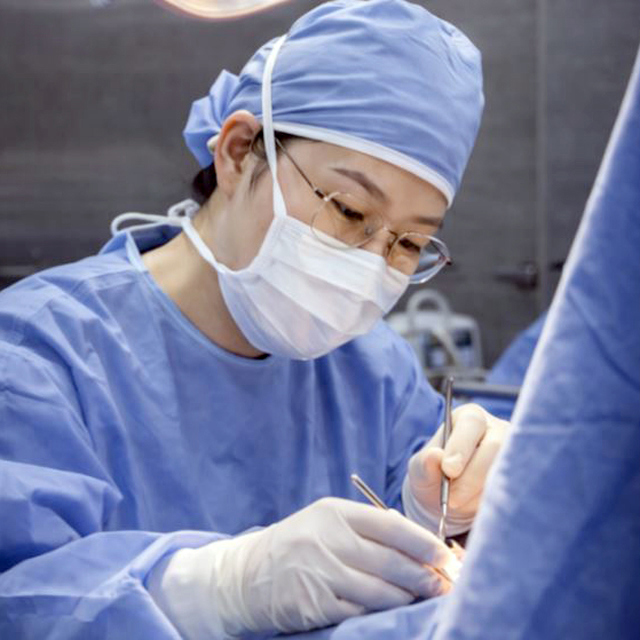
Two doctors cover this area of the clinic's dermatological work, and both of them reviewed this page.
Dr. Eun-Young Kwak leads the clinic's plastic surgery and petit centre, which is where its skin procedures sit. Both doctors perform this service; the clinic does not assign it to one of them. Which of them you see is arranged when the appointment is made rather than chosen from a list on a website.
Dr. Eun-Young Kwak is a Director and the doctor who leads the clinic's plastic surgery and petit centre. She graduated from Yonsei University College of Medicine. She is a member of the Korean Academy of Women's Aesthetic Medicine, the Korean Aesthetic Wellbeing Society, the Korean Society for Obesity and Plastic Surgery, and the Korean Society of Anti-Aging Medicine, and she previously served as a director of I-Love Petit Clinic and of Petit Queen Clinic.
The clinic's second doctor on this work is Dr. Yu-Jin Oh, whose society memberships include medical aesthetics and dermatology alongside her specialty practice.
Dr. Yu-Jin Oh is a Director and a board-certified obstetrician-gynecologist with 23 years of experience. She graduated from Jeonbuk National University Medical School, completed her internship at Samsung Medical Center Cheil General Hospital, and completed residency training in obstetrics and gynecology at Samsung Medical Center Kangbuk Samsung Hospital. She is a member of the Korean Society of Obstetrics and Gynecology, the Korean Academy of Functional Medicine, and the Korean Society of Medical Aesthetics and Dermatology.
Whoever treats you examines the lesion first, goes over its history and any changes to it, and decides whether it appears benign or needs further testing. A dermatoscope or a biopsy may be used where that is appropriate.
Mole, Wart & Skin Lesion Removal Options Available
The method follows the lesion. These are the approaches the clinic's record names, grouped by what is being treated.
Lesion | Methods recorded as options |
|---|---|
Moles | Shave removal or surgical excision, depending on the lesion and on what the examination needs to establish |
Warts | Cryotherapy, salicylic acid, electrosurgery, curettage, or selected laser treatments |
Skin tags | Snip or shave removal, electrosurgery, or cryotherapy where appropriate |
Lesions that look suspicious | Medical evaluation, rather than routine cosmetic destruction |
That last row is not a formality. The American Academy of Dermatology describes two standard approaches to taking a mole off — surgical excision, in which the whole mole is cut out and the skin stitched closed if necessary, and surgical shave, in which a blade is used — and states that in most cases the removed mole is then examined under a microscope by a specially trained doctor. The same organisation warns against doing any of this at home, listing skin injury, infection, scarring and delay to a diagnosis among the consequences.
Who Is a Good Candidate for Mole, Wart & Skin Lesion Removal?
Adults with benign moles, skin tags or confirmed warts that cause irritation, discomfort or cosmetic concern.
People willing to be assessed first, so that the diagnosis is confirmed and a suitable removal method chosen.
People whose growths catch on clothing or get nicked during shaving, which is one of the reasons the clinic's record names for requesting treatment.
A lesion that is changing, bleeding, itching, growing rapidly or failing to heal calls for medical assessment before any cosmetic removal.
Active infection, impaired healing, bleeding disorders and certain medical conditions may call for extra assessment or a modified plan.
A suspicious lesion is not destroyed without appropriate diagnostic evaluation.
What to Expect: Procedure, Recovery, and Results Timeline
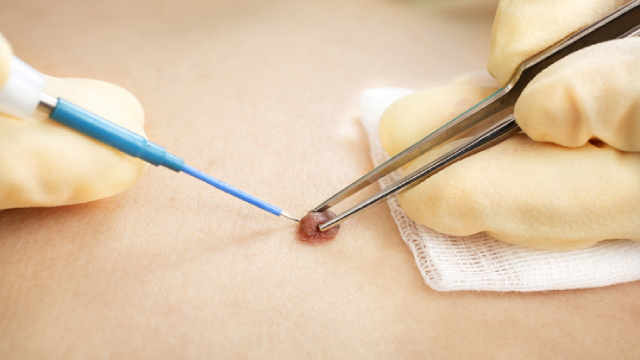
Preparation is mostly a conversation. Tell the clinician about your medications, allergies, bleeding problems, diabetes, immune-system conditions and any history of poor wound healing or raised scars, and report any change in the lesion itself, including bleeding or rapid growth. Ask whether any medication needs adjusting, and do not stop a prescribed medicine without medical advice. In the days beforehand, avoid tanning and heavy sun exposure, and do not pick or cut at the lesion or put unapproved removal products on it.
The appointment itself runs in a fixed order. The lesion is examined and identified, a treatment is chosen, the area is cleaned and local anesthesia applied if it is needed. The growth is then removed or treated with the selected technique, bleeding is controlled and the area dressed if required, tissue is sent for laboratory examination when indicated, and you leave with wound-care instructions and a follow-up arranged if one is necessary. Local anesthetic injections or numbing cream may be used, and mild discomfort, stinging or a brief burning sensation is usual rather than severe pain.
Stage | What to expect |
|---|---|
Appointment length | Roughly 10 to 30 minutes for a straightforward removal |
Anesthesia | Local anesthetic injection or numbing cream, where needed |
Redness and scabbing | Usually improving within 1 to 2 weeks |
Initial result | Visible within 1 to 2 weeks |
Wound healing | 1 to 3 weeks or longer, varying with the lesion and the method |
Scar maturing | Can continue to settle and fade over 6 to 12 months |
Wart sessions | Repeat treatment every 2 to 4 weeks may be needed |
Stay in Korea | About 2 to 3 days, allowing for consultation, treatment and an initial check |
Flying home | Generally after about 2 to 3 days, once the clinician confirms you are fit to travel |
Aftercare is simple and worth following exactly. Keep the area clean, change dressings as directed, and leave scabs and blisters alone rather than picking at them. Protect healing skin from sunlight. Get in touch with a clinician if you develop increasing redness, worsening pain, pus, fever or persistent bleeding — advice that matches what Healthdirect Australia tells patients after a mole is removed, which is to keep the wound clean, use pain relief if needed, and report redness, swelling, worsening pain or discharge.
What the treatment achieves is bounded and worth stating plainly. Removal takes away a targeted benign growth, reduces irritation and improves how the treated area looks, with the result depending on the lesion and the technique. A successfully removed benign mole or skin tag is generally gone straight away, and removal is generally permanent for the lesions treated — though new growths can appear elsewhere, and warts in particular can come back.
The honest list of possible effects includes pain, bleeding, swelling, redness, infection, scarring, and temporary or persistent lightening or darkening of the skin. Blistering is common after cryotherapy, and the treated area usually heals within four to seven days after a wart is frozen, although a scab may take one to three weeks to come away. Surgical removal may leave a permanent scar. Some lesions recur or need further treatment.
On how stubborn warts can be, DermNet reports that cryotherapy with liquid nitrogen is repeated at one to two-week intervals, that it is uncomfortable and causes blistering for several days or weeks, and that a hard freeze may leave a lasting white mark or cause temporary numbness if done over a superficial nerve. It also notes that curettage and cautery under local anaesthetic leaves a scar, which can be painful to walk on at a pressure site.
Combining Mole, Wart & Skin Lesion Removal with Other Treatments
A clinician may take off several benign lesions in one appointment where that is appropriate.
Different lesions in the same person may need different methods, so one visit does not mean one technique.
Whether to combine removal with another cosmetic procedure is decided after examining the skin and weighing the healing risks, not booked in advance.
Safety, Precision, and Clinic Standards
The paragraphs below are the clinic's own published wording on how it works, reproduced rather than summarised.
The clinic states its philosophy as: "We are committed to personalized 1:1 treatment plans tailored to each patient's condition and prioritize safety above all else in every procedure."
The clinic states that it carries out individualized pre-procedure consultations, limits surgeries to two per day, installs CCTV in all surgery and procedure rooms, and avoids unnecessary over-treatment.
Golden Balance Clinic is registered as a Medical Institution for Attracting Foreign Patients with the Republic of Korea's Ministry of Health and Welfare, under the Medical Overseas Expansion and Foreign Patients Attraction Act. That is a registration for treating international patients; it is not a facility accreditation.
English-language support is available through designated marketing, consultation, and global coordination staff, and the clinic names Scarlett Kim as its global coordinator, available from 10:00 to 20:00 KST.
Golden Balance Clinic is on the 12th floor of the Chunglim Building at 468 Gangnam-daero, Gangnam-gu, Seoul 06123, Republic of Korea. The clinic is open Monday to Sunday from 10:00 to 21:00 KST year-round, with a lunch break from 11:30 to 12:30 KST and last registration at 19:00 KST.
The Bottom Line
The technique is chosen for the lesion: excision, shave, freezing, electrosurgery or curettage, with no single method covering everything.
A straightforward removal takes roughly 10 to 30 minutes under local anesthetic or numbing cream.
Redness and scabbing generally improve within one to two weeks; a scar can keep settling for 6 to 12 months.
Warts behave differently from moles and tags — repeat sessions every two to four weeks may be needed, and recurrence is possible.
Any lesion that is changing, bleeding, itching or growing quickly is assessed medically before it is removed for cosmetic reasons.
Frequently Asked Questions
Can every growth on my skin be taken off at this appointment?
Not necessarily, and that is the point of examining first. A lesion that is changing, bleeding, itching, growing rapidly or failing to heal needs medical assessment before any cosmetic removal, and a suspicious lesion is not destroyed without appropriate diagnostic evaluation. Active infection, impaired healing, a bleeding disorder or certain medical conditions may also mean a modified plan.
How much does it hurt?
Expect mild discomfort, stinging or a short burning sensation rather than severe pain. Local anesthesia is commonly used for surgical removal, and freezing a wart can cause temporary pain or blistering afterwards. Discomfort usually eases within a few days.
When will the area look normal again?
Redness and scabbing usually improve within one to two weeks, and the initial result is visible in the same window. The wound itself may take one to three weeks or longer to heal depending on the lesion and the method used. A scar can continue to mature and fade over six to twelve months.
Will the growth come back?
For a benign mole or skin tag that has been fully removed, the result is generally lasting, although new lesions can appear elsewhere over time. Warts are the exception, because they are driven by a virus — they may need repeat treatment every two to four weeks, and recurrence is possible. Your clinician will say which category your lesion falls into.
How many days should I plan to be in Seoul?
About two to three days is the figure the clinic gives, which allows for the consultation, the treatment and an initial check if one is needed. Flying home after roughly the same interval is generally fine, provided the treating clinician confirms you are fit to travel and that no further monitoring is required.
What should make me contact a doctor after I get home?
Increasing redness, worsening pain, pus, fever or bleeding that will not stop are all reasons to seek medical attention rather than wait. Ordinary healing looks like a settling scab and fading redness over one to two weeks. Should the wound still worry you after you have flown home, the clinic's details are at the foot of this page, and a local doctor can examine it.
Book a Consultation at Golden Balance Clinic
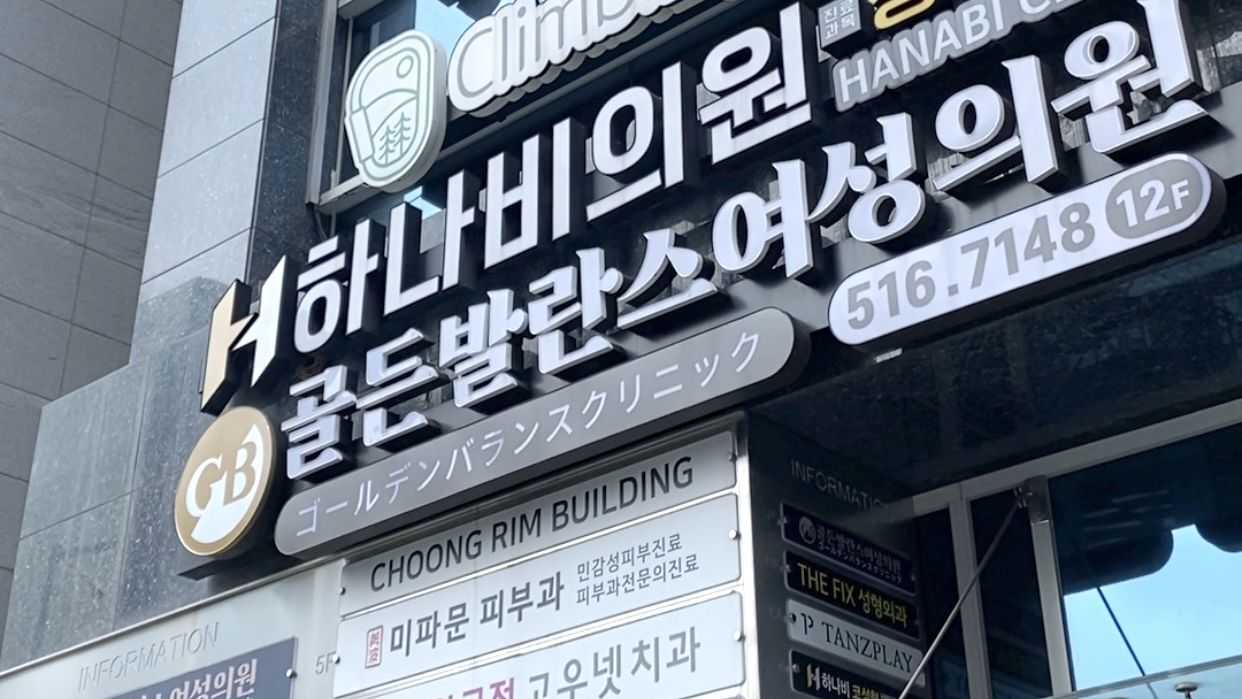
Removal of moles, warts, skin tags and similar benign growths is carried out at the clinic's premises in Gangnam-gu, Seoul, and the examination that opens the visit decides both whether to remove a given lesion and how. Photographs of the clinic's own work are published at clinic's gallery.
Contact Golden Balance Clinic through the clinic contact page, by phone on +82-2-516-7148, or by email at info@goldenbalanceclinic.com.
Disclaimer
For informational purposes only. Individual results may vary depending on each patient's medical history, physical condition, anatomy, treatment plan, and recovery. The suitability of gynecological, aesthetic, dermatological, injectable, and other medical procedures should be determined through an individual consultation with a qualified medical professional. All treatments may involve potential risks, side effects, and recovery requirements, which should be discussed before treatment. Information provided by Golden Balance Clinic does not replace professional medical advice, diagnosis, or treatment. Results may vary and individual experiences may differ.
Sources & Further Reading
NHS — where skin tags appear, how large they get, the three removal methods used, the scarring and pigmentation risk that can follow, and the warning against removing one yourself.
American Academy of Dermatology — surgical excision and surgical shave as the two standard mole-removal procedures, and the microscopic examination that usually follows.
DermNet — warts as human papillomavirus infection, spread by contact and autoinoculation; cryotherapy intervals and blistering; curettage and cautery and the scar it leaves.
Healthdirect Australia — what moles are, why most need no treatment, the local anaesthetic and blade or punch used when one is removed, and the wound-care advice afterwards.
Other Services
Explore additional treatments offered by our specialists.
Eyebrow Semi-Permanent Makeup
Eyebrow semi-permanent makeup is a cosmetic tattooing procedure that deposits pigment into the skin to enhance eyebrow shape, definition, and color.
Learn More
Facial Contour Micropigmentation
Facial contour micropigmentation refers to depositing pigment into the skin to create or enhance selected facial features.
Learn More
Eyeliner & Eye Enhancement PMU
Eyeliner PMU is a cosmetic tattooing procedure that deposits pigment into the skin around the eyelids to create a longer-lasting eyeliner effect.
Learn More