Personalized Medical Care & Dedicated International Patient Concierge

Lifting & Skin Tightening · Consultation Required
Non-Surgical Nose Thread Lift
Non-Surgical Nose Thread Lift is a minimally invasive procedure that uses specialised medical-grade absorbable threads to reshape, define and elevate the nose bridge and tip without an operation.
Schedule a ConsultationNon-Surgical Nose Thread Lift in Seoul, Republic of Korea

Medically reviewed by Dr. Eun-Young Kwak, MD, graduate of Yonsei University College of Medicine Golden Balance Clinic, Gangnam-gu, Seoul
Non-Surgical Nose Thread Lift is a minimally invasive procedure that uses specialised medical-grade absorbable threads to reshape, define and elevate the nose bridge and tip without an operation. It works on contour and projection within the soft tissue, not on the cartilage framework underneath, and that distinction decides almost everything about who it suits. The appointment is short, the change is visible straight away, and the effect is temporary.
What Is Non-Surgical Nose Thread Lift?
Non-Surgical Nose Thread Lift is a minimally invasive cosmetic procedure designed to reshape, define and elevate the nose bridge and tip using specialised medical-grade absorbable threads.
The procedure usually takes 20 to 30 minutes.
Local anesthesia or topical numbing cream is applied to the area for comfort.
Absorbable threads, such as those made of polydioxanone or polycaprolactone, are placed with fine needles or blunt cannulas intended for nasal tissue.
Threads go into the nasal bridge, the tip, or both, and their position is adjusted to improve projection and definition.
Results are visible immediately, then settle; this is a soft-tissue procedure, not a structural one.
The clinic places it within Lifting & Skin Tightening at its Gangnam-gu premises.
Because the procedure is marketed heavily and studied lightly, the most useful external evidence comes from the surgeons who see it when it goes wrong. A case series in Clinical and Experimental Otorhinolaryngology reviewed seven patients who underwent revision rhinoplasty because of complications of thread rhinoplasty between 2018 and 2021. Visible or extruded threads at the tip were the most common complication, followed by irregularity of the dorsum. The authors report that all the threads were unabsorbed and intact in shape even several years after insertion, and that removing them required careful tissue dissection which resulted in the loss of tip support and dorsal irregularity, so that autologous tissue grafts were needed to restore the tip and camouflage the bridge.
That paper also explains why placement technique matters so much in this particular area. It states that thread exposure at the tip is mostly caused by an incorrect insertion technique, and that because the tip is a mobile part with relatively poor blood circulation, improper insertion inevitably results in pain, thread exposure or infection. The authors add that thread rhinoplasty can be effective for mild tip ptosis or a slight increase in dorsal volume in patients with thick skin, but that surgery using grafts is preferable where a considerable change in tip projection or dorsal height is wanted.
Infection is the other reported line of harm. A case series in Aesthetic Plastic Surgery followed seven patients who presented with complications after rhinoplasty performed with absorbable polydioxanone thread. Three of them had severe complications involving open wounds, abscesses and skin necrosis, while four had milder problems including redness and thread exposure without an open wound, with the nasal tip and the inner lining the sites involved. Six of the seven had a history of previous rhinoplasty, and the authors' conclusion was that the thread cannot be seen on radiological imaging, that severe infection can require extensive debridement, and that patients who already have implants are better off not having thread rhinoplasty at all.
Who Performs Non-Surgical Nose Thread Lift at Golden Balance Clinic

Dr. Eun-Young Kwak
Plastic Surgery/Petit Center Doctor
A nose tolerates very little improvisation, and the planning matters more than the technique.
The doctor who designs and carries out this procedure at the clinic, and who reviewed this page, is Dr. Eun-Young Kwak.
Dr. Eun-Young Kwak is a Director and the doctor who leads the clinic's plastic surgery and petit centre. She graduated from Yonsei University College of Medicine. She is a member of the Korean Academy of Women's Aesthetic Medicine, the Korean Aesthetic Wellbeing Society, the Korean Society for Obesity and Plastic Surgery, and the Korean Society of Anti-Aging Medicine, and she previously served as a director of I-Love Petit Clinic and of Petit Queen Clinic.
Her consultation evaluates nasal anatomy, skin thickness, facial proportions and the individual's aesthetic goals, and from those she designs a customised thread insertion plan. Skin thickness is not a detail in this assessment; it changes what can be achieved and what can be seen afterwards.
Who Is a Good Candidate for Non-Surgical Nose Thread Lift?
People seeking subtle refinement, enhancement of the bridge or elevation of the tip.
People whose structural adjustment needs are mild to moderate rather than extensive.
People who prefer a non-surgical approach and want to avoid lengthy downtime.
Individuals requiring major structural cartilage reconstruction are not suitable candidates.
Individuals with severe nasal deformities are not suitable candidates.
An active skin infection at the site rules the procedure out until it has resolved.
What to Expect: Procedure, Recovery, and Results Timeline
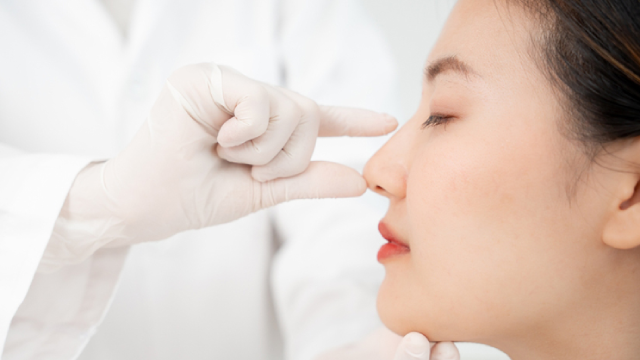
Design comes before anything else. The consultation looks at nasal anatomy, skin thickness and facial proportions alongside what you are hoping to change, and produces a thread insertion plan specific to your nose.
Preparation asks you to stop certain things and to attend a medical consultation beforehand. Blood-thinning medications, anti-inflammatory drugs, alcohol and health supplements are all to be avoided in advance. List everything you take for the clinic, prescription or not, and leave decisions about prescribed medicines to the prescriber rather than acting alone.
The procedure itself is brief. The nasal area is cleansed, local anesthesia is applied — usually by injection, sometimes with topical numbing cream first — and the absorbable threads are inserted into the bridge or the tip, then adjusted in position to improve projection and definition. People describe mild pain, with slight pressure, swelling or tenderness afterwards.
Stage | What to expect |
|---|---|
Procedure length | 20 to 30 minutes |
Anesthesia | Local anesthesia or topical numbing cream |
Swelling and bruising | Mild, usually improving within 1 to 2 weeks |
When results show | Immediately, then settling over 2 to 4 weeks |
How long effects last | 4 to 6 weeks or longer, depending on the threads used and individual factors |
Stay in Korea | 2 to 3 days, covering treatment and a brief post-procedure check-up |
Flying home | Generally after 2 to 3 days, once the treating clinician confirms recovery is stable |
Aftercare is specific and physical. Do not press or rub the nose. Leave heavy eyeglasses off for a few days. Avoid strenuous exercise, saunas and alcohol for a week. These restrictions exist because the threads are holding a position in a small, mobile area, and pressure from a spectacle bridge is exactly the kind of force the instruction is written against.
The benefits recorded are an elevated nasal bridge, a refined nose tip, sharper contours and improved facial harmony without surgical incisions, and the approved description is non-surgical temporary nasal elevation with refinement of the bridge and tip contours. Note the word temporary: the recorded duration of effect is weeks to longer, not years, and the comparison with surgery should start from that.
The side effects listed are temporary swelling, mild bruising, localised tenderness and mild redness around the thread entry points. The risks to understand are thread asymmetry and displacement, which are rare, alongside those same temporary effects.
Combining Non-Surgical Nose Thread Lift with Other Treatments
Hyaluronic acid nasal fillers may be used alongside the threads for smoother contours and added structural stability.
Skin boosters are the other combination the clinic's record names.
Surgical rhinoplasty is an alternative rather than a companion, and it is the route for permanent structural reshaping.
Dermal fillers on their own are the other recorded alternative, adding volume without the mechanical support that threads provide.
Safety, Precision, and Clinic Standards
Quoted below, unchanged, are the clinic's published statements about how it works.
The clinic states its philosophy as: "We are committed to personalized 1:1 treatment plans tailored to each patient's condition and prioritize safety above all else in every procedure."
The clinic states that it carries out individualized pre-procedure consultations, limits surgeries to two per day, installs CCTV in all surgery and procedure rooms, and avoids unnecessary over-treatment.
Golden Balance Clinic is registered as a Medical Institution for Attracting Foreign Patients with the Republic of Korea's Ministry of Health and Welfare, under the Medical Overseas Expansion and Foreign Patients Attraction Act. That is a registration for treating international patients; it is not a facility accreditation.
English-language support is available through designated marketing, consultation, and global coordination staff, and the clinic names Scarlett Kim as its global coordinator, available from 10:00 to 20:00 KST.
Golden Balance Clinic is on the 12th floor of the Chunglim Building at 468 Gangnam-daero, Gangnam-gu, Seoul 06123, Republic of Korea. The clinic is open Monday to Sunday from 10:00 to 21:00 KST year-round, with a lunch break from 11:30 to 12:30 KST and last registration at 19:00 KST.
For a procedure this dependent on technique, the questions you ask are part of your protection. The National Health Service advises booking a consultation with the person who will actually carry out the procedure before making a final decision, and asking how many of these procedures they have done, what qualifications and training they hold, and what the most common complications are. It also says you should not pay for a procedure before having that consultation. The General Medical Council requires doctors offering cosmetic interventions to take account of patients' vulnerabilities and psychological needs, which matters particularly where the feature under discussion is at the centre of the face.
The Bottom Line
Absorbable threads are placed in the nasal bridge or tip to refine contour and lift the tip; no incision is made.
The appointment runs 20 to 30 minutes under local anesthesia or topical numbing.
The change is visible immediately and settles over two to four weeks.
The effect is temporary, recorded as lasting 4 to 6 weeks or longer depending on the threads and the individual.
Major cartilage reconstruction, severe nasal deformity and active skin infection all rule the procedure out.
Frequently Asked Questions
What can this change about my nose, and what can it not?
It can lift the tip, add definition to the bridge, sharpen contour and improve facial balance, all within the soft tissue. It cannot rebuild cartilage, correct a severe deformity or produce a permanent structural change. Where a considerable alteration in tip projection or bridge height is the goal, that is surgical territory and should be discussed as such.
Is it painful?
It can be mildly painful, and local anesthesia or topical numbing cream is normally used to reduce the discomfort. Afterwards you may notice slight pressure, swelling or tenderness in the area. The nose is a sensitive region, so it is reasonable to ask at the consultation exactly what pain control will be used.
Why can't I wear my glasses?
Heavy eyeglasses press directly on the bridge, which is one of the places the threads are holding a position. Leaving them off for a few days is part of the standard aftercare, alongside not pressing or rubbing the nose and avoiding strenuous exercise, saunas and alcohol for a week. If you depend on glasses daily, raise it before you book, not afterwards.
How long will the result actually last?
The recorded duration is four to six weeks or longer, depending on the threads used and on individual factors, with the appearance settling over the first two to four weeks. That is a short horizon compared with surgery, and it is the single most important number to have straight before deciding. Permanent reshaping is not what this procedure offers.
What happens if a thread becomes visible or needs removing?
Published revision series report visible or extruded threads at the tip as the most common complication seen by surgeons, and describe removal as requiring careful dissection that can weaken tip support and leave the bridge irregular. That is a reason to treat any pain, redness, visible thread or suspected infection as something to have assessed promptly rather than watched.
Can I have it if I have had nose surgery or an implant before?
That needs a direct conversation with the doctor. One published case series of infections after thread rhinoplasty found that six of its seven patients had a history of previous rhinoplasty, and its authors advised against thread rhinoplasty for patients who already have implants. Disclose any previous nasal procedure at the consultation.
How many days should I plan to be in Seoul?
Two to three days is the usual allowance, covering the treatment and a brief check-up afterwards. Flying home after two to three days is generally reasonable once the treating clinician confirms your recovery is stable and you are fit to travel. Arrange the schedule with the clinic before you commit to flights.
Book a Consultation at Golden Balance Clinic
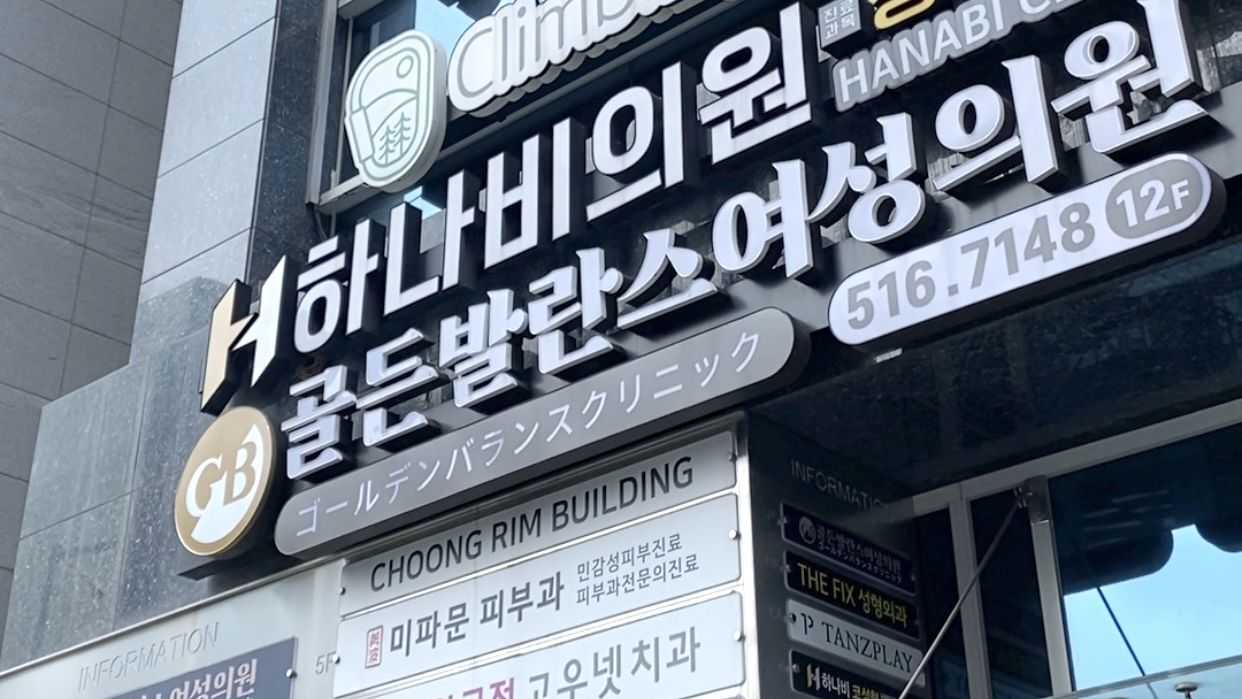
Non-Surgical Nose Thread Lift is performed at the clinic's Gangnam-gu premises in Seoul, and the consultation settles whether your nose is one that threads can refine or one that needs a different answer. You can look through photographs the clinic has taken of its own patients at clinic's gallery.
Contact Golden Balance Clinic through the clinic contact page, by phone on +82-2-516-7148, or by email at info@goldenbalanceclinic.com.
Disclaimer
For informational purposes only. Individual results may vary depending on each patient's medical history, physical condition, anatomy, treatment plan, and recovery. The suitability of gynecological, aesthetic, dermatological, injectable, and other medical procedures should be determined through an individual consultation with a qualified medical professional. All treatments may involve potential risks, side effects, and recovery requirements, which should be discussed before treatment. Information provided by Golden Balance Clinic does not replace professional medical advice, diagnosis, or treatment. Results may vary and individual experiences may differ.
Sources & Further Reading
Clinical and Experimental Otorhinolaryngology — case series on the presentation patterns and surgical management of thread rhinoplasty complications: the most common presentations, the unabsorbed state of the threads, the consequences of removal, and the authors' view on insertion technique and on when grafts are preferable.
Aesthetic Plastic Surgery — case series on skin infection after rhinoplasty with absorbable polydioxanone thread: the severe and mild presentations, the sites involved, the proportion with previous rhinoplasty, and the authors' advice regarding patients with existing implants.
National Health Service — advice on booking a consultation with the person who will perform the procedure, the questions to ask about their experience and the common complications, and not paying before that consultation.
General Medical Council — professional standards for doctors offering cosmetic interventions, including taking account of patients' vulnerabilities and psychological needs.
Other Services
Explore additional treatments offered by our specialists.
Eyebrow Semi-Permanent Makeup
Eyebrow semi-permanent makeup is a cosmetic tattooing procedure that deposits pigment into the skin to enhance eyebrow shape, definition, and color.
Learn More
Facial Contour Micropigmentation
Facial contour micropigmentation refers to depositing pigment into the skin to create or enhance selected facial features.
Learn More
Eyeliner & Eye Enhancement PMU
Eyeliner PMU is a cosmetic tattooing procedure that deposits pigment into the skin around the eyelids to create a longer-lasting eyeliner effect.
Learn More