Personalized Medical Care & Dedicated International Patient Concierge

Pelvic Floor & Urinary Health · Consultation Required
Pelvic Floor Botox
Pelvic Floor Botox is an injection of botulinum toxin into selected pelvic floor muscles, given to reduce excessive muscle contraction and tightness.
Schedule a ConsultationPelvic Floor Botox in Seoul, Republic of Korea

Medically reviewed by Dr. Jong-Yeol Kim, board-certified obstetrician-gynecologist, and Dr. Yu-Jin Oh, board-certified obstetrician-gynecologist Golden Balance Clinic, Gangnam-gu, Seoul
Pelvic Floor Botox is an injection of botulinum toxin into selected pelvic floor muscles, given to reduce excessive muscle contraction and tightness. It is considered for selected patients with high-tone pelvic floor dysfunction, pelvic muscle pain or painful penetration. The injection appointment is short, local anesthesia is used, and the treatment is normally reached only after conservative care has been tried.
What Is Pelvic Floor Botox?
Pelvic Floor Botox treats a muscle problem directly: botulinum toxin is placed into the pelvic floor muscles that will not release, so that their excessive contraction eases.
The target is muscle tone, not tissue volume or appearance. Nothing is added to or removed from the anatomy.
Local anesthesia is used for the injection.
The injection itself takes roughly 15 to 30 minutes.
Equipment is simple — sterile injection supplies and a means of identifying the pelvic floor muscles. Whether ultrasound, electromyography, needle guides or other tools are used varies with the technique.
It is listed among the clinic's Pelvic Floor & Urinary Health services in Gangnam-gu, Seoul.
Patients in the United States who ask about it are usually describing one of three things: pelvic muscle pain that will not settle, intercourse that hurts, or a pelvic floor they cannot consciously relax. The muscle group involved is the levator ani, and the pattern has a name in the clinical literature. A StatPearls chapter hosted by the NCBI Bookshelf describes levator ani syndrome as resulting from spasmodic contraction of that muscle, producing recurrent and chronic burning pain, pressure, tenesmus or discomfort without detectable organic pathology.
How the drug acts on that spasm is well described. A study protocol published in BMJ Open explains that inhibition of acetylcholine release by botulinum toxin A produces a localised, partial and reversible chemical denervation of the muscle, causing localised muscle weakness. The same paper notes that the toxin has also been found to block the release of neurogenic inflammatory substances in afferent nerve fibres, which the authors link to peripheral desensitisation. Botulinum toxin is a drug class rather than a single product, and the dose, the muscles chosen and the injection route are decisions made by the treating clinician for each patient.
Who Performs Pelvic Floor Botox at Golden Balance Clinic
|
|
Dr. Jong-Yeol Kim | Dr. Yu-Jin Oh |


This is an injection into muscles that lie deep in the pelvis, and it is held by the clinic's two obstetrician-gynecologists, who reviewed this page as well.
Medical Director Dr. Jong-Yeol Kim brings three decades in obstetrics and gynecology to the assessment that decides whether an injection is the right next step at all.
Dr. Jong-Yeol Kim is the Medical Director of Golden Balance Clinic and a board-certified obstetrician-gynecologist with 30 years of experience. He graduated from Hallym University College of Medicine and completed his internship and residency training in obstetrics and gynecology at Hallym University Sacred Heart Hospital. He is a regular member of the Korean Society of Obstetrics and Gynecology.
Alongside him, Dr. Yu-Jin Oh holds the same board certification and a parallel set of society memberships in gynecology and related fields.
Dr. Yu-Jin Oh is a Director and a board-certified obstetrician-gynecologist with 23 years of experience. She graduated from Jeonbuk National University Medical School, completed her internship at Samsung Medical Center Cheil General Hospital, and completed residency training in obstetrics and gynecology at Samsung Medical Center Kangbuk Samsung Hospital. She is a member of the Korean Society of Obstetrics and Gynecology, the Korean Academy of Functional Medicine, and the Korean Society of Medical Aesthetics and Dermatology.
Both doctors perform this service; the clinic does not assign it to one of them.
Who Is a Good Candidate for Pelvic Floor Botox?
People with confirmed high-tone pelvic floor dysfunction.
People with myofascial pelvic pain.
People in either group whose symptoms have not improved sufficiently with conservative treatments such as pelvic floor physical therapy.
People whose suitability has been assessed by a specialist, which is a requirement rather than a formality.
Several circumstances point away from the injection, at least for now. An active infection at the injection site, certain neuromuscular disorders and relevant medication interactions may all make a patient unsuitable, and other contraindications exist. Pregnancy and breastfeeding should be discussed with the treating clinician, because safety data in those situations are limited. Suitability is an individual judgement in every case.
The sequencing matters as much as the eligibility. The BMJ Open protocol describes first-line treatment for chronic pelvic pain as pelvic floor physiotherapy, possibly combined with psychological or sexological consultation, and positions a botulinum toxin A injection as a reasonable second-line intervention for patients in whom that first line has failed. The clinic's own criteria sit in the same place: conservative care first, injection afterwards.
What to Expect: Procedure, Recovery, and Results Timeline
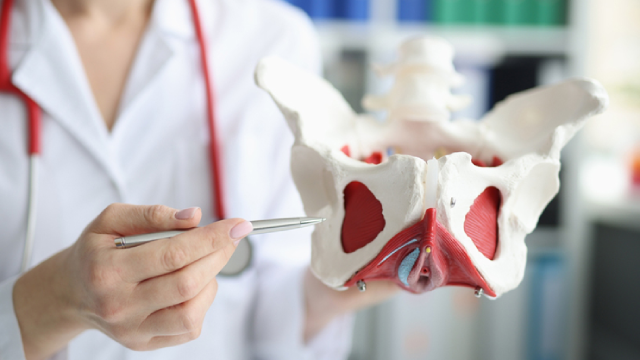
Before anything is injected, the clinician reviews symptoms, medical history, previous treatments and current medications, then assesses the pelvic floor muscles for tenderness and tightness by examination. Further testing may be needed to exclude other causes of pelvic pain — the injection treats muscle tone, so a diagnosis that is not muscular would not be addressed by it.
The appointment itself runs in five steps. Symptoms are reviewed and the treatment plan confirmed; painful or overactive muscles are identified during examination; the injection area is prepared and appropriate pain control given; the selected muscles are injected; and the patient is monitored before follow-up is arranged.
Some discomfort, pressure or brief needle pain may occur during the injections. How much depends on the injection technique and on whether local or general anesthesia is used.
Stage | What to expect |
|---|---|
Injection appointment | Approximately 15 to 30 minutes |
Return to routine activities | Usually within 1 to 2 days, depending on the injection technique and anesthesia |
Stay in Korea | Roughly 2 to 3 days, depending on the treatment and follow-up requirements |
Flying home | Generally after 2 to 3 days, once your treating doctor confirms you are fit to travel |
Effect begins | May start within several days |
Full effect | Develops over roughly 1 to 2 weeks |
Formal reassessment | Improvement may be assessed within 2 to 6 weeks |
Aftercare is short but not optional. Follow the clinic's instructions on activity, pain relief and follow-up. Contact the clinician if pain worsens, if urinating becomes difficult, if new problems with bowel control appear, or if there are signs of infection. Difficulty breathing or swallowing, or widespread weakness, calls for urgent care rather than a message.
The side effects to expect are mostly local: temporary soreness, tenderness, bruising or minor bleeding at the injection sites. Depending on which muscles are treated, temporary changes in urinary or bowel control are also possible, as are injection-site pain and temporary muscle weakness. More serious complications are possible and require individual risk assessment, so ask the treating doctor what the risks are for the specific injection being planned and when to seek help. The BMJ Open protocol lists the same categories for this procedure — bleeding or infection from the injection, problems related to a temporarily altered pelvic floor such as transient urinary or faecal incontinence or constipation, and, very rarely, an anaphylactic reaction.
Realistic expectations matter here more than usual. Treatment may reduce pelvic muscle tightness, spasms and the pain associated with them in selected patients. Response varies and improvement is not guaranteed, and the injection is generally used alongside physical therapy rather than as a standalone cure. The published evidence is genuinely mixed: an evidence review published by CADTH on the NCBI Bookshelf found that two randomised controlled trials comparing botulinum toxin A injections with placebo in myofascial pelvic pain or provoked vestibulodynia showed no difference between the groups in pain reduction, and that no guidelines or recommendations on injectable botulinum toxin for pelvic floor pain were identified. The authors of the BMJ Open protocol describe the evidence on injection into hypertonic pelvic floor muscles as conflicting, and note the small sample sizes and differing treatment protocols behind it. A separate StatPearls review of dyspareunia reports that botulinum toxin injection has proved effective in dyspareunia caused by pelvic floor myalgia and contracture, which is why the question remains open rather than closed.
Combining Pelvic Floor Botox with Other Treatments
Botulinum toxin may be combined with pelvic floor physical therapy where that is clinically appropriate.
A home relaxation programme may run alongside it.
Relaxation training and biofeedback belong to the same family of options, used before an injection is considered or alongside one.
Selected pain-relief or muscle-relaxant treatments may form part of the overall plan.
The injection is positioned as an addition to a programme rather than a replacement for it.
Safety, Precision, and Clinic Standards
The clinic states its philosophy as: "We are committed to personalized 1:1 treatment plans tailored to each patient's condition and prioritize safety above all else in every procedure."
The clinic states that it carries out individualized pre-procedure consultations, limits surgeries to two per day, installs CCTV in all surgery and procedure rooms, and avoids unnecessary over-treatment.
Golden Balance Clinic is registered as a Medical Institution for Attracting Foreign Patients with the Republic of Korea's Ministry of Health and Welfare, under the Medical Overseas Expansion and Foreign Patients Attraction Act. That is a registration for treating international patients; it is not a facility accreditation.
English-language support is available through designated marketing, consultation, and global coordination staff, and the clinic names Scarlett Kim as its global coordinator, available from 10:00 to 20:00 KST.
Golden Balance Clinic is on the 12th floor of the Chunglim Building at 468 Gangnam-daero, Gangnam-gu, Seoul 06123, Republic of Korea. The clinic is open Monday to Sunday from 10:00 to 21:00 KST year-round, with a lunch break from 11:30 to 12:30 KST and last registration at 19:00 KST.
The Bottom Line
Botulinum toxin is injected into selected pelvic floor muscles to reduce excessive contraction and tightness.
It is considered for confirmed high-tone pelvic floor dysfunction or myofascial pelvic pain that conservative treatment has not relieved enough.
The injection takes roughly 15 to 30 minutes under local anesthesia; most patients return to routine activities within one to two days.
The effect may begin within days and develop over one to two weeks, with formal reassessment at two to six weeks.
Response varies, improvement is not guaranteed, and the injection usually accompanies physical therapy rather than replacing it.
Frequently Asked Questions
Why is physical therapy tried before an injection?
Because the injection is positioned as a later step, not a first one. Candidacy rests on a diagnosis of high-tone pelvic floor dysfunction, or of myofascial pelvic pain, in someone for whom earlier conservative care has not given enough relief — and pelvic floor physical therapy is the main form that earlier care takes. Published guidance on chronic pelvic pain describes the same order, with injection considered once first-line therapy has failed.
Will I be asleep for it?
No. Local anesthesia is used. You can expect some discomfort, a sensation of pressure, or brief needle pain while the injections are given, and how much of that you feel depends on the technique and on the type of anesthesia used.
How quickly does it work, and how will anyone know whether it worked?
The effect may begin within several days and reach its full extent over roughly one to two weeks. Formal reassessment of improvement usually falls somewhere between two and six weeks after the injection, which is why the follow-up arrangement is made before you leave.
What are the risks I should weigh?
Soreness, tenderness, bruising and minor bleeding at the injection sites are the common ones, and they are temporary. Depending on which muscles are treated, temporary changes in urinary or bowel control can occur, along with temporary muscle weakness. More serious complications are possible and need individual assessment, so ask the treating doctor to go through the risks of your specific injection and the signs that should prompt a call.
What should I tell the clinic before the appointment?
Medications, allergies, pregnancy or breastfeeding, any neuromuscular condition, and any previous botulinum toxin injections. Ask whether fasting or a medication adjustment is needed in case sedation or anesthesia is planned. Do not stop a prescribed medication without medical advice, and mention blood-thinning medicines and supplements specifically.
Is it safe during pregnancy or while breastfeeding?
That is a conversation to have with the treating clinician rather than a question with a general answer, because safety data in pregnancy and breastfeeding are limited. Raise it early, before an appointment is scheduled, so that the plan accounts for it.
How long should I stay in Korea?
Around two to three days, depending on the treatment and the follow-up required. Flying home is generally possible after that, provided your treating doctor confirms you are fit to travel. The reassessment window falls weeks later, so the follow-up conversation usually happens after you are back.
Does it cure the problem?
It is not presented that way. The realistic aim is a reduction in pelvic muscle tightness, spasms and the pain that goes with them in selected patients, with the injection used alongside physical therapy. Response varies between individuals, and the randomised evidence comparing this injection with placebo is mixed rather than settled.
Book a Consultation at Golden Balance Clinic

Pelvic Floor Botox is carried out at the clinic in Gangnam-gu, Seoul, and whether it is appropriate at all is a question the specialist assessment answers first.
Contact Golden Balance Clinic through the clinic contact page, by phone on +82-2-516-7148, or by email at info@goldenbalanceclinic.com.
Disclaimer
For informational purposes only. Individual results may vary depending on each patient's medical history, physical condition, anatomy, treatment plan, and recovery. The suitability of gynecological, aesthetic, dermatological, injectable, and other medical procedures should be determined through an individual consultation with a qualified medical professional. All treatments may involve potential risks, side effects, and recovery requirements, which should be discussed before treatment. Information provided by Golden Balance Clinic does not replace professional medical advice, diagnosis, or treatment. Results may vary and individual experiences may differ.
Sources & Further Reading
BMJ Open — protocol for a multicentre randomised controlled trial of botulinum toxin A in pelvic floor muscles: the acetylcholine mechanism and reversible chemical denervation, the second-line position after failed pelvic floor physiotherapy, the conflicting evidence, and the procedure's risk categories.
NCBI Bookshelf — CADTH rapid review of injectable botulinum toxin for pelvic floor pain: two placebo-controlled randomised trials showed no difference in pain reduction, and no guidelines or recommendations were identified.
National Library of Medicine — StatPearls chapter on the levator ani muscle, including levator ani syndrome as spasmodic contraction of that muscle causing chronic burning pain, pressure or discomfort.
National Center for Biotechnology Information — StatPearls review of dyspareunia, which reports botulinum toxin injection as effective in dyspareunia caused by pelvic floor myalgia and contracture.
Other Services
Explore additional treatments offered by our specialists.
Eyebrow Semi-Permanent Makeup
Eyebrow semi-permanent makeup is a cosmetic tattooing procedure that deposits pigment into the skin to enhance eyebrow shape, definition, and color.
Learn More
Facial Contour Micropigmentation
Facial contour micropigmentation refers to depositing pigment into the skin to create or enhance selected facial features.
Learn More
Eyeliner & Eye Enhancement PMU
Eyeliner PMU is a cosmetic tattooing procedure that deposits pigment into the skin around the eyelids to create a longer-lasting eyeliner effect.
Learn More