Personalized Medical Care & Dedicated International Patient Concierge

Pelvic Floor & Urinary Health · Consultation Required
Pelvic Floor Reconstruction
Pelvic floor reconstruction is a group of surgical procedures intended to restore support to the pelvic organs when the muscles, ligaments or connective tissues holding them have weakened.
Schedule a ConsultationPelvic Floor Reconstruction in Seoul, Republic of Korea

Medically reviewed by Dr. Jong-Yeol Kim, board-certified obstetrician-gynecologist, and Dr. Yu-Jin Oh, board-certified obstetrician-gynecologist Golden Balance Clinic, Gangnam-gu, Seoul
Pelvic floor reconstruction is a group of surgical procedures intended to restore support to the pelvic organs when the muscles, ligaments or connective tissues holding them have weakened. Depending on what has given way, surgery may repair the front or the back vaginal wall, support the top of the vagina, or correct pelvic organ prolapse. Not every patient with pelvic floor symptoms needs an operation, and establishing which ones do is the point of the assessment.
What Is Pelvic Floor Reconstruction?
Pelvic floor reconstruction repairs or reinforces the tissue that is supposed to hold the pelvic organs in place, using the approach that fits the particular support defect rather than a single standard operation.
The problem it treats is loss of support, not loss of muscle tone: tissue has stretched or torn, and organs have moved.
Repairs are described by compartment — the front wall, the back wall, or the top of the vagina.
General, spinal or epidural anesthesia may be used.
The operation generally takes one to three hours.
It is the reconstructive end of Pelvic Floor & Urinary Health at the clinic in Gangnam-gu, Seoul.
Prolapse is named by which organ has dropped. The Office on Women's Health describes the pelvic muscles and tissues as supporting the pelvic organs like a hammock, and lists the most common types as a dropped bladder, known as a cystocele; a rectocele, where the rectum bulges into or out of the vagina; and a dropped uterus, sometimes accompanied by a small bowel prolapse called an enterocele. The symptoms it records are recognisable: seeing or feeling a bulge, a sensation of pressure, aching or fullness in the pelvis that worsens on standing or coughing or as the day goes on, leaking urine or difficulty with bowel movements, and trouble inserting tampons.
The commonest version has been studied closely. The National Institute of Diabetes and Digestive and Kidney Diseases describes a cystocele as the supportive tissues around the bladder and vaginal wall weakening and stretching so that both fall into the vaginal canal, and notes that it may also be called a prolapsed bladder or anterior vaginal wall prolapse. That source also explains a complication patients rarely anticipate: a cystocele can press on or kink the urethra and cause urinary retention, so that the bladder cannot be emptied completely.
Who Performs Pelvic Floor Reconstruction at Golden Balance Clinic
|
|
Dr. Jong-Yeol Kim | Dr. Yu-Jin Oh |

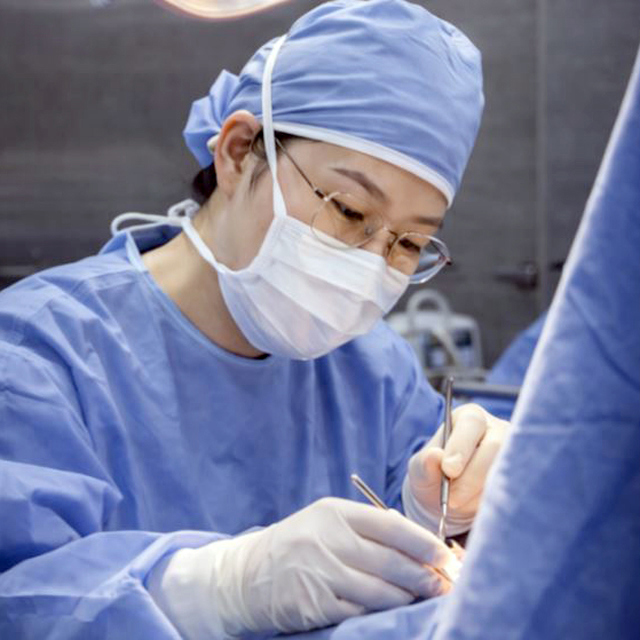
The surgeons for this operation are the clinic's two board-certified obstetrician-gynecologists, who also reviewed this page.
Leading them is Dr. Jong-Yeol Kim, whose career spans three decades in the specialty in which pelvic support defects are diagnosed and repaired.
Dr. Jong-Yeol Kim is the Medical Director of Golden Balance Clinic and a board-certified obstetrician-gynecologist with 30 years of experience. He graduated from Hallym University College of Medicine and completed his internship and residency training in obstetrics and gynecology at Hallym University Sacred Heart Hospital. He is a regular member of the Korean Society of Obstetrics and Gynecology.
Alongside him practises Dr. Yu-Jin Oh, who holds the same board certification and memberships that reach into functional medicine and medical aesthetics as well.
Dr. Yu-Jin Oh is a Director and a board-certified obstetrician-gynecologist with 23 years of experience. She graduated from Jeonbuk National University Medical School, completed her internship at Samsung Medical Center Cheil General Hospital, and completed residency training in obstetrics and gynecology at Samsung Medical Center Kangbuk Samsung Hospital. She is a member of the Korean Society of Obstetrics and Gynecology, the Korean Academy of Functional Medicine, and the Korean Society of Medical Aesthetics and Dermatology.
Both doctors perform this service; the clinic does not assign it to one of them.
Pelvic Floor Reconstruction Options Available
Reconstruction is a category, and the procedures inside it differ by which compartment has failed, by the route taken and by what the patient wants afterwards.
Repair | What it addresses | Route |
|---|---|---|
Anterior vaginal repair | A dropped bladder pressing into the front vaginal wall | Through the vagina |
Posterior wall repair | Bulging of the back vaginal wall | Through the vagina |
Apical support | The top of the vagina or the uterus losing suspension | Through the vagina or the abdomen |
Obliterative surgery | Severe prolapse in patients who do not plan vaginal intercourse | Through the vagina |
The front-wall repair has a standard form. The NIDDK describes the most common operation for a cystocele as anterior vaginal repair, also called anterior colporrhaphy, in which the surgeon returns the bladder to its normal position and tightens the supporting muscles and tissues with stitches; it adds that a procedure to treat or prevent urinary incontinence may be performed at the same time. For the obliterative option, the Office on Women's Health describes colpocleisis as surgery that treats prolapse by closing the vaginal opening, and presents it as a reasonable choice for women who do not plan to have, or no longer have, vaginal intercourse. The trade is explicit and is discussed before anything is scheduled.
Support for the top of the vagina is where approach matters most. A StatPearls chapter on pelvic organ prolapse, hosted by the NCBI Bookshelf, describes adequate support of the vaginal apex as a critical component of successful repair in advanced prolapse, notes that some techniques rely on the patient's own tissues and ligaments for suspension while others incorporate graft material, and summarises the trade-off between routes: transvaginal approaches offer shorter operating and recovery times, while abdominal approaches tend to be more durable with lower recurrence rates. The same chapter sets out the goals that a reconstructive plan is measured against — relief of symptoms, preservation or improvement of sexual function, prevention of new support defects and of incontinence, and restoration of adequate pelvic support.
Who Is a Good Candidate for Pelvic Floor Reconstruction?
Patients with clinically diagnosed pelvic organ prolapse or a pelvic support defect.
Patients whose symptoms interfere with daily activities.
Patients for whom surgery is appropriate given the type and severity of the prolapse.
Patients whose general health, previous operations and treatment preferences have been weighed in the decision.
Patients who have discussed any plans for future pregnancy, because those plans affect both the timing and the choice of operation.
Not everyone belongs in this group, and some belong in it later rather than now. Active infection, uncontrolled medical conditions or anything that raises the risk of surgery or anesthesia may mean postponing. Mild symptoms may be better served by pelvic floor muscle training or a pessary than by an operation. The NHS makes the same point from the other direction: it states that a prolapse causing no symptoms, or one that is not bothering the patient, may not need medical treatment at all, and it places hormone treatment applied to the vagina, vaginal support pessaries, and physiotherapy with pelvic floor muscle training alongside surgery as the options to weigh. Final suitability rests on an individual medical evaluation covering the type and severity of the condition and the patient's overall health.
What to Expect: Procedure, Recovery, and Results Timeline

Assessment begins with medical and surgical history, a discussion of pelvic symptoms and how far they interfere with daily life, and a pelvic examination that establishes the type and severity of any prolapse. Further tests may be added where there are urinary or bowel symptoms, or where the diagnosis is not yet clear.
Severity gets a number, and the number guides the conversation. The NIDDK notes that a cystocele is ranked on a grading or staging system in which grade 1 is the mildest form and grades 3 and 4 the most serious, with the bladder and vaginal wall dropping far enough in advanced cases to reach or pass through the vaginal opening. The StatPearls chapter sets out the formal tool, the Pelvic Organ Prolapse Quantification system, which measures each compartment in centimetres relative to the hymen — points above it recorded as negative values, points protruding beyond it as positive — and stages prolapse from 0, meaning none, to 4, meaning complete eversion.
The operation runs in six stages: consultation and evaluation; treatment planning, where the approach is chosen for the type and severity of the defect; anesthesia; the repair itself, in which weakened support tissues are repaired or reinforced through the vagina or through abdominal incisions; closure and monitoring during early recovery; and postoperative care, with instructions on pain management, activity restrictions and follow-up. The exact steps vary by procedure.
Preparation should be thorough rather than last-minute. Provide a complete medical history, including any prior pelvic surgery, allergies, medications and existing conditions. Follow the instructions you are given about fasting, medication adjustments, smoking and the management of any infection or chronic illness. Disclose vitamins and herbal supplements as well as prescriptions, and do not change how you take a blood-thinning medicine without medical guidance. Arrange transport and help afterwards. International patients should also plan travel, accommodation and enough recovery time in South Korea before booking anything.
Stage | Expected timing |
|---|---|
Operation | 1 to 3 hours |
Anesthesia | General, spinal or epidural |
Initial recovery | Around 1 to 2 weeks |
Stay in Korea | Roughly 10 to 14 days, depending on the procedure and recovery progress |
Flying home | After 10 to 14 days, once your surgeon confirms you are fit to travel |
Initial results | May appear within 2 to 6 weeks |
Final outcome | Generally assessed around 3 to 6 months, once substantial healing has occurred |
Longer-term review | May be arranged to monitor symptoms and possible recurrence |
Aftercare is more demanding than for most gynecological procedures, mainly because the repair must not be strained while it heals. Take the prescribed pain relief and follow the wound-care instructions. Resume gentle walking as advised and keep up your fluid intake. Avoid constipation and straining, which work directly against what the operation has just done. Heavy lifting, strenuous exercise and sexual intercourse wait until the surgeon confirms it is safe. Seek urgent assessment for chest pain, shortness of breath, heavy bleeding, fever, worsening pain or any other concerning symptom.
Side effects in the early weeks commonly include pelvic pain, swelling, vaginal bleeding or discharge, fatigue, and discomfort when urinating or opening the bowels. The more serious potential complications are bleeding, infection, blood clots, anesthesia-related problems, injury to nearby organs such as the bladder or bowel, urinary problems, pain during sexual intercourse, and recurrence of the prolapse. Procedures involving mesh carry additional risks, including erosion and persistent pain. Which risks apply depends on the exact operation, which is why the consent conversation is specific to the plan rather than generic.
What surgery can offer is improvement, not a guarantee. It may relieve pelvic pressure, vaginal bulging and some of the related bladder or bowel symptoms. Outcomes vary between individuals. Complete symptom relief and permanent correction cannot be promised, prolapse can recur, and a minority of patients develop new urinary symptoms or pain during intercourse after surgery.
Combining Pelvic Floor Reconstruction with Other Treatments
Prolapse repair may sometimes be combined with surgery for uterine prolapse, depending on what the examination finds.
It may also be combined with an operation for urinary incontinence where both conditions are present.
Pelvic floor muscle training or physiotherapy may be used before surgery, and may remain part of the plan afterwards.
A vaginal pessary and lifestyle measures are alternatives for symptom control rather than additions to an operation; they manage symptoms without correcting the underlying support defect surgically.
Observation is a legitimate option when symptoms are mild and not progressing.
No other combination should be assumed. Each requires a clear clinical indication and an individual risk assessment.
Safety, Precision, and Clinic Standards
The clinic states its philosophy as: "We are committed to personalized 1:1 treatment plans tailored to each patient's condition and prioritize safety above all else in every procedure."
The clinic states that it carries out individualized pre-procedure consultations, limits surgeries to two per day, installs CCTV in all surgery and procedure rooms, and avoids unnecessary over-treatment.
Golden Balance Clinic is registered as a Medical Institution for Attracting Foreign Patients with the Republic of Korea's Ministry of Health and Welfare, under the Medical Overseas Expansion and Foreign Patients Attraction Act. That is a registration for treating international patients; it is not a facility accreditation.
English-language support is available through designated marketing, consultation, and global coordination staff, and the clinic names Scarlett Kim as its global coordinator, available from 10:00 to 20:00 KST.
Golden Balance Clinic is on the 12th floor of the Chunglim Building at 468 Gangnam-daero, Gangnam-gu, Seoul 06123, Republic of Korea. The clinic is open Monday to Sunday from 10:00 to 21:00 KST year-round, with a lunch break from 11:30 to 12:30 KST and last registration at 19:00 KST.
The Bottom Line
The operation restores support to pelvic organs when the tissues holding them have weakened or torn.
Which repair is done depends on the compartment involved — the front wall, the back wall or the top of the vagina.
General, spinal or epidural anesthesia may be used, and the surgery generally takes one to three hours.
Initial recovery takes around one to two weeks, initial results appear within two to six weeks, and the final outcome is judged at around three to six months.
Prolapse can recur and complete correction cannot be promised, so the decision weighs symptom burden against surgical risk.
Frequently Asked Questions
My prolapse was given a number. What does it mean?
It is a measure of how far the prolapse has descended, and it guides the conversation about treatment. Grading systems run from the mildest form up to the most severe, with advanced cases reaching or passing the vaginal opening. The formal version used in gynecology measures each compartment in centimetres relative to the hymen and stages the result from none to complete.
Do I have to have surgery?
No. Pelvic floor muscle training, physiotherapy, a vaginal pessary and lifestyle measures can control symptoms for many people, and observation is reasonable when symptoms are mild. What those options do not do is correct the underlying support defect surgically. The decision turns on how much the symptoms interfere with your life and on what the examination finds.
Will this affect sex?
It depends which operation is chosen, and the question belongs in the consultation rather than after it. Reconstructive repairs aim to preserve sexual function, while obliterative surgery closes the vaginal opening and ends vaginal intercourse, which is why it is offered only to patients who do not plan to have it. Pain during intercourse is also listed among the possible complications of reconstruction.
I might want to be pregnant later. Does that change things?
Yes, both the timing and the choice of procedure. Raise it at the first consultation, because future pregnancy plans are one of the factors that determine whether an operation is appropriate now, later or at all.
How long should I plan to stay in Korea?
Around ten to fourteen days, depending on the procedure and how recovery goes. Flying home is reasonable at the end of that period provided your surgeon confirms you are fit to travel. Arrange accommodation and someone to help you before you travel rather than after you arrive.
When will I know whether it worked?
Initial results may appear within two to six weeks, but the real answer comes later: the final outcome is generally assessed at around three to six months, once substantial healing has taken place. Longer-term follow-up may be arranged to watch for recurrence.
What makes recovery go badly?
Straining, mostly. Constipation, heavy lifting and returning to strenuous exercise early all put load on tissue that is still healing, which is why the instructions about them are specific and why they run for weeks rather than days. Fever, heavy bleeding, worsening pain, chest pain or shortness of breath are reasons to seek assessment urgently rather than to wait for the scheduled review.
Book a Consultation at Golden Balance Clinic

Pelvic pressure, a vaginal bulge or related bladder and bowel symptoms are worth having examined, and a consultation in Gangnam-gu, Seoul, is where the type and severity of any prolapse are established.
Contact Golden Balance Clinic through the clinic contact page, by phone on +82-2-516-7148, or by email at info@goldenbalanceclinic.com.
Disclaimer
For informational purposes only. Individual results may vary depending on each patient's medical history, physical condition, anatomy, treatment plan, and recovery. The suitability of gynecological, aesthetic, dermatological, injectable, and other medical procedures should be determined through an individual consultation with a qualified medical professional. All treatments may involve potential risks, side effects, and recovery requirements, which should be discussed before treatment. Information provided by Golden Balance Clinic does not replace professional medical advice, diagnosis, or treatment. Results may vary and individual experiences may differ.
Sources & Further Reading
Office on Women's Health — the pelvic organs supported like a hammock, the named types of prolapse including cystocele, rectocele, uterine prolapse and enterocele, the symptoms, and colpocleisis as surgery that closes the vaginal opening.
National Institute of Diabetes and Digestive and Kidney Diseases — the definition of a cystocele and its alternative names, its grading from mild to severe, urinary retention as a complication, and anterior vaginal repair as the most common operation for it.
NCBI Bookshelf — StatPearls chapter on pelvic organ prolapse: apical support as critical in advanced prolapse, the trade-off between transvaginal and abdominal routes, the goals of management, and the POP-Q staging system.
NHS — that a prolapse causing no symptoms may need no medical treatment, and hormone treatment, vaginal support pessaries, physiotherapy with pelvic floor muscle training and surgery as the treatment options to weigh.
Other Services
Explore additional treatments offered by our specialists.
Eyebrow Semi-Permanent Makeup
Eyebrow semi-permanent makeup is a cosmetic tattooing procedure that deposits pigment into the skin to enhance eyebrow shape, definition, and color.
Learn More
Facial Contour Micropigmentation
Facial contour micropigmentation refers to depositing pigment into the skin to create or enhance selected facial features.
Learn More
Eyeliner & Eye Enhancement PMU
Eyeliner PMU is a cosmetic tattooing procedure that deposits pigment into the skin around the eyelids to create a longer-lasting eyeliner effect.
Learn More