Personalized Medical Care & Dedicated International Patient Concierge

Semi-Permanent Makeup · Consultation Required
Stretch Mark Camouflage
Stretch mark camouflage is a cosmetic procedure designed to make stretch marks less noticeable by blending their color with the surrounding skin, commonly by depositing skin-tone pigments using a micropigmentation technique.
Schedule a ConsultationStretch Mark Camouflage in Seoul, Republic of Korea

Medically reviewed by Dr. Eun-Young Kwak, MD, graduate of Yonsei University College of Medicine Golden Balance Clinic, Gangnam-gu, Seoul
Stretch mark camouflage is a cosmetic procedure designed to make stretch marks less noticeable by blending their color with the surrounding skin, commonly by depositing skin-tone pigments using a micropigmentation technique. It works on color contrast and nothing else: it does not remove stretch marks or restore the skin's original texture. That one boundary decides who it suits, when it can be done, and what a good result looks like.
What Is Stretch Mark Camouflage?
Stretch mark camouflage is a cosmetic procedure that deposits skin-tone pigments into the skin to blend the color of stretch marks with the surrounding skin tone.
A session may take approximately one to three hours, and more than one session may be required.
The pigment is chosen to blend with the surrounding skin rather than to add a decorative color.
A small test area may be treated first, and a patch test may be recommended to assess pigment tolerance and color response.
Equipment may include a cosmetic micropigmentation or tattoo device, sterile single-use needles or cartridges, skin-preparation supplies, and pigments formulated for cosmetic use.
A topical numbing cream may be applied beforehand; discomfort is usually described as mild to moderate.
The treatment sits within Semi-Permanent Makeup at the clinic's Gangnam-gu address.
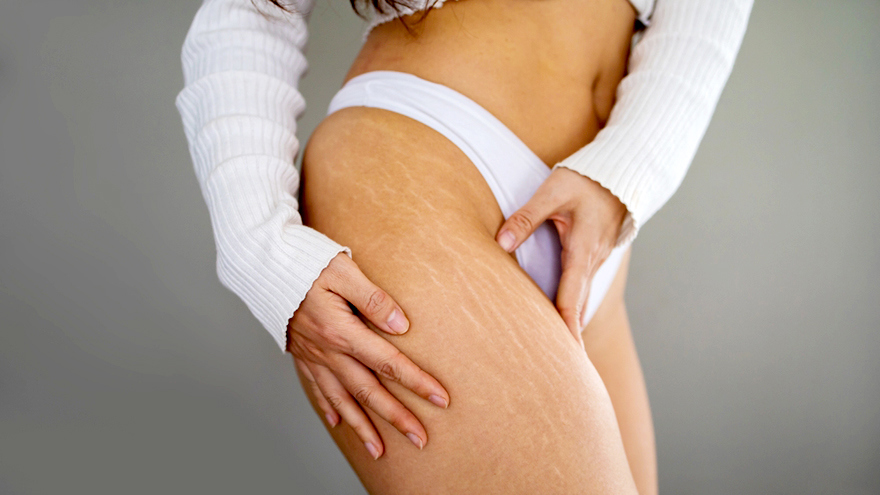
It helps to know what stretch marks are before deciding to camouflage them. The National Health Service describes them as very common, harmless lines or streaks across the skin that often become less visible over time, appearing pink, red, brown, black, silver or purple and usually starting off darker before fading. They are most common on the tummy, breasts, chest, upper arms, legs, bottom, hips or back, and are often caused by sudden growth or weight gain, with pregnancy, puberty, rapid weight change and some steroid creams or tablets among the contributing factors. On treatment, the service is direct: many creams and lotions claim to prevent, reduce or remove stretch marks, but there is very little evidence these work, and the treatments that may help make stretch marks look better will not get rid of them.
Camouflage tattooing of this kind is a recognized use of pigment. The U.S. Food and Drug Administration notes that people with vitiligo — a lack of pigmentation in areas of the skin — may try tattooing to help camouflage the condition, and that for others tattooing serves as an adjunct to reconstructive surgery to simulate natural pigmentation. The same agency warns that anyone prone to developing keloids, scars that grow beyond normal boundaries, is at risk of keloid formation from a tattoo, and that although tattoos may be satisfactory at first they sometimes fade, while pigments injected too deeply may migrate beyond the original sites.
Who Performs Stretch Mark Camouflage at Golden Balance Clinic

Dr. Eun-Young Kwak
Plastic Surgery/Petit Center Doctor
Matching a pigment to someone's own skin tone is a different problem from choosing a color, and it starts with looking carefully at the marks themselves.
Dr. Eun-Young Kwak is the performing doctor for this treatment and reviewed this page.
Dr. Eun-Young Kwak is a Director and the doctor who leads the clinic's plastic surgery and petit centre. She graduated from Yonsei University College of Medicine. She is a member of the Korean Academy of Women's Aesthetic Medicine, the Korean Aesthetic Wellbeing Society, the Korean Society for Obesity and Plastic Surgery, and the Korean Society of Anti-Aging Medicine, and she previously served as a director of I-Love Petit Clinic and of Petit Queen Clinic.
The examination assesses the stretch marks for maturity, texture, color and location, and evaluates the surrounding skin tone they would need to blend into. Medical history, allergies, previous treatments, healing concerns and expectations are reviewed alongside that. A patch test may be recommended before full treatment to see how your skin tolerates the pigment and how the color responds once it has settled. Marks of different colors, depths and textures are assessed individually rather than treated as one surface.
Who Is a Good Candidate for Stretch Mark Camouflage?
Individuals with fully healed, stable stretch marks who want to reduce the color contrast between the marks and the surrounding skin.
People seeking more uniform skin tone across an area such as the abdomen, thighs, hips, buttocks or breasts.
Those who accept that the treatment addresses color rather than texture, and that an exact color match cannot be guaranteed.
Recently formed, red or purple stretch marks may need to mature before camouflage is considered.
Treatment may be unsuitable where there is an active skin infection, irritation, an open wound, or inflamed stretch marks in the area.
A history of abnormal scarring, pigment allergies, poor wound healing, or certain skin conditions requires careful assessment first.
What to Expect: Procedure, Recovery, and Results Timeline
Getting the skin ready matters more here than on smaller treatment areas. Tell the practitioner about allergies, existing skin conditions, medications, any history of abnormal scarring, and previous cosmetic tattooing. The area must be clean and free from irritation, sunburn or infection — treatment is not carried out on irritated, sunburned or infected skin. Avoid excessive sun exposure and tanning beforehand, avoid alcohol before treatment, and follow the practitioner's instructions about skincare products on the area.
In the session, the treatment area is cleansed and prepared. The practitioner selects a pigment intended to blend with the surrounding skin and may treat a small test area first. Pigment is then deposited into the superficial skin layers using a specialized device, the area is cleaned, and aftercare instructions are provided. Discomfort is usually mild to moderate, depending on the area being treated and on individual pain sensitivity, and a topical numbing cream may be applied before the procedure.
Stage | What to expect |
|---|---|
Session length | Approximately 1 to 3 hours |
Pain control | A topical numbing cream may be applied beforehand |
Redness and sensitivity | May settle within 1 to 2 weeks, depending on the area treated |
Initial results noticeable | Within 2 to 4 weeks |
Final color and appearance assessed | Around 4 to 6 weeks, once the skin has healed |
Further sessions | Additional sessions may be needed |
Stay in Korea | Approximately 1 to 2 days, depending on schedule and treatment area |
Flying home | Generally within 1 to 2 days provided you feel well and no complications occur |
Aftercare protects the color you have just paid for. Keep the treated area clean and follow the wound-care instructions you are given. Do not pick scabs or rub the area, and keep away from swimming and anything else that may contaminate or irritate the skin until it has healed adequately. Avoid direct sun exposure, and use suitable sun protection once the skin has healed — on an area like the abdomen or thighs that means remembering it on holiday, which is often when the result is most wanted.
What the treatment offers is reduced color contrast between stretch marks and surrounding skin, more uniform skin tone across the area, and marks that are less noticeable. Results vary depending on skin tone, the characteristics of the marks, pigment selection and individual healing. It does not remove stretch marks or restore the skin's original texture, and an exact color match cannot be guaranteed.
The possible effects are temporary redness, swelling, tenderness, itching and scabbing. The other risks are infection, allergic reactions, pigment migration, uneven color, color changes over time, scarring, and results you are not satisfied with — including unsatisfactory color matching, which is the complication specific to a treatment judged entirely on how well it blends.
Correcting pigment that has not blended is harder than placing it. The American Society of Plastic Surgeons' patient information on removal is worth reading before committing to pigment anywhere on the body. Lasers are the usual method, working by fragmenting ink particles until the immune system can carry them off; appointments are spaced about six weeks apart so the skin can recover, and certain shades come out only partly however many treatments are given. That asymmetry between doing and undoing is the argument for the patch test.
Combining Stretch Mark Camouflage with Other Treatments
It may be combined with microneedling, fractional laser therapy, or radiofrequency treatments to address the texture of stretch marks as well as their color.
Texture-focused treatments are generally carried out first, with the skin allowed to heal fully before pigment is applied.
Alternatives rather than additions include fractional laser treatments, microneedling, radiofrequency microneedling and selected topical treatments, which aim at texture or collagen rather than at color contrast.
Safety, Precision, and Clinic Standards
Below are the clinic's published statements about its own practice, given as written.
The clinic states its philosophy as: "We are committed to personalized 1:1 treatment plans tailored to each patient's condition and prioritize safety above all else in every procedure."
The clinic states that it carries out individualized pre-procedure consultations, limits surgeries to two per day, installs CCTV in all surgery and procedure rooms, and avoids unnecessary over-treatment.
Golden Balance Clinic is registered as a Medical Institution for Attracting Foreign Patients with the Republic of Korea's Ministry of Health and Welfare, under the Medical Overseas Expansion and Foreign Patients Attraction Act. That is a registration for treating international patients; it is not a facility accreditation.
English-language support is available through designated marketing, consultation, and global coordination staff, and the clinic names Scarlett Kim as its global coordinator, available from 10:00 to 20:00 KST.
Golden Balance Clinic is on the 12th floor of the Chunglim Building at 468 Gangnam-daero, Gangnam-gu, Seoul 06123, Republic of Korea. The clinic is open Monday to Sunday from 10:00 to 21:00 KST year-round, with a lunch break from 11:30 to 12:30 KST and last registration at 19:00 KST.
Infection control in any tattooing procedure rests on routine rather than skill. The Centers for Disease Control and Prevention looked into a run of staphylococcal infections that followed tattoos performed outside licensed premises and reported that basic measures had lapsed: gloves reused across clients, hands not washed, skin not prepared, work surfaces and tools not disinfected. What it recommends is standard precautions together with sterilized or single-use needles and inks.
The Bottom Line
Skin-tone pigment is blended into mature stretch marks to reduce their color contrast with surrounding skin.
It does not remove stretch marks or restore the skin's original texture, and an exact color match cannot be guaranteed.
Recently formed, red or purple marks may need to mature before camouflage is considered.
A session takes about one to three hours, and more than one session may be required.
A patch test may be recommended first, because correcting pigment that has not blended is difficult.
Frequently Asked Questions
Will my stretch marks be gone afterwards?
No. The procedure reduces how noticeable they are by blending their color with the surrounding skin; it does not remove them or restore the original texture. The NHS makes the same general point about the category, noting that treatments which may help stretch marks look better will not get rid of them.
My stretch marks are still red. Can I be treated now?
Probably not yet. Recently formed, red or purple stretch marks may need to mature before camouflage is considered, and the examination assesses maturity along with texture, color and location. Marks also tend to start off darker and fade over time on their own, so waiting may change what you want treated.
What does the patch test tell you?
Two things: how your skin tolerates the pigment, and how the color responds once it has settled. Both matter because the whole result is judged on how well the pigment blends with the skin around it. A small test area may also be treated first during the session itself before the rest proceeds.
Can the color be corrected if it does not match?
Correction is possible but difficult. Laser removal is slow and incomplete: ink sits deeper than the body will clear, treatments fall about six weeks apart, and some shades never fully lift. Additional camouflage sessions are the more common route, and the practitioner will advise what is realistic.
Which areas can be treated?
Stretch marks are most often camouflaged on the abdomen, thighs, hips, buttocks or breasts. Session length and the number of sessions depend on how much area is involved, so a large expanse is not a single-appointment project. Discuss the full area at the consultation rather than treating a sample and deciding later.
Does it hurt?
Mild to moderate discomfort during pigment application is what most people report, varying with the area treated and individual pain sensitivity. A topical numbing cream may be applied beforehand. Sessions can run up to three hours, so it is worth asking how breaks are handled on larger areas.
What should I watch for while it heals?
Worsening pain, spreading redness, pus or a fever all need medical advice. Temporary redness, swelling, tenderness, itching and mild scabbing are the ordinary effects and usually settle within one to two weeks. Once healed, sun protection on the treated area is part of keeping the color stable.
Book a Consultation at Golden Balance Clinic
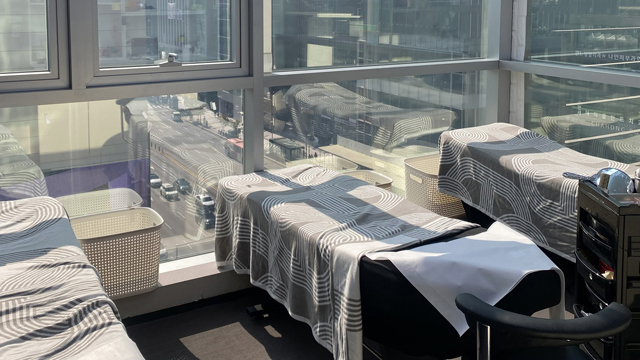
Stretch mark camouflage is carried out at Golden Balance Clinic in Gangnam-gu, Seoul, in sessions of roughly one to three hours, after the marks have been assessed for maturity and the surrounding skin tone has been matched. Before-and-after pictures published by the clinic are at clinic's gallery.
Contact Golden Balance Clinic through the clinic contact page, by phone on +82-2-516-7148, or by email at info@goldenbalanceclinic.com.
Disclaimer
For informational purposes only. Individual results may vary depending on each patient's medical history, physical condition, anatomy, treatment plan, and recovery. The suitability of gynecological, aesthetic, dermatological, injectable, and other medical procedures should be determined through an individual consultation with a qualified medical professional. All treatments may involve potential risks, side effects, and recovery requirements, which should be discussed before treatment. Information provided by Golden Balance Clinic does not replace professional medical advice, diagnosis, or treatment. Results may vary and individual experiences may differ.
Sources & Further Reading
National Health Service — stretch marks: what they look like, the colors they take and how they fade, where they most often appear, the common causes, and the statement that available treatments may improve their appearance but will not get rid of them.
Food and Drug Administration — fact sheet on tattoos and permanent makeup: tattooing used to camouflage vitiligo and to simulate natural pigmentation, the risk of keloid formation in susceptible people, and fading and migration of pigment over time.
American Society of Plastic Surgeons — tattoo removal: why ink particles persist in the skin, the number of laser sessions typically needed, the six-week interval between them, and the colors that resist removal.
Centers for Disease Control and Prevention — infections among tattoo recipients, the infection-control measures that were not followed, and the recommendation to use standard precautions and sterilized or single-use equipment.
Other Services
Explore additional treatments offered by our specialists.
Eyebrow Semi-Permanent Makeup
Eyebrow semi-permanent makeup is a cosmetic tattooing procedure that deposits pigment into the skin to enhance eyebrow shape, definition, and color.
Learn More
Facial Contour Micropigmentation
Facial contour micropigmentation refers to depositing pigment into the skin to create or enhance selected facial features.
Learn More
Eyeliner & Eye Enhancement PMU
Eyeliner PMU is a cosmetic tattooing procedure that deposits pigment into the skin around the eyelids to create a longer-lasting eyeliner effect.
Learn More