Personalized Medical Care & Dedicated International Patient Concierge

Lifting & Skin Tightening · Consultation Required
Ultrasound (HIFU) Lifting
Ultrasound (HIFU) Lifting is a non-surgical treatment that sends focused ultrasound energy into selected layers of tissue below the skin surface, heating them enough to stimulate collagen production and improve skin firmness and mild sagging.
Schedule a ConsultationUltrasound (HIFU) Lifting in Seoul, Republic of Korea

Medically reviewed by Dr. Eun-Young Kwak, MD, graduate of Yonsei University College of Medicine Golden Balance Clinic, Gangnam-gu, Seoul
Ultrasound (HIFU) Lifting is a non-surgical treatment that sends focused ultrasound energy into selected layers of tissue below the skin surface, heating them enough to stimulate collagen production and improve skin firmness and mild sagging. Nothing is cut, and no tissue is taken away; whatever change appears comes from a controlled thermal effect placed at a chosen depth. The lift that follows is gradual and modest by design, which is the fact most worth settling before anything else.
What Is Ultrasound (HIFU) Lifting?
Ultrasound (HIFU) Lifting is a non-surgical treatment that uses focused ultrasound energy to heat targeted tissue layers and stimulate collagen production, aiming to improve skin firmness and mild sagging.
A session typically takes 30 to 90 minutes.
Treatment is often performed without anesthesia, although discomfort can occur, and topical or other pain relief may be considered.
The area is cleansed, ultrasound gel may be applied, and energy is delivered through a handpiece passed over the skin.
Treatment depth, the facial zones addressed, the energy settings and the number of treatment lines are decided by the clinician from the patient's skin laxity and anatomy.
It belongs to the group of treatments the clinic files under Lifting & Skin Tightening at its Gangnam-gu premises.
Patients tend to arrive with a question about how much lift is realistic, and the published record answers it more usefully than any brochure. A systematic review of microfocused ultrasound for facial skin tightening in the International Journal of Environmental Research and Public Health identified sixteen eligible studies and found the method capable of tightening skin, with brow lifts measured at 0.47 to 1.7 mm and submental lifts recorded as a 26 to 45 square-millimetre reduction on lateral photographs. Pooled investigator-reported scores at day 90 showed that 92 per cent of patients demonstrated an improvement in tightening or wrinkle reduction that continued up to one year, while the patient-reported pooled scores described those improvements as mild and rising from 42 per cent at 90 days to 53 per cent at 360 days. The same review recorded that longer-term follow-up data are not available, and that excessive skin laxity and a body mass index above 30 were posed as relative contraindications, because positive results declined as laxity and body mass index increased.
Discomfort and side effects were described in the same place. That review found the treatment moderately painful and productive of transient redness with or without swelling, and put other adverse effects at 2 per cent, among them altered sensation, bruising, stinging, mandibular burns, striations and contact dermatitis.
A separate 2025 review in Applied Sciences gathered twenty-two studies published between 2010 and 2025 specifically to catalogue complications. It reported most of them mild and transient, typically settling within hours to days without medical intervention, and linked the rarer but more significant events — fat atrophy, nerve irritation and hyperpigmentation — to improper device settings, inadequate practitioner expertise and insufficient patient assessment. Its authors argued that training, standardised protocols and individualised patient evaluation are what reduce those risks, which is a reason to ask about assessment rather than about equipment.
The distinction between this treatment and the other energy-based options is physical rather than promotional. A review in Applied Biosciences covering age-related change in the face, neck and décolleté concluded that focused ultrasound and radiofrequency each promote collagen remodelling and dermal tightening, but do so through different energy-delivery mechanisms.
Who Performs Ultrasound (HIFU) Lifting at Golden Balance Clinic
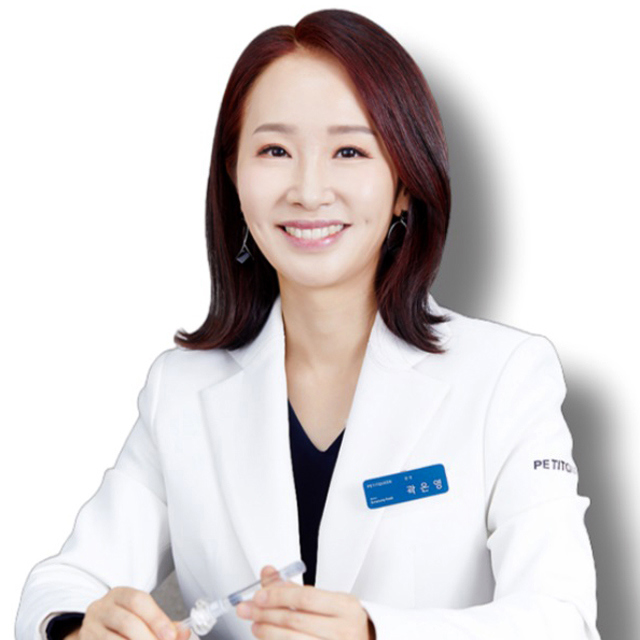
Dr. Eun-Young Kwak
Plastic Surgery/Petit Center Doctor
One doctor carries the clinic's lifting and skin-tightening work, and she reviewed this page.
Energy delivered to a chosen depth is only as good as the reading of the face it is delivered into, and that reading is where Dr. Eun-Young Kwak begins.
Dr. Eun-Young Kwak is a Director and the doctor who leads the clinic's plastic surgery and petit centre. She graduated from Yonsei University College of Medicine. She is a member of the Korean Academy of Women's Aesthetic Medicine, the Korean Aesthetic Wellbeing Society, the Korean Society for Obesity and Plastic Surgery, and the Korean Society of Anti-Aging Medicine, and she previously served as a director of I-Love Petit Clinic and of Petit Queen Clinic.
Before treatment is offered, she reviews medical history, skin condition, facial anatomy, treatment goals and contraindications, and decides from those whether focused ultrasound is appropriate at all. Where it is, the treated depths and zones, the energy settings and the session plan follow from that assessment rather than from a fixed menu.
Who Is a Good Candidate for Ultrasound (HIFU) Lifting?
Adults with mild to moderate skin laxity who want a subtle lifting effect.
Adults who understand that the result is generally less dramatic than surgical lifting.
Adults whose main concern is mild facial sagging or jawline definition and who prefer to avoid incisions and a surgical recovery period.
Treatment may need to be avoided or postponed where there is an active skin infection or an open wound in the area to be treated.
Certain implanted devices and certain medical conditions make ultrasound treatment unsuitable, and these are assessed individually before anything is scheduled.
What to Expect: Procedure, Recovery, and Results Timeline
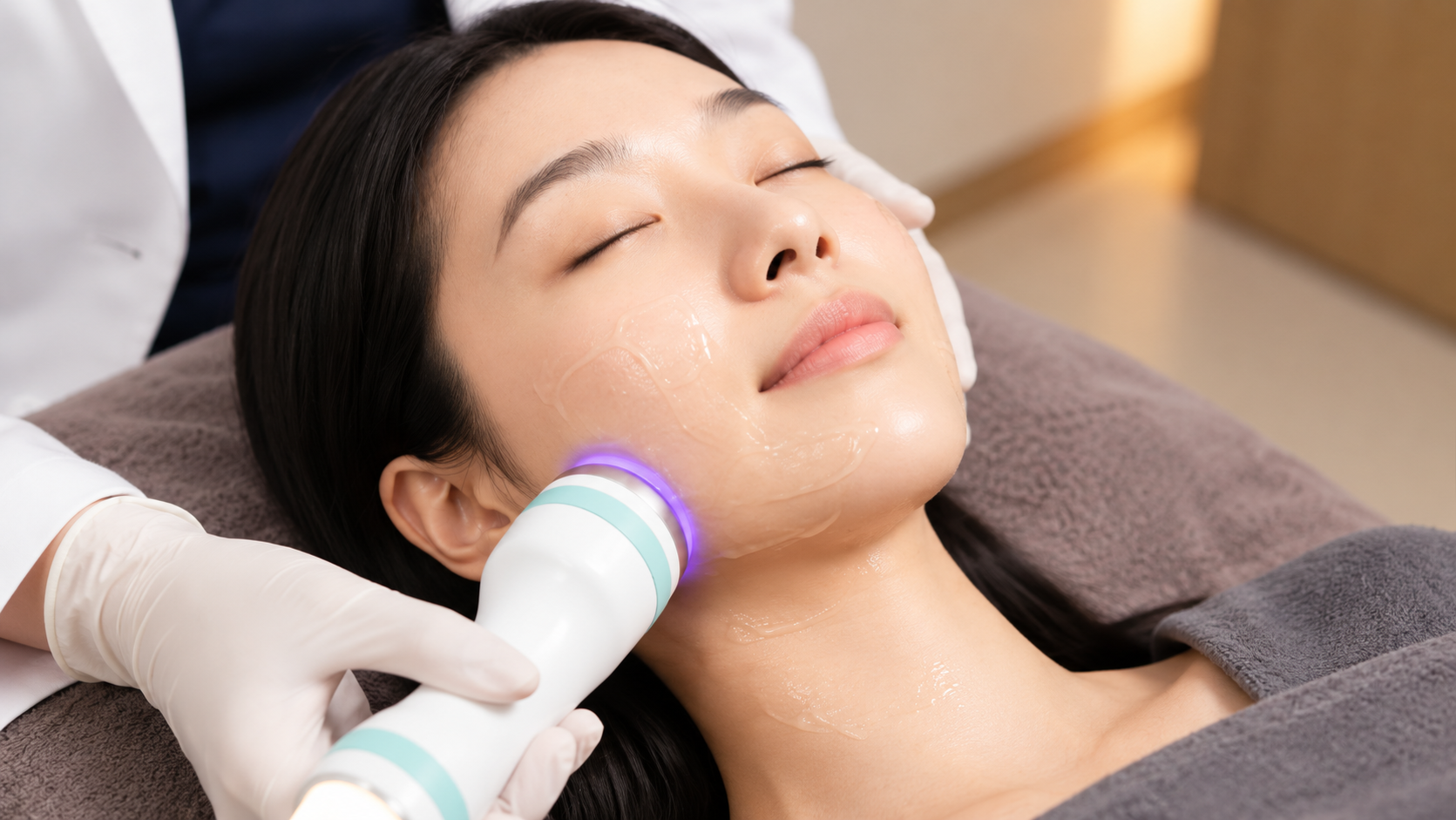
The appointment starts with an assessment rather than a handpiece. Medical history, skin condition, facial anatomy, treatment goals and contraindications are all reviewed, and that review decides whether the treatment goes ahead.
Preparation is largely a matter of telling the clinician what she needs to know. Declare your medical conditions, your medications, any implanted devices, any previous facial procedures and any ongoing skin problems. Arrive with clean skin and follow whatever preparation instructions the clinic gives you. Recent cosmetic procedures in the same area matter and should be mentioned, and treatment is not carried out over irritated or infected skin.
During the session the area is cleansed, ultrasound gel may be applied, and the handpiece delivers focused energy while the clinician adjusts the treatment to the plan agreed with you. Sensation is usually described as brief prickling, warmth or discomfort, and it is often stronger over bony areas. How much any individual feels varies with the treatment intensity.
Stage | What to expect |
|---|---|
Session length | Approximately 30 to 90 minutes |
Anesthesia | Often none; topical or other pain relief may be considered |
Redness or swelling | Usually subsides within 1 week |
First visible lifting | 2 to 4 weeks |
Continued improvement | Up to 8 weeks, becoming clearer over 2 to 3 months |
Longer-term change | May continue for up to around 6 months, depending on the individual |
Stay in Korea | Approximately 1 to 2 days for consultation, treatment and an initial assessment |
Flying home | Generally 1 to 2 days afterwards, if you feel well and have no concerning effects |
Aftercare is undemanding but not optional. Follow the advice you are given, keep your skincare gentle, and protect the treated skin from excessive sun exposure. Seek medical advice if you develop severe pain, blistering, persistent numbness or any other symptom that worries you.
The realistic outcome is narrower than the marketing of the category tends to suggest. The treatment may give a modest improvement in skin firmness and facial contour without surgery. Results vary between people, and significant skin laxity or genuine excess skin may not be adequately addressed by it.
Common side effects are temporary redness, swelling, tenderness, tingling, bruising and sensitivity, and these are usually mild and resolve without treatment. The risks worth knowing about are burns, blistering, uneven results, prolonged pain and altered sensation, and, rarely, nerve injury or unwanted fat loss. How likely any of them are depends on the device, the settings, the area treated and the technique of the person holding the handpiece.
Combining Ultrasound (HIFU) Lifting with Other Treatments
Selected skin-rejuvenation treatments may be combined with it, depending on what the individual needs.
Radiofrequency skin tightening is one such pairing recorded in the clinic's material.
Injectable treatments are another, where the concern is volume or movement rather than laxity alone.
Compatibility, sequencing and the cumulative risk of combining treatments are assessed by the clinician rather than assumed.
Safety, Precision, and Clinic Standards
The clinic's own standards are reproduced here in its published wording rather than summarised.
The clinic states its philosophy as: "We are committed to personalized 1:1 treatment plans tailored to each patient's condition and prioritize safety above all else in every procedure."
The clinic states that it carries out individualized pre-procedure consultations, limits surgeries to two per day, installs CCTV in all surgery and procedure rooms, and avoids unnecessary over-treatment.
Golden Balance Clinic is registered as a Medical Institution for Attracting Foreign Patients with the Republic of Korea's Ministry of Health and Welfare, under the Medical Overseas Expansion and Foreign Patients Attraction Act. That is a registration for treating international patients; it is not a facility accreditation.
English-language support is available through designated marketing, consultation, and global coordination staff, and the clinic names Scarlett Kim as its global coordinator, available from 10:00 to 20:00 KST.
Golden Balance Clinic is on the 12th floor of the Chunglim Building at 468 Gangnam-daero, Gangnam-gu, Seoul 06123, Republic of Korea. The clinic is open Monday to Sunday from 10:00 to 21:00 KST year-round, with a lunch break from 11:30 to 12:30 KST and last registration at 19:00 KST.
Some of the thinking a patient should do belongs outside any clinic. The National Health Service advises anyone considering a cosmetic procedure to be clear about why they want to change the way they look, to research the procedure thoroughly, to understand all the costs involved including aftercare, and to ask the practitioner about the procedure, the products used and what could go wrong. It also says you should be offered a cooling-off period after any consultation with a practitioner, and that you can walk away if you are not completely comfortable.
The Bottom Line
Focused ultrasound energy is used to heat selected tissue layers so that collagen production is stimulated; no incision is made.
A session takes roughly 30 to 90 minutes and is often done without anesthesia.
Redness or swelling usually settles within a week, and the first lifting appears at 2 to 4 weeks.
Improvement continues to around 8 weeks and becomes clearer over 2 to 3 months; the effect is modest, not surgical.
Reported risks include burns, blistering, uneven results, prolonged pain, altered sensation and, rarely, nerve injury or unwanted fat loss.
Frequently Asked Questions
How deep does the energy actually go, and why does that matter?
Focused ultrasound is aimed at selected layers beneath the surface rather than at the skin itself, and the depth chosen depends on the laxity and anatomy the clinician finds. That is why two people with similar-looking faces may be treated with different settings. Ask at the consultation which depths are planned for your treatment areas.
Will I need anesthesia?
Usually not. The treatment is often carried out without it, though discomfort does occur, and topical or other pain relief may be considered depending on the area and your own tolerance. Most people describe brief prickling or warmth that is more noticeable over bone.
How soon would I notice anything?
Initial lifting tends to appear at two to four weeks, with continued improvement up to around eight weeks. The result commonly becomes clearer over two to three months as collagen remodelling progresses, and change may continue for up to roughly six months. Nothing about this treatment is immediate.
How long should I plan to be in Korea?
Around one to two days covers the consultation, the treatment and an initial assessment, subject to the clinic's own scheduling. Flying home one to two days afterwards is generally reasonable provided you feel well and have no side effects that concern you. Confirm the dates with the clinic before you book anything.
What might go wrong?
Burns, blistering, uneven results, prolonged pain and altered sensation are the reported risks, and nerve injury or unwanted fat loss can occur rarely. Milder effects such as redness, swelling, tenderness, tingling and bruising are more common and usually settle on their own. Severe pain, blistering or numbness that persists should be assessed by a doctor rather than waited out.
Is this an alternative to a facelift?
No, and it is not offered as one. The improvement in firmness and contour is modest, and significant laxity or genuine excess skin may not respond adequately. Where the degree of sagging is beyond what a non-surgical treatment can address, that is something the consultation should say plainly.
What else could I consider instead?
Radiofrequency skin tightening, other energy-based treatments, injectable treatments for certain specific concerns, and surgical lifting are all alternatives. They differ in the degree of improvement they can produce, in their risks and in how much downtime they involve. The comparison is worth having with a doctor who has examined you.
Book a Consultation at Golden Balance Clinic
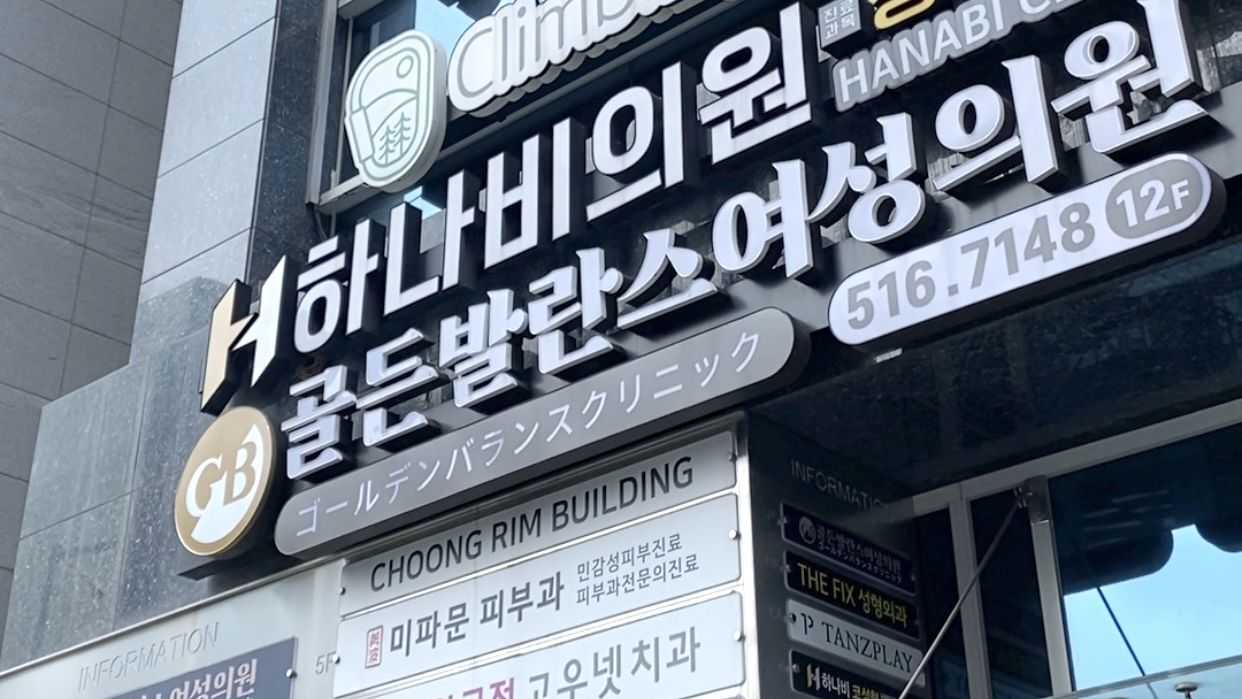
Ultrasound (HIFU) Lifting is carried out at the clinic's Gangnam-gu premises in Seoul, and the examination decides the depths, the zones and whether the treatment suits you at all. Photographs taken by the clinic of its own patients can be browsed at clinic's gallery before you enquire.
Contact Golden Balance Clinic through the clinic contact page, by phone on +82-2-516-7148, or by email at info@goldenbalanceclinic.com.
Disclaimer
For informational purposes only. Individual results may vary depending on each patient's medical history, physical condition, anatomy, treatment plan, and recovery. The suitability of gynecological, aesthetic, dermatological, injectable, and other medical procedures should be determined through an individual consultation with a qualified medical professional. All treatments may involve potential risks, side effects, and recovery requirements, which should be discussed before treatment. Information provided by Golden Balance Clinic does not replace professional medical advice, diagnosis, or treatment. Results may vary and individual experiences may differ.
Sources & Further Reading
International Journal of Environmental Research and Public Health — systematic review of microfocused ultrasound for facial skin tightening: the measured brow and submental lifts, the pooled investigator and patient improvement scores, the absence of longer-term follow-up data, the relative contraindications, and the recorded adverse effects.
Applied Sciences — review of twenty-two studies on complications of focused-ultrasound aesthetic treatment: the mild and transient majority, the rarer events of fat atrophy, nerve irritation and hyperpigmentation, and the factors the authors link them to.
Applied Biosciences — review of non-surgical approaches to the face, neck and décolleté, and the finding that focused ultrasound and radiofrequency act through different energy-delivery mechanisms.
National Health Service — advice on what to settle before any cosmetic procedure, including research, total costs, the questions to ask a practitioner, and the cooling-off period.
Other Services
Explore additional treatments offered by our specialists.
Eyebrow Semi-Permanent Makeup
Eyebrow semi-permanent makeup is a cosmetic tattooing procedure that deposits pigment into the skin to enhance eyebrow shape, definition, and color.
Learn More
Facial Contour Micropigmentation
Facial contour micropigmentation refers to depositing pigment into the skin to create or enhance selected facial features.
Learn More
Eyeliner & Eye Enhancement PMU
Eyeliner PMU is a cosmetic tattooing procedure that deposits pigment into the skin around the eyelids to create a longer-lasting eyeliner effect.
Learn More