Personalized Medical Care & Dedicated International Patient Concierge

Pelvic Floor & Urinary Health · Consultation Required
Urinary Incontinence & Voiding Dysfunction Care
Urinary incontinence is the involuntary leakage of urine; voiding dysfunction is trouble passing it — difficulty starting, a weak or interrupted stream, incomplete emptying, urgency or frequent urination.
Schedule a ConsultationUrinary Incontinence & Voiding Dysfunction Care in Seoul, Republic of Korea
Medically reviewed by Dr. Jong-Yeol Kim, board-certified obstetrician-gynecologist, and Dr. Yu-Jin Oh, board-certified obstetrician-gynecologist Golden Balance Clinic, Gangnam-gu, Seoul
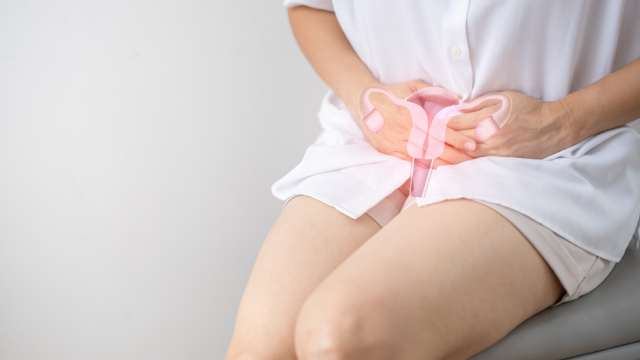
Urinary incontinence and voiding dysfunction care covers two opposite complaints that share one organ. Urinary incontinence is the involuntary leakage of urine; voiding dysfunction is trouble passing it — difficulty starting, a weak or interrupted stream, incomplete emptying, urgency or frequent urination. What happens next depends entirely on the underlying cause, and the plan that follows may be behavioral, medical, procedural or surgical.
What Is Urinary Incontinence & Voiding Dysfunction Care?
This service is a diagnostic pathway with treatment attached: the cause of the leakage or the emptying problem is established first, and the plan is then built for that cause rather than for the symptom.
Two problem families are in scope — urine escaping when it should not, and urine that will not come out properly.
Local anesthesia is used where an in-office procedure forms part of the plan.
A urodynamic system is used to assess bladder function and to help evaluate leakage and emptying problems.
An appointment that includes assessment and treatment generally runs one to two hours, and roughly two visits are expected.
The service belongs to Pelvic Floor & Urinary Health at the clinic's Gangnam-gu premises.
Naming the pattern is most of the work, because the names carry different treatments. The National Institute of Diabetes and Digestive and Kidney Diseases separates stress incontinence, where coughing, sneezing, laughing or physical activity puts pressure on the bladder and urine escapes, from urgency incontinence, where a strong need arrives and leakage happens before a toilet can be reached; it notes that the two can occur together, which is called mixed incontinence, and that urgency incontinence is often referred to as overactive bladder. The same agency lists overflow incontinence, in which the bladder does not empty all the way and leaks because it has become too full, along with reflex, functional and temporary forms.
The emptying side of the complaint has its own vocabulary. In the NIDDK's account of urinary retention, chronic retention may produce few or no symptoms, or it may show up as difficulty starting the flow — called hesitancy — a slow stream, frequent urination in small amounts, the feeling of needing to urinate again immediately after finishing, or urine leaking without any warning. The causes divide into two groups: something partially or fully blocking the exit, such as pelvic organ prolapse, constipation, a stricture or tight pelvic floor muscles, or a bladder that cannot contract strongly enough or long enough to empty itself. Acute retention — a sudden inability to urinate, often with severe lower abdominal pain — is treated as an emergency rather than an outpatient question.
Who Performs Urinary Incontinence & Voiding Dysfunction Care at Golden Balance Clinic
|
|
Dr. Jong-Yeol Kim | Dr. Yu-Jin Oh |


Two board-certified obstetrician-gynecologists hold this service, and they are also the reviewers of this page.
The clinic's Medical Director, Dr. Jong-Yeol Kim, brings three decades of obstetrics and gynecology to the part of the work that matters most here — deciding what is actually causing the symptom before anything is treated.
Dr. Jong-Yeol Kim is the Medical Director of Golden Balance Clinic and a board-certified obstetrician-gynecologist with 30 years of experience. He graduated from Hallym University College of Medicine and completed his internship and residency training in obstetrics and gynecology at Hallym University Sacred Heart Hospital. He is a regular member of the Korean Society of Obstetrics and Gynecology.
Dr. Yu-Jin Oh, the clinic's second obstetrician-gynecologist, holds the same board certification and a broader set of society memberships.
Dr. Yu-Jin Oh is a Director and a board-certified obstetrician-gynecologist with 23 years of experience. She graduated from Jeonbuk National University Medical School, completed her internship at Samsung Medical Center Cheil General Hospital, and completed residency training in obstetrics and gynecology at Samsung Medical Center Kangbuk Samsung Hospital. She is a member of the Korean Society of Obstetrics and Gynecology, the Korean Academy of Functional Medicine, and the Korean Society of Medical Aesthetics and Dermatology.
Both doctors perform this service; the clinic does not assign it to one of them.
Urinary Incontinence & Voiding Dysfunction Care Options Available
Several routes exist, and they are not interchangeable — the diagnosis selects one or a combination, and what suits one type of leakage may do nothing for another.
Route | What it addresses | What it involves |
|---|---|---|
Behavioral care | Urgency, frequency, nighttime urination, some leakage | Bladder training, fluid and caffeine management, and a structured routine |
Pelvic floor muscle training | Weak support around the urethra | Supervised exercises, sometimes with biofeedback |
Medication | Selected urgency or overactive bladder symptoms | Prescribed and reviewed by the treating clinician |
Bladder injections | Urgency that has not responded to earlier steps | A procedure room appointment with local anesthesia |
Nerve stimulation | Selected urgency symptoms | A course of treatment rather than a single session |
Urethral bulking | Selected stress-type leakage | An injection intended to narrow the bladder opening |
Surgery | Leakage with a diagnosis that matches an operation | Assessed separately as its own procedure |
The conservative end of that list is where most plans begin, and it is better supported than its modest reputation suggests. The NIDDK describes bladder training as urinating on a schedule to reduce leaking, with the interval between trips gradually lengthened so the bladder can hold more, and it describes urgency suppression — distraction, long relaxing breaths, or quick strong squeezes of the pelvic floor muscles — as a way to reach the toilet before a leak happens. The same source notes that a physical therapist trained in pelvic floor therapy can help a patient get more out of these exercises, and that biofeedback or electrical stimulation can confirm the right muscles are being used.
Who Is a Good Candidate for Urinary Incontinence & Voiding Dysfunction Care?
People who leak urine when coughing, sneezing, exercising or lifting.
People who get sudden urges that are difficult to control.
People with frequent daytime urination or who wake at night to urinate.
People who have difficulty emptying the bladder.
People willing to undergo a medical assessment, since the cause has to be identified before treatment can be matched to it.
Some situations call for investigation before any elective step. An active urinary tract infection, unexplained blood in the urine, acute urinary retention or another untreated medical problem may need evaluation first. Pregnancy, bleeding disorders and blood-thinning medication all need to be declared, because they change what is safe to do and when. There is no single exclusion list that covers every urinary condition — suitability, and the question of whether to postpone, depend on the individual's health and on the specific procedure being considered.
What to Expect: Procedure, Recovery, and Results Timeline
The consultation opens with a review of symptoms, medical and surgical history, current medicines, fluid intake and urinary habits. A physical examination follows. Testing is chosen rather than applied wholesale: urine testing, a bladder diary, measurement of the urine remaining after voiding, and — when indicated — urodynamic testing, imaging or cystoscopy. Not every patient needs every test.
Those tests have specific jobs. The NIDDK explains that uroflowmetry measures how much urine is in the bladder and how fast it comes out, which can show whether the bladder muscles are weak or the flow is blocked; that a postvoid residual measurement finds how much urine is left behind, with 100 to 150 millilitres or more indicating that the bladder is not emptying completely; and that a cystometric test records how much the bladder holds, how pressure builds as it fills, and whether it contracts when it should not. Mild discomfort when urinating is common for a few hours after urodynamic testing.
The sequence after that is five steps: discuss symptoms and history, complete the examinations considered necessary, review the likely diagnosis and the options, agree an individual plan, and then review how symptoms have changed at follow-up.
Preparation is straightforward. Bring a list of urinary symptoms, current medicines, allergies, previous urinary procedures and relevant medical conditions. If the clinician asks for a bladder diary, two to three days of entries covering fluid intake, urination, leakage and urgency is the usual request. Avoid alcohol and excessive caffeine before treatment, along with anything else that reliably worsens your symptoms. Do not stop a prescribed medicine or start a new one without asking, and follow the clinic's instructions on food, fluids and fasting if anesthesia is planned.
Stage | Expected timing |
|---|---|
Appointment including assessment and treatment | 1 to 2 hours |
Visits | Approximately two |
Recovery, conservative or non-surgical care | Same day to 1 week |
Recovery, if surgery is the route chosen | 2 to 6 weeks, occasionally up to 12 weeks for full recovery |
Stay in Korea | Roughly 2 to 3 days, depending on the evaluation, tests and treatment |
Flying home | Usually possible at the end of that window, subject to your doctor's sign-off |
First improvement | May occur within 2 to 6 weeks |
Clearer improvement | May take 1 to 3 months |
Final assessment | Within 4 to 12 weeks for some treatments; several months where surgery was involved |
Aftercare follows the clinician's instructions on medicines, hydration, activity, and wound or catheter care where either applies. Do not restrict fluids heavily without medical advice — it is a common instinct and a counterproductive one. Seek urgent assessment for an inability to urinate, severe pain, fever with urinary symptoms, or significant bleeding.
Side effects depend on what was done. Temporary discomfort, pain, mild bleeding, bruising or irritation when urinating are the common ones. Some procedures can also cause a urinary tract infection or difficulty emptying the bladder. Across the wider range of interventions, medication may cause side effects, injections may cause temporary discomfort, bleeding, infection or difficulty emptying, and surgery may involve bleeding, infection, pain, urinary retention, persistent symptoms or complications specific to the operation. That is a list of what is possible across different treatments, not a list of what any one patient should expect.
Outcomes deserve plain language. Treatment may reduce leakage, urgency, frequency, nighttime urination or difficulty emptying, depending on the condition and the route taken. Some people need a combination of approaches, and some need ongoing management rather than a single fix. How long the benefit lasts ranges from months to years. Complete resolution cannot be guaranteed, and improvement varies between individuals.
Combining Urinary Incontinence & Voiding Dysfunction Care with Other Treatments
Bladder training and pelvic floor muscle training are often run together, since they work on different parts of the same mechanism.
Lifestyle adjustments sit alongside both and are usually part of the plan rather than an alternative to it.
Medication may be added where the symptom pattern supports it.
Patients with more than one contributing condition may need a coordinated plan rather than a single treatment.
Combining injections or surgery with other interventions should rest on clinical indication, safety and the treating clinician's recommendation.
Safety, Precision, and Clinic Standards
The clinic states its philosophy as: "We are committed to personalized 1:1 treatment plans tailored to each patient's condition and prioritize safety above all else in every procedure."
The clinic states that it carries out individualized pre-procedure consultations, limits surgeries to two per day, installs CCTV in all surgery and procedure rooms, and avoids unnecessary over-treatment.
Golden Balance Clinic is registered as a Medical Institution for Attracting Foreign Patients with the Republic of Korea's Ministry of Health and Welfare, under the Medical Overseas Expansion and Foreign Patients Attraction Act. That is a registration for treating international patients; it is not a facility accreditation.
English-language support is available through designated marketing, consultation, and global coordination staff, and the clinic names Scarlett Kim as its global coordinator, available from 10:00 to 20:00 KST.
Golden Balance Clinic is on the 12th floor of the Chunglim Building at 468 Gangnam-daero, Gangnam-gu, Seoul 06123, Republic of Korea. The clinic is open Monday to Sunday from 10:00 to 21:00 KST year-round, with a lunch break from 11:30 to 12:30 KST and last registration at 19:00 KST.
The Bottom Line
The service covers both leakage and the opposite problem of a bladder that will not empty properly.
The cause is established first; treatment is matched to it, not to the symptom.
Assessment may include urine testing, a bladder diary, measurement of urine left after voiding, and urodynamic testing when indicated.
Non-surgical care typically means a recovery measured from the same day to a week; surgery, where chosen, means two to six weeks and sometimes longer.
First improvement may appear within two to six weeks, clearer change within one to three months, and complete resolution cannot be promised.
Frequently Asked Questions

I leak and I also struggle to empty. Is that one problem or two?
It can be either, which is exactly why the assessment comes first. A bladder that empties incompletely can overflow and leak, so one mechanism produces both complaints; equally, two separate issues can coexist. Measurement of the urine remaining after voiding is one of the tests that helps separate those possibilities.
What is a bladder diary and why am I being asked for one?
It is a record kept over roughly two to three days of what you drink, when you urinate, when you leak and when urgency strikes. Patterns that are invisible in a ten-minute conversation become obvious on paper, and the diary often shapes the treatment plan more than any single test. Bring it with you if one has been requested.
Will I need anesthesia?
Local anesthesia is used for this service. Non-surgical treatment generally involves minimal discomfort, while an injection or an operation may bring temporary pain, pressure or soreness. Pain control is matched to what is actually being done.
How long do I need to be in Seoul?
Around two to three days, depending on the evaluation, the tests and the treatment that follows from them. Flying home at the end of that window is normally fine, subject to your doctor's sign-off. Improvement is assessed over the following weeks, so the follow-up conversation generally happens once you are home.
Can I just do the exercises and skip the clinic?
Pelvic floor muscle training is a legitimate treatment and frequently part of the plan, but it addresses one mechanism among several. If the leakage is driven by urgency, by incomplete emptying or by an obstruction, exercises alone will not reach it — and an unexamined symptom can also be the first sign of something that needs investigating.
What if nothing improves?
That answer is built into the pathway rather than left to chance. Review at follow-up is where the plan is revised, whether that means adjusting behavioral care, adding or changing medication, considering a non-surgical procedure, or assessing whether an operation fits the diagnosis. Some conditions are managed over time rather than resolved once.
Is it safe to have this care while taking blood thinners?
Tell the clinician before anything is scheduled, because it changes which procedures are reasonable and when. The same applies to bleeding disorders and to pregnancy. Never stop a prescribed medicine on your own in order to qualify for a procedure.
Book a Consultation at Golden Balance Clinic
Leakage, urgency and difficulty emptying all begin in the same place here — an assessment in Gangnam-gu, Seoul, that establishes which of them you have and why.
Contact Golden Balance Clinic through the clinic contact page, by phone on +82-2-516-7148, or by email at info@goldenbalanceclinic.com.
Disclaimer
For informational purposes only. Individual results may vary depending on each patient's medical history, physical condition, anatomy, treatment plan, and recovery. The suitability of gynecological, aesthetic, dermatological, injectable, and other medical procedures should be determined through an individual consultation with a qualified medical professional. All treatments may involve potential risks, side effects, and recovery requirements, which should be discussed before treatment. Information provided by Golden Balance Clinic does not replace professional medical advice, diagnosis, or treatment. Results may vary and individual experiences may differ.
Sources & Further Reading
National Institute of Diabetes and Digestive and Kidney Diseases — the named types of bladder control problem: stress, urgency (overactive bladder), mixed, reflex, overflow, functional and temporary incontinence.
National Institute of Diabetes and Digestive and Kidney Diseases — the symptoms of chronic urinary retention, the division of causes into blockage and inefficient bladder contraction, and acute retention as an emergency.
National Institute of Diabetes and Digestive and Kidney Diseases — what uroflowmetry, postvoid residual measurement and cystometric testing each measure, and the mild discomfort that can follow testing.
National Institute of Diabetes and Digestive and Kidney Diseases — bladder training by schedule, urgency suppression techniques, and the role of pelvic floor therapy with biofeedback or electrical stimulation.
Other Services
Explore additional treatments offered by our specialists.
Eyebrow Semi-Permanent Makeup
Eyebrow semi-permanent makeup is a cosmetic tattooing procedure that deposits pigment into the skin to enhance eyebrow shape, definition, and color.
Learn More
Facial Contour Micropigmentation
Facial contour micropigmentation refers to depositing pigment into the skin to create or enhance selected facial features.
Learn More
Eyeliner & Eye Enhancement PMU
Eyeliner PMU is a cosmetic tattooing procedure that deposits pigment into the skin around the eyelids to create a longer-lasting eyeliner effect.
Learn More