Personalized Medical Care & Dedicated International Patient Concierge

Non-Surgical Intimate Rejuvenation · Consultation Required
Vaginal Moisturizing Injection
Vaginal moisturizing injection is a minimally invasive treatment in which an injectable material is placed into selected tissues to support moisture or tissue hydration, and it is offered for vaginal or vulvovaginal dryness.
Schedule a ConsultationVaginal Moisturizing Injection in Seoul, Republic of Korea

Medically reviewed by Dr. Jong-Yeol Kim, board-certified obstetrician-gynecologist, and Dr. Yu-Jin Oh, board-certified obstetrician-gynecologist Golden Balance Clinic, Gangnam-gu, Seoul
Vaginal moisturizing injection is a minimally invasive treatment in which an injectable material is placed into selected tissues to support moisture or tissue hydration, and it is offered for vaginal or vulvovaginal dryness. Which material is appropriate, whether the treatment suits a given person at all, and how effective and safe it is in that person's case all depend on the product chosen and the reason for the dryness. That is why the assessment that comes first is not a formality.
What Is Vaginal Moisturizing Injection?
Vaginal moisturizing injection is the administration of a moisturizing injectable material into planned tissue of the vagina or vulva, with the aim of relieving dryness and the discomfort that goes with it.
The injection itself usually takes twenty to thirty minutes.
Topical or local anesthesia may be used, depending on the injection technique.
No incision is made and no tissue is removed.
The intended benefit is improvement in dryness and related discomfort where the chosen treatment is appropriate; the extent and duration vary, and some people experience little or no benefit.
It belongs to the group of treatments offered under Non-Surgical Intimate Rejuvenation at the clinic in Gangnam-gu, Seoul.
Dryness is a symptom with many causes, and naming the cause changes what should be done about it. The National Health Service lists menopause, pregnancy and breastfeeding, certain medicines including hormonal contraceptives and antidepressants, removal of the womb — particularly when the ovaries were removed too — and cancer treatments such as chemotherapy, radiotherapy, hormonal therapy or surgery among the things that alter hormone levels and so change how much vaginal fluid there is. It also records causes that are not hormonal at all: not being aroused during sex, using perfumed soaps, washes or douches in and around the vagina, and underlying conditions such as diabetes or Sjögren's syndrome.
When the cause is the menopause, the symptom belongs to a recognised cluster. The United States Office on Women's Health explains that lower estrogen levels affect the tissues of the vagina, vulva, bladder and urinary tract, and that clinicians call this genitourinary syndrome of menopause, with symptoms including repeat urinary tract infections, pain during sex, burning, itching or irritation of the vagina and vulva, a sudden or frequent need to urinate, and vaginal dryness. The same agency notes that bleeding after twelve months without a period is not normal and should be seen by a provider straight away — a reminder that some symptoms in this area need investigation rather than treatment.
Who Performs Vaginal Moisturizing Injection at Golden Balance Clinic
|
|
Dr. Jong-Yeol Kim | Dr. Yu-Jin Oh |

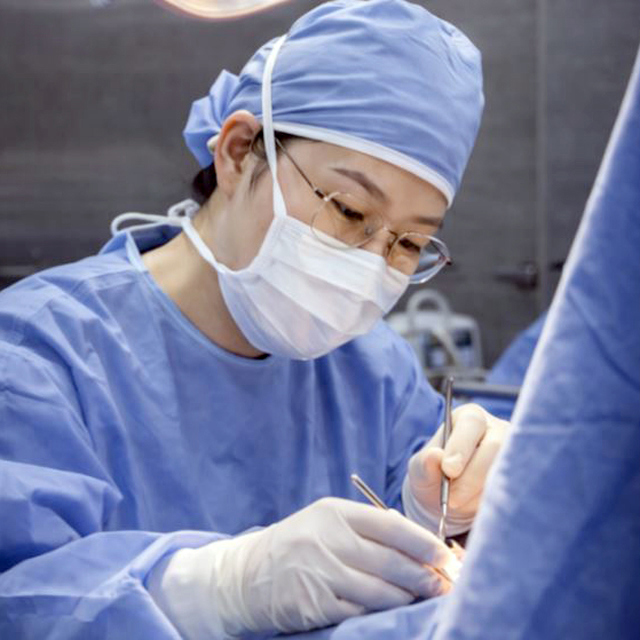
Responsibility for this treatment sits with the clinic's two board-certified obstetrician-gynecologists, who are also the people best placed to work out why the dryness is there.
A medical directorship and three decades of obstetrics and gynecology inform how Dr. Jong-Yeol Kim approaches a symptom that can arise from hormones, medication or an untreated gynecological condition.
Dr. Jong-Yeol Kim is the Medical Director of Golden Balance Clinic and a board-certified obstetrician-gynecologist with 30 years of experience. He graduated from Hallym University College of Medicine and completed his internship and residency training in obstetrics and gynecology at Hallym University Sacred Heart Hospital. He is a regular member of the Korean Society of Obstetrics and Gynecology.
Functional medicine and medical aesthetics both appear among the societies Dr. Yu-Jin Oh belongs to, which is a useful breadth when hormonal change and an injectable treatment are being weighed against each other.
Dr. Yu-Jin Oh is a Director and a board-certified obstetrician-gynecologist with 23 years of experience. She graduated from Jeonbuk National University Medical School, completed her internship at Samsung Medical Center Cheil General Hospital, and completed residency training in obstetrics and gynecology at Samsung Medical Center Kangbuk Samsung Hospital. She is a member of the Korean Society of Obstetrics and Gynecology, the Korean Academy of Functional Medicine, and the Korean Society of Medical Aesthetics and Dermatology.
Both doctors perform this service; the clinic does not assign it to one of them. The one you meet will take the history, arrange any examination or testing that is needed, and say whether an injection is the right answer or whether something else should be tried first.
Who Is a Good Candidate for Vaginal Moisturizing Injection?
Adults with persistent vaginal or vulvovaginal dryness who have had an appropriate gynecological assessment.
Adults judged suitable for the specific product and the specific procedure, rather than for injections in general.
Postpone until assessed: active vaginal or genital infection, unexplained vaginal bleeding, untreated genital lesions, or significant unexplained pain.
Individual evaluation required: relevant allergies, pregnancy, certain medical conditions, and medicines that affect bleeding.
What to Expect: Procedure, Recovery, and Results Timeline

The consultation is a diagnostic appointment, not a sales one. A qualified gynecologist or appropriately trained clinician reviews symptoms, medical and sexual health history, menopause status, medications, allergies and previous treatments. A pelvic examination or relevant testing may be recommended to identify causes such as infection, hormonal change or another gynecological condition before treatment options are discussed at all.
Preparation is mostly disclosure. Give a complete medical history, including allergies, current medications, any possibility of pregnancy and relevant gynecological conditions, and report unusual bleeding, discharge, pain or signs of infection. Follow the clinic's instructions on hygiene, medications and any required examination or testing. Unless your clinician advises otherwise, avoid vaginal intercourse and vaginal products — douches, creams and lubricants included — for twenty-four to forty-eight hours before treatment, and tell the clinician about any vaginal infection, irritation, allergy, medicine or ongoing treatment beforehand.
On the day the appointment runs through six stages: consultation and assessment of symptoms, history, allergies and suitability; preparation, in which the area is examined and cleaned with appropriate antiseptic procedures; anesthesia, where local anesthesia may be applied to reduce discomfort depending on the technique; the injection itself, with the selected moisturizing material administered to the planned area; a post-treatment check for immediate reactions, with recovery and aftercare instructions; and follow-up guidance on monitoring symptoms and arranging any further appointment.
Stage | What the clinic's record states |
|---|---|
Procedure length | 20 to 30 minutes |
Anesthesia | Topical or local anesthesia may be used |
Mild discomfort subsiding | Within 1 to 2 weeks |
Noticeable improvement | Within 2 to 4 weeks |
Stay in Korea | Approximately 1 to 2 days for consultation, treatment and initial monitoring |
Flying home | After approximately 1 to 2 days, with follow-up requirements confirmed before flights are booked |
Aftercare is light but specific. Follow the clinic's instructions on genital hygiene, activity and any temporary restriction on vaginal intercourse or inserting products. Do not self-treat new symptoms. Attend the recommended follow-up appointments, contact the clinic if symptoms persist or worsen, and seek urgent assessment for severe pain, fever, heavy bleeding or anything else that alarms you.
Sensation during the injections ranges from mild to moderate: stinging, pressure or tenderness, varying with the injection site, the technique and individual sensitivity. In the days afterwards, tenderness, mild swelling, bruising, irritation, spotting and temporary discomfort at the injection site are the common short-term effects. The complications that matter more are infection, bleeding, inflammatory reactions, allergic reactions, lumps and persistent pain, and the specific risk profile depends on which injectable material is used and how it is administered.
How long it takes to judge the result depends on the product, how the tissue responds and what the symptoms were to begin with, and the clinician may suggest reassessment after several weeks. Hyaluronic acid, which the clinic lists among the alternative vaginal products for dryness, is a useful illustration of why material matters: DermNet describes it as a natural glycosaminoglycan found in all living organisms and present in skin tissue, where it hydrates and acts as a cushioning and lubricating agent, and notes that manufactured hyaluronic acid injected into skin gradually breaks down and is absorbed, so that implantation of it is not permanent. The same reference records that allergy to hyaluronic acid is very rare because the molecule is chemically identical within and between species, while rare allergic reactions have presented as red, swollen, indurated nodules at injected sites persisting for weeks or months.
Combining Vaginal Moisturizing Injection with Other Treatments
There is no universal combination protocol, so any pairing is a clinical judgement rather than a standard package.
A qualified clinician should review the indication, infection risk, tissue healing and the compatibility of the treatments before combining anything.
Alternatives may be the better route depending on the cause: vaginal moisturizers, lubricants, vaginal hyaluronic acid products, and clinician-prescribed local hormonal treatments where appropriate.
Other prescription options exist for selected patients, and pelvic floor therapy addresses different concerns entirely — it is not a substitute for treating dryness.
Those alternatives have an evidence-based core worth naming. The Office on Women's Health lists vaginal estrogen and vaginal dehydroepiandrosterone as prescription treatments placed in the vagina for dryness and pain during sex caused by menopause, ospemifene as a daily prescription pill that acts like estrogen on vaginal tissue, and moisturizers and personal lubricants for temporary relief, suggesting a vaginal moisturizer every few days and a water-based lubricant during sex. It adds that anyone who has had breast cancer should speak to their cancer care team before using any hormone therapy, vaginal estrogen included.
Safety, Precision, and Clinic Standards
Set out below is what the clinic says about its own practice, in its own wording.
The clinic states its philosophy as: "We are committed to personalized 1:1 treatment plans tailored to each patient's condition and prioritize safety above all else in every procedure."
The clinic states that it carries out individualized pre-procedure consultations, limits surgeries to two per day, installs CCTV in all surgery and procedure rooms, and avoids unnecessary over-treatment.
Golden Balance Clinic is registered as a Medical Institution for Attracting Foreign Patients with the Republic of Korea's Ministry of Health and Welfare, under the Medical Overseas Expansion and Foreign Patients Attraction Act. That is a registration for treating international patients; it is not a facility accreditation.
English-language support is available through designated marketing, consultation, and global coordination staff, and the clinic names Scarlett Kim as its global coordinator, available from 10:00 to 20:00 KST.
Golden Balance Clinic is on the 12th floor of the Chunglim Building at 468 Gangnam-daero, Gangnam-gu, Seoul 06123, Republic of Korea. The clinic is open Monday to Sunday from 10:00 to 21:00 KST year-round, with a lunch break from 11:30 to 12:30 KST and last registration at 19:00 KST.
The Bottom Line
An injectable moisturizing material is placed in selected vaginal or vulvar tissue to address dryness and related discomfort.
The injection takes twenty to thirty minutes, with topical or local anesthesia used depending on the technique.
Mild discomfort settles within one to two weeks and noticeable improvement is described at two to four weeks.
Effectiveness, duration and risk all depend on the product and the individual, and some people see little or no benefit.
Dryness has many causes, and assessment should rule out infection, hormonal change and other gynecological conditions first.
Frequently Asked Questions
Why does the cause of my dryness matter so much?
Because it changes the right answer. Hormonal change, certain medicines, cancer treatment, perfumed washes and conditions such as diabetes or Sjögren's syndrome can all produce the same symptom, and some of them are better addressed directly. A clinician who examines and tests before injecting is doing the part of the work that makes the treatment appropriate or inappropriate.
How long does the appointment take?
The injection procedure itself typically runs twenty to thirty minutes, with the consultation and the post-treatment check adding to the visit. Topical or local anesthesia may be applied first, depending on the injection technique. Expect the assessment at the first visit to take longer than the injection does.
Does it hurt?
Mild to moderate discomfort is common: stinging, pressure or tenderness during the injections, varying with the site, the technique and your own sensitivity. Anesthesia is used to reduce that where the technique calls for it. Afterwards, tenderness and mild swelling at the injection site are the usual complaints.
When will I notice a difference?
Noticeable improvement is described at two to four weeks, with duration varying by individual and by treatment type. The clinician may want to reassess after several weeks before drawing any conclusion, because the product used, the tissue response and the original symptoms all affect the timing. No particular degree of improvement should be promised in advance.
What should I avoid before the appointment?
Vaginal intercourse and vaginal products including douches, creams and lubricants for twenty-four to forty-eight hours beforehand, unless your clinician tells you otherwise. Report any vaginal infection, irritation, allergy, medication or ongoing treatment before the procedure. Do not stop a prescribed medicine on your own initiative.
What counts as a reason to seek help urgently afterwards?
Severe pain, fever, heavy bleeding, or any symptom that worsens rather than settles. Ordinary recovery is tenderness and mild swelling that fades, not pain that climbs. Avoid self-treating anything new, and contact the clinic if symptoms persist.
How many days in Korea should I plan for?
Around one to two days covers the consultation, the treatment and the initial monitoring. Confirm any follow-up requirement with the clinic before you book flights, because that is what can extend the stay. Travel plans built on an assumption rather than a confirmation tend to be the ones that go wrong.
Book a Consultation at Golden Balance Clinic
Vaginal Moisturizing Injection is available at the clinic in Gangnam-gu, Seoul, and the first appointment is about finding the cause of the dryness before choosing a treatment for it. A gallery of previous results is maintained on the clinic's own website, at clinic's gallery.
Contact Golden Balance Clinic through the clinic contact page, by phone on +82-2-516-7148, or by email at info@goldenbalanceclinic.com.
Disclaimer
For informational purposes only. Individual results may vary depending on each patient's medical history, physical condition, anatomy, treatment plan, and recovery. The suitability of gynecological, aesthetic, dermatological, injectable, and other medical procedures should be determined through an individual consultation with a qualified medical professional. All treatments may involve potential risks, side effects, and recovery requirements, which should be discussed before treatment. Information provided by Golden Balance Clinic does not replace professional medical advice, diagnosis, or treatment. Results may vary and individual experiences may differ.
Sources & Further Reading
National Health Service — the causes of vaginal dryness, hormonal and otherwise, along with self-care measures and the circumstances in which a doctor should be seen.
Office on Women's Health — genitourinary syndrome of menopause: what falling estrogen does to vaginal, vulvar and urinary tissue, and which symptoms belong to that cluster.
Office on Women's Health — the prescription and non-prescription options for genital and urinary symptoms of menopause, including vaginal estrogen, vaginal DHEA, ospemifene, moisturizers and lubricants.
DermNet — hyaluronic acid as an injectable material: what it does in tissue, why injected hyaluronic acid is gradually absorbed rather than permanent, and the rare allergic nodules reported at injection sites.
Other Services
Explore additional treatments offered by our specialists.
Eyebrow Semi-Permanent Makeup
Eyebrow semi-permanent makeup is a cosmetic tattooing procedure that deposits pigment into the skin to enhance eyebrow shape, definition, and color.
Learn More
Facial Contour Micropigmentation
Facial contour micropigmentation refers to depositing pigment into the skin to create or enhance selected facial features.
Learn More
Eyeliner & Eye Enhancement PMU
Eyeliner PMU is a cosmetic tattooing procedure that deposits pigment into the skin around the eyelids to create a longer-lasting eyeliner effect.
Learn More